Software
Houzz Logo Print
bettie_geese

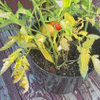
Sun scorched leaves

8 years ago

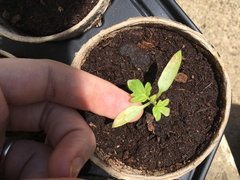
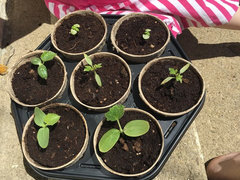
I have a couple tomato plants that are very young. I only started them inside about 16 days ago. I wanted to start hardening them off early. But on the 5th day of them outside, I think I over estimated the time they could handle in the sun. The cotyledons on my Tomato and Basil plants are all white. Only the tips of the first true leaves seem to be affected. On the other hand neither my cucumber nor cantaloupe plants were negatively affected. Are tomato plants more sensitive to the sun? Their growth seems to be a little stunted now and Im concerned because the cotyledons are burned, but hoping the true leaves will take over? This is my first garden, any help is truly appreciated!

Comments (16)

  • 8 years ago

    Most people keep tomato seedlings inside until they are several inches tall at least. After that, the cotyledons are gone, and the seedlings are less fragile. But cotyledons are irrelevant once the main leaves start emerging. Cucurbits, with large seeds, tend to have big strong cotyledons. If the temperature outside is significantly lower than inside, the growth will be slower. Call it "stunted" if you like. It's normal.

    Bettie thanked daninthedirt (USDA 9a, HZ9, CentTX, Sunset z30, Cfa)
  • 8 years ago

    Agree. Older seedlings with at least a couple sets of true leaves will usually recover from sun scorch and don't need their cotyledons any longer. Younger seedlings normally will not recover from sunburn or will be very slow to recover and develop (aka stunted).

    Dave

    Bettie thanked digdirt2
  • 8 years ago

    Ok. Thank you. I guess the best I can do is just keep the soil moist and hope for best. They are just small roma tomato plants. They did start to slow down once I started putting them outside for a time. Im leaving them in the house now until I see they are doing much better. Then maybe trying taking them outside of increasing intervals of 30 minutes?

  • 8 years ago

    I would leave them outside but use something to give them shade. I think it'll be more stressful for them to yo-yo between inside and outside again.

    One thing I like to do for small numbers of plants is use old window screens for shade. My process is:
    - Day 1 put plants in completely shaded location
    - Day 2 shade with 2 stacked window screens
    - Day 4 shade with 1 window screen
    - Day 5-6 remove window screen.

    You could also do the same with some kind of shadecloth, or I've even used old curtain sheers I had lying around.

    I include some flexibility for cloudy days.

    Bettie thanked gorbelly
  • 8 years ago

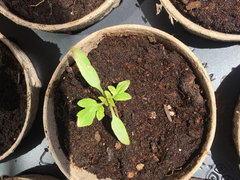
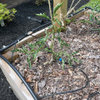
    I took a couple photos today just to update. They seem to be continuing to grow ok now. My basil plants seem to be the most worse off. Up to any suggestions at all if any of you notice anything. Thank you!

  • 8 years ago
    last modified: 8 years ago

    That's not so bad. As long as the growing tip doesn't get so damaged that it dies, they should be OK and recover quite quickly. Tomatoes are kind of amazing at recovering from physical trauma, which makes up a bit for how disease prone they are. The basil might die, but basil is delicate when young.

    Bettie thanked gorbelly
  • 8 years ago

    Yea I was happy to see that new growth had formed this morning on the tomatos when I went to check on them this morning. The basil are still at a standstill, and I think might die like you say. Which is sortve unfortunate since I was hoping they could be companions plants with my tomatoes. Any tips about when I could/should fertilize?

  • 8 years ago

    I would wait to fertilize until new leaves get a little larger and more established. Sometimes, fertilization--or any change in growing conditions--when a plant is stressed by something else causes problems.

    Start new basil, just in case. Even if the ones there survive, you'll be glad you succession planted when those plants get ready to bolt. I try to succession plant basil two or three weeks apart all season. I also find basil flowers beautiful, and the beneficials love them, so I like to have plants for eating co-existing with plants for the pollinators and such.

    The basil may not be dead. It's normal for basil to seemingly do nothing for a while with only little tiny nubs of the first true leaves showing for seemingly forever. It's slow to start. But it's also more likely that the damage will kill them vs. the other more robust seedlings.

    Bettie thanked gorbelly
  • 8 years ago

    Ok. Thank you for the help. As mentioned this is my very first Garden and theres so much information out there its difficult to sort out what I should or shouldnt do. I was under the assumption planting basil about 18 inches from my tomato plant would help repel certain insects and things like this. I am pregnant expecting a baby at the end of the summer and handling or spraying any type of pesticides is not on my to do list at all. So I was trying to find natural ways to do this to help. If anything if problems develop then I guess Ill have someone else do the spraying lol. Thanks you all have been very helpful!

  • 8 years ago

    So true, Dan. Basil wants a lot of sun. I actually plant cilantro with my tomatoes because the shade may keep it from bolting so quickly, and when it does bolt, parasitoid wasps and hoverflies love the flowers.. If I had the space, I wouldn't co-plant at all, but my garden space is very limited.

  • 8 years ago

    Bettie, companion planting to REPEL pests never works. The myths persist because they're so attractive conceptually, but in reality, I've yet to find it makes any difference. Some myths, like planting marigolds next to your tomatoes, can actively backfire, since marigolds can attract mites, which are probably one of the worst kinds of infestations you can have on tomatoes and one that's hard to conquer without using more toxic options.

    What DOES work is planting a lot of flowers throughout your garden to ATTRACT beneficial predators. Not necessarily companion planting right next to your edibles--that's not necessary--but nearby and throughout. Predators like lacewings, ladybugs, hoverflies, parasitoid wasps, etc. feed on pollen and nectar in their adult stages. As most are smaller insects, they especially like tiny, open flowers like Alyssum, flowering herbs, etc. These attract predators and encourage them to stick around and lay eggs, and their voracious larvae help significantly with pest control.

    Bettie thanked gorbelly
  • 8 years ago

    Thanks so much! I spread some wildflower seeds around my shed earlier. I wanna attract humming birds, mainly just because I like them haha. Would those work at all? Im probably going to plant some more flowers with my little girls (If i can convince them to stop picking them)

  • 8 years ago

    In my experience Scarlet Runner Beans attract hummingbirds.

    Bettie thanked Hrib
  • 8 years ago

    I always liked to plant an occasional marigold among the vegetables because I found them attractive.


  • 8 years ago

    Yes, hummingbirds like long, tubular flowers, especially if they're red.

Sponsored
Wannemacher Interiors
Average rating: 5 out of 5 stars26 Reviews
Customized Award-Winning Interior Design Solutions in Franklin Cnty OH