Software
Houzz Logo Print
socalnolympia

C. chrysantha (nitidissima)

7 years ago
last modified: 7 years ago

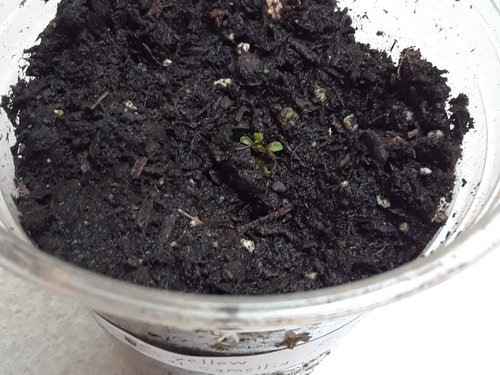
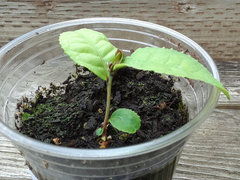
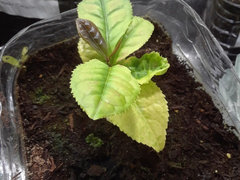
tiny seedling beginning to sprout


https://www.americancamellias.com/care-culture-resources/the-camellia-family/yellow-camellias

I'm not sure if this particular species can survive in zone 8. I don't think so.


I also have a hybrid I'll be testing, to see if it can survive the Winter in the Pacific Northwest zone 8.

Other camellias tend to do really well here.

Comments (25)

  • 7 years ago

    I have heard some people make comments like yours (about surviving zone 8). Hope it does well as it appears it will years before it blooms.

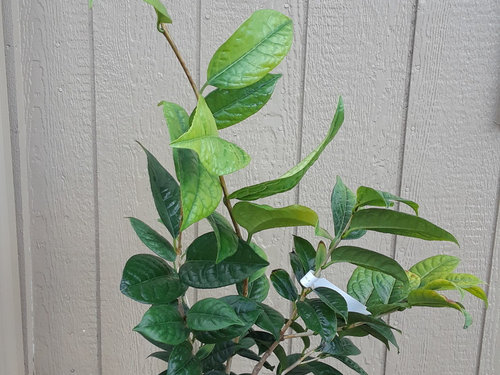
    Is the 2nd picture the hybrid that you mentioned?

  • 7 years ago

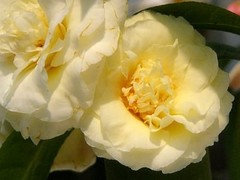
    No, here's a picture of the hybrid

  • 7 years ago

    here's the seedling again, you can see little leaves now

  • 7 years ago

  • 7 years ago
    last modified: 7 years ago

    I just noticed something... what is the enclosure(s) in which the seedling's pot is in? Something special you built? Last 2 pictures...

  • 7 years ago
    last modified: 7 years ago

    Here are pictures of the hybrid cultivar


    Still a young plant, so I think the bloom shape and size will improve with maturity of the bush.

  • 7 years ago
    last modified: 7 years ago

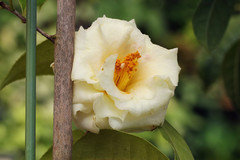
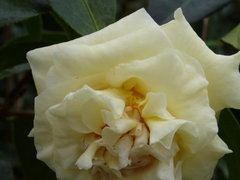
    Here are pictures of the blooms of this variety from Japan, to get some idea of what the blooms look like on an established bush:


    Anyway, I was thinking about trying to backcross C. nitidissima back in to get a deeper yellow.

  • 7 years ago

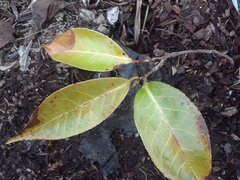
    current status of C. nitidissima seedling


    It had a setback but now still slowly growing

  • 7 years ago

    Too much sun?

  • 7 years ago

    I think the roots might have outgrown the cup it was in, and the soil was a little too moist and the roots got waterlogged and may have begun to rot. The health of the roots can often be seen in the appearance of the leaves. I transplanted it to a larger container. A bigger soil volume can more easily maintain the optimum range of soil moisture.

  • 7 years ago

    Ok. There seems to be a discoloration on the leaf located around 11 o'clock. I thought it was sun-related. Why do the leaves look light green?

  • 7 years ago
    last modified: 7 years ago

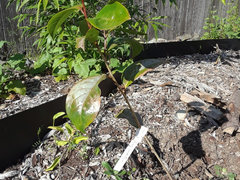
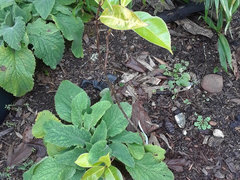
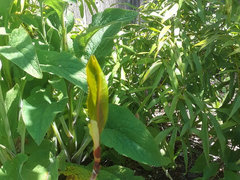
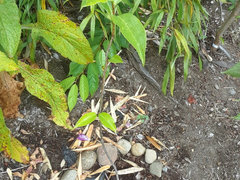
    hybrid 'Ki no Senritsu' in ground


    It still appears to be managing to survive the Winter here, in zone 8a.

    (Those weeds surrounding it are foxgloves that had been popping up everywhere around here, this is the PNW. )

    picture taken Jan 17

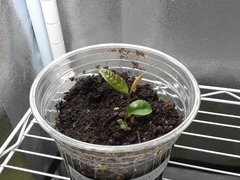
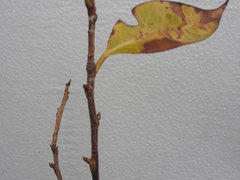
    C. nitidissima seedling still growing (indoors)


  • 7 years ago

    Thanks for the update. Say, is the bottom picture's color off or does the seedling need a more acidic soil pH?

  • 7 years ago
    last modified: 7 years ago

    The hybrid is still alive after being completely covered in snow. It still has all its leaves, and doesn't look that much more terrible than the regular camellias.

    I guess Ki no Senritsu was able to survive zone 8a, and not just a mild Winter.

  • 7 years ago
    last modified: 7 years ago

    Good news but, give it some time if you are evaluating it for winter damage. Since camellias are semi-dormant in winter, damage sometimes takes several weeks to a month before it shows up. For example, damage to flower buds (browning) can become evident as late as a month after the event that caused damage.

    Winter damage is a caused by a combination of a sustained temperature drop and dehydration. You and your shrub got lucky (although my coffee consumption would have tripled) with conditions that minimized the damage: plants got covered with snow; the snow cover protected plants from the effects of the cold; and the snow -when temps dipped to the upper 30s- melted and provided some moisture. I am glad that you did not get a sustained snowless drop that "stays" on teens for a high for a week or longer... causing more issues.

    To the plant's benefit, the overnight lows in the teens were "brief" and you guys bumped back up nicely to the "warmer" 20s and 30s. Ugh, but it probably did not feel warmer if you ask me. Hee, hee, hee.

    The snow cover helped, as snow is an excellent insulator from cold temperatures. And the melting of snow helped, as it provided soil moisture when temps rebounded and got closer to "warmer" 20s, 32 or above freezing. How did you fare?

    Over here, we get somewhat similar snowy weather. meaning some snow but very little; not like in the northeast or in IL/ND/etc. You know, we got something like your recent event a few years (10 years or so maybe) ago; about 9" at once, overnight. Normal snowfall would be a fraction of an inch to 1-3" tops. This winter, zippo, nada, so far; it has been warm when the rains show up. Knock on wood. I will try to blow some warm air in your direction and hope that helps melt any leftover snow!!! Or ice.

    Fyi... Snow or no snow, I find that watering deeply my camellias just before temperatures drop to the low 20s, teens or below helps my camellia shrubs from dehydrating. But next time, watch me plain forget to water when the weather forecasts warn of very cold temps and I wake up in the freezer when letting the dog out in the morning! Hee hee hee.

    Stay warm! Have some coffees (plural!) or hot chocolates! And I hope the shrub has no issues, Luis

  • 7 years ago
    last modified: 7 years ago

    In my experience frozen camellia plants don't fall apart until they try to start growing and blooming in spring. Then everything drops off, to show what the true situation is. A killer winter in the vicinity of Puget Sound is one where garden sites get single digit readings (F). As happened in 1989-90 for instance. Those are the temperatures that separate the genuinely hardy from the marginal.

    The interveinal chlorosis will be a soil minerals problem, as though the potting medium used is very not right for this kind of plant.

  • 6 years ago

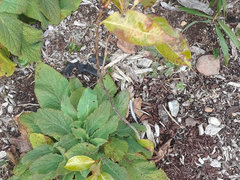
    Here's a picture of the hybrid outside, so you can see how it fared.


    Some of the leaves have splotches of brown, and the leaves are a bit yellow hued, but they are still overall green. Some of the leaves don't look too much worse than the leaves on regular camellias.

  • 6 years ago
    last modified: 6 years ago

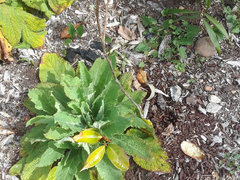
    Here's the hybrid,


    April 1

    it seems it was barely able to survive through the Winter. but I scraped under the bark and it was fully green underneath.

    still remains to be seen whether it can grow out.

    remember, this was completely covered in snow and it was a colder Winter than usual here

    don't mind the foxglove growing at the bottom, those are sprouting like weeds around here

  • 6 years ago

    Do not make the foxglove and the camellia "compete" for water and nutrients. The small roots of both may comingle in the same area and that can be a pain.

  • 6 years ago

    I removed the foxglove.


    It's April 6, and I'm still not sure if the hybrid is going to be able to push out new growth.


  • 6 years ago
    last modified: 6 years ago


    The hybrid is pushing out leaf growth at the very top.

    There's also a few small buds on the rest of the plant that are beginning to grow. It appears that all the old leaves from last year have finally dropped off, except one, and it does not look good, will likely drop off.

    May 23

    So took a long time for this plant to begin to leaf out, and it obviously struggled and suffered some light damage, and severe damage to all the leaves, over the Winter, but it is definitely still alive and just starting to grow out now.

  • 6 years ago

    So based on all that happened since November, what changes -if any- do you plant to make for Winter-Spring in 2019-2020? Obviously, you still have time to think what could help the plant next year.... so no hurry.

  • 6 years ago

    Here's the camellia hybrid

    July 2


    You can see that it regrew its leaves and now looks about the same level that it did in January.

  • 6 months ago
    last modified: 6 months ago

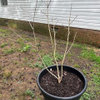
    I can provide an update (August 2025), 6 years later. Unfortunately the nitidissima species camellia was not able to survive through the cold, left outside in a container close to the house, here (in climate zone 8a).

    However, the hybrid has been surviving, outside and uncovered, and has been slowly growing. The growth rate seems to be much slower than other camellias, but the leaves appear to be able to survive through the winters, though look a slightly less healthy tone of green than other camellias.

    I'd say that zone 8a probably seems to be on the very edge of what it can survive (at least in the PNW region).

0
Sponsored
Boss Design Center
Average rating: 5 out of 5 stars33 Reviews
Reputable Home Renovation Company Serving Northern Virginia