Software
Houzz Logo Print
bahram03

Help prepare beds for next year

8 years ago

I want to build my first raised bed for next year. I watched videos on how to build the frame and its fairly simple. The hardest part will be cutting the wood because i only have a handsaw.

Here is my questions:

The area I want to build it has grass, dandelions, and other weeds growing. After I build my bed do I need to pull everything out? Or can I simply use the area as compost bin and kill the growth underneath from the lack of sun exposure?

Comments (30)

  • 8 years ago

    "Or can I simply use the area as compost bin and kill the growth underneath from the lack of sun exposure?"

    Maybe :-) However, some plants will just grow through whatever debris may be dumped on top of them, especially deep rooted perennials like the dandelions. A better plan would be to layer the area intended for the raised bed with cardboard, then a layer of mulch and then use the area for any additional composting you may have. The cardboard will effectively smother the weeds and will degrade and by planting time next season you should have a loose, weed-free and easily worked soil base for your raised beds.

    btw, for just a tad more expense, HD or Lowe's or other lumber suppliers will cut lumber to size for you. I don't even own a hand saw (just a pruning saw) and they have done this for me numerous times.

  • 8 years ago

    I have read that before how HD employees would cut to size lumber when you but it for free. My local HD I have a hard time finding someone who can even help find things. My assumption (which I should ask to be 100% sure) is that they won't cut a few to size for me.

    I was considering laying cardboard or layers of brown paper bags on the bottom. How do I know which cardboard is safe to use?

  • 8 years ago

    Cardboard that has a matte finish is fine to use. Pull out staples if present. Any shiny surface on the cardboard should be cut off or discarded as well as tape and shipping labels.

  • 8 years ago

    I agree that finding someone to actually help you is the biggest challenge at HD :-)) But when you do they will gladly cut to size, at least at my local HD's. They have this massive, big tilting tablesaw thingamajig at the back of the store in the lumber department for just this purpose......why would they need it otherwise??

    And any cardboard carton will work - they are just paper and natural glue. Nothing that won't fully decompose.

  • 8 years ago

    Just curious, why are you building a raised bed? Do you have poor soil, or contaminated soil, or poor drainage, or do you need it for accessibility, or just for looks? These are all reasons people build raised beds, and there are probably more. Some people end up building a raised bed where they don't really need it, just because they think it will help somehow.

    A follow up to that is, what do you plan to put in it for soil?

  • 8 years ago
    last modified: 8 years ago

    Raised beds can extend the gardening season. They can also help deter garden marauders. They can also help define and organize a kitchen garden area that may not fit well aesthetically in an otherwise landscaped garden (think potager).

    I'm not sure I understand the rationale behind questioning why one would opt for a raised bed garden......it's just a matter of personal choice regardless if there is a motive behind it or not.

  • 8 years ago

    I find it will be too much work to completely remove all the grass and weeds to create a bed without creating a raised bed. It also will mark off the area so the gardeners don't accidentally cut things down. I can mark off the area but I have other reasons for the raised bed. We have sprinklers that i don't know exactly where the pipes are located or how deep. The new areas will probably be over the pipes.

    It also gives me an area to compost for this year and next year. I plan to dump kitchen scraps and leftovers (no meat or anything like that), lawn clippings, used coffee grounds, shredded brown paper bags, and fall leaves. Put some shovels full of soil over them to help compost faster. When I start to plant next year in the bed I would add Scotts-Premium-0-75-cu-ft-Topsoil and mix it all up. I have filled 5 gallon containers with the topsoil and grown vegetables successfully. This way I also get some compost mixed and save money by using less of the topsoil. The top soil has Sphagnum Peat Moss in it to make it lighter.

  • 8 years ago

    I only brought it up because there have been posters here who did exactly as I described - simply assumed it would make a better garden, with no other basis. Sounds like Ariel has a plan which is fine.

    The Scotts product looks to be totally organic matter, which can cause some issues. A major one is shrinkage as the material continues to decompose, requiring additions every year. It may also drain very fast and dry out in hot weather. I'd suggest mixing in some mineral soil, which you can probably also get in bags where you get the Scotts mix.

  • 8 years ago

    Can't I simply add compost year to year? I have containers from last year with no signs of shrinkage. From those it looks like the shrinkage if it happens, would take a long time. Adding compost year to year should help it from shrinking.

  • 8 years ago

    Yes, you could. Still, there is value in the mineral portion of soil. You're not making a pot here, but a garden bed, so soil is recommended. But I won't argue that things can grow in 100% organic matter - we've all seen it done. We did have someone here awhile back who had a lot of rain after planting tomatoes and peppers and such in an all-organic matter bed, and they were kinda drowned from all the water retained by the spongy soil.

  • 8 years ago

    How deep will these raised beds be? An 8 inch depth is one thing while a few feet would be another. If 8 inches deep then some kind of unwanted plant barrier would be necessary, although a mulch would not since the soil would act as mulch, unless you put the barrier (newspaper, cardboard) down long before the frame for the raised bed.

  • 8 years ago

    I haven't decided if it will be 2, 4, or 8 inches deep.

    When i find time this summer i will build the frame. Then i can pour boiling water one day over the current growth. The next day vinegar. That should severely weaken anything growing. Cover everything as gardengal mentioned with a layer of cardboard. On top of that a sprinkle of soil. Add my composting materials over the summer. Top it off with some more soil.

    when the winter comes,either leave it all uncovered or put some plywood on top.

    once the ground is workable in the early spring, i would mix in a few bags of the topsoil. Till it all with a shovel.

    if the cardboard by then has not broken down, i would try to pull it out to give more depth for the roots to grow.

  • 8 years ago
    last modified: 8 years ago

    Ariel, I have the late shift tonight and will get back to you tomorrow. If I understand what your plan is, that is the best advise for failure I have heard of. I don't know where you are getting your information from, but it is totally wrong in so many ways. Others please chime in as maybe I am reading this wrong.

  • 8 years ago

    Ariel, 2 or 4 inches is too shallow. Even in-ground beds are that high. You'd need a minimum of 6 inches, depending on what you intend to grow, and the soil below the bed would also need to be loosened so roots can get down easily. I see no reason why you shouldn't use the bed to make compost this year. But you do also need soil. I've made compost directly in beds in the past. It worked fine. But I did include soil.

    You could probably eliminate weeds by covering with cardboard but most raised beds are fairly small so the effort to remove perennial weeds by cultivation before building really wouldn't be that much. Just to be sure you'd got those roots out. And I'd do it before putting the frame down so you can get in and out easily with your tools without damaging the frame.

  • 8 years ago

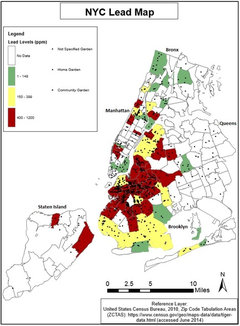
    You are noted as being in Queens... so before you go too far ... either get your soil tested for lead... ask around at a local garden place/county extension... or just assume it does have lead.... and build on top of the existing soil. You don't want to be digging around, breathing, walking it in the house, or handling the potentially contaminated soil. I'm not a lead expert... or play one on tv... but it's something to consider.
    I would go with at least an min 8" depth. So at HD if you get 2x10 boards for the sides... this would give you 9.25" in height to work with. There are numerous ways to tie the corners together (galvanized brackets, wood blocks, etc). You could also consider getting the retaining wall blocks and build you sides that way.


  • 8 years ago

    I have been growing in the ground for a few years already. Getting a soil test is a smart thing to do.

    I don't want to build such a deep bed because it gets expensive to fill it. My plan was to build it up slightly while getting rid of anything growing underneath. That way I have the garden soil's depth plus the few inches added from the bed.

  • 8 years ago

    Below is a link to the info for lead in NYC.
    Link


  • 8 years ago

    Thanks. I was looking into after you mentioned. Based on this map from I have the lowest levels of lead in my area. I do understand that many factors can come into play from old paint chipping and other things that can make my specific soil have higher levels.


    https://www.reuters.com/investigates/special-report/usa-lead-newyork/

  • 8 years ago

    well with that said..... you could always just slowly build up your beds without mixing in the existing soil. And then the next time you are out of the city... fill your trunk with some clean dirt and haul it in!

  • 8 years ago

    Im never out of town to haul it clean dirt that way. lol my family would also kill me if I did that.


  • 8 years ago

    A raised bed, filled with soil from some place other than nearby, should eliminate the concern about lead in the soil if that raised bed is at least 8 inches deep. As floral stated a raised bed 2 to 4 inches in depth is too shallow.

  • 8 years ago

    I found somewhere that would test my soil for me.

    I have also started looking into what is the cheapest option for wood framing. I found these 1 in. x 8 in. x 8 ft. Whitewood Ledger Board. I could buy 5 of them. ( I havent measured the bed area yet). I would put two of them lengthwise on each side then cut the last one for the width.

  • 8 years ago

    Basically untreated pine. Those will decompose in a couple years!

    I would suggest either a ACQ treated board or timber, or you could use plastic decking boards which would last pretty much forever. It's about a dollar a foot though. The 8' landscape timbers are about $4/8 ft.

  • 8 years ago

    I looked at landscape timbers now. HD is supposed to have them on sale for under $3 this week.

    Each one would give me 2.5 or 3.5 inches depending on how I lay them down. I would then need 10 of them at least. Then I also need more screws to fasten them all together. It would come to somewhere around $40 for everything.

  • 8 years ago

    You could start with one layer of them and if your bed gets too high with additions of compost and natural 'fluff' later, you can add a second layer. I did that with my garden, didn't really plan to have raised beds but as I added compost to my clay and a few topsoil bags here and there, it slowly rose. One layer, and now two, of timbers.

    My favorite timbers are the free ones from the city yard waste/mulch site. They aren't supposed to shred them up with the yard waste but idiots dispose of them there anyway, and I pick out the good ones.

  • 8 years ago

    When I scan these discussions there is talk of material but I rarely see mention of cedar fencing. It should be widely available and inexpensive. Have I just missed it? Forgotten?

  • 8 years ago

    Cedar fencing slats (1"x4"s or 1"x6"s) are usually too thin to be good structural members for a raised bed. The weight of the soil pressed against them will bow them out. I wouldn't use anything thinner than a 2"by - 2"x6" or 2"x8" western red cedar are standard raised bed material here.

  • 8 years ago

    What would be the cheapest thing to buy as the frame?

  • 8 years ago

    CMU's - standard 8"x8"x16" concrete blocks - sell for under $2 each. You would need at least 18 for a standard 4'x8', 8" deep raised bed, so looking at $35-40 for the bed, not including soil.

    Would be about the same price for pressure treated pine boards and a bit less for untreated Doug fir. At least in my area. Naturally rot resistant western red cedar is about double that price.