Software
Houzz Logo Print
designassassin

Can I keep a boxwood really small by trimming it?

8 years ago
last modified: 8 years ago

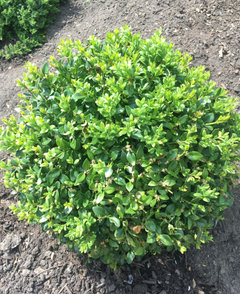
I want to put a row of boxwood under my yews. Is it possible to keep the boxwood small forever by trimming it every year? Most tags say boxwood grows 3' or so, which would be too tall.


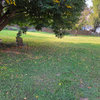
PS. I know the grass looks horrible—working on it!

Comments (11)

  • 8 years ago

    Where are you and what type of boxwood? They vary in size considerably. There is a boxwood blight affecting some parts of the country so you want to get resistant types. This is more a shrub forum question than landscape design.

  • 8 years ago

    Oh, I tagged this Shrub and Landscape design. I'll adjust. I'm in Michigan. I was thinking a boxwood like green velvet.

  • 8 years ago

    Following, I have the same question! I would like a hedge about a foot high or so behind my mini rose bushes :)


  • 8 years ago

    where in MI .... zone varies ....


    see link.. no blight in MI as of 2015 .... but winter damage is an annual possibility ... MSU .... that cow college in lansing [moo U] .. is our state Ag college.. they are the go to for all things about plants.. maybe you can find a more current article from them ...


    there are a lot of things that would be more stunning in that spot.. btw.. is the wall new ...


    finally ... there really isnt anything.. that cant be pruned to your wishes ... but things that need a hircut or pruning once or twice a year.. can become a problem.. over the years ... especially when you dont want to ... or get to old to do it ...


    ken


    http://msue.anr.msu.edu/news/winter_injury_or_boxwood_blight

  • 8 years ago

    i agree ... that you should start with dwarf varieties .. those with slower annual growth rates ...

  • 8 years ago

    This gives some indication of susceptibility:

    http://pubs.ext.vt.edu/content/dam/pubs_ext_vt_edu/PPWS/PPWS-29/PPWS-29-pdf.pdf

    You also want to choose a variety that is hardy enough for your part of Michigan (look at USDA hardiness zones) and choose a small growing variety to reduce pruning frequency and amount. Any pruning should be done so that the base is a bit wider than the top so that the lower part of the plant doesn't get shaded out by the top. And the hedge behind or in front of a hedge needs to have some space between them as well so that the one side of each hedge isn't shaded out.

    FWIW, I would be more likely to use a deciduous shrub with flowers or colored bark or something else with some contrast instead. Two fine-textured, dark green shrubs seems like too little interest; why not just have the yews since I think the boxwood will essentially disappear.

  • 8 years ago

    @ken I'm near Detroit. Yep, the wall is new, and this is my first house! I have a huge yard (.75 acres, about half is landscaped from previous owner and I'm working on changing things over to my taste.) I want to keep maintenance low year after year.

    Boxwood blight? Ok, now I've got a more pressing concern...

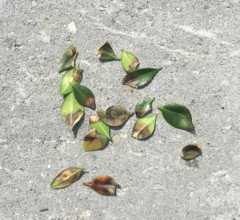
    I just checked all 5 of the boxwood I bought this year from English Gardens and they have brown leaves that look like blight! Looking at the article links you guys sent (thanks ken and nhbabs) I wonder if it's just winter damage or damage from when it was trimmed at the store. They did have these brown spots when I bought them a couple weeks ago. Maybe I need to dig these up and take them out right now?!

  • 8 years ago

    I would take samples to the nearest cooperative extension folks to check if it is blight. I have no expertise in the matter.

  • 8 years ago
    last modified: 8 years ago

    Update: So I sent the leaves to be analyzed—it's not boxwood blight. It's another thing called boxwood leafminer. From the report…

    ___

    "The yellow leaves in the boxwood sample submitted is Boxwood leafminer injury, Monarthropalpusi flavus (Diptera: Cecidomyiidae).

    This is the most serious insect pest of boxwoods. The boxwood leafminer is native to Europe and widely distributed throughout the United States. Its introduction dates back to the same time period that common boxwood was introduced into this country. The leafminer causes serious damage to boxwoods, with heavily damaged plants become unattractive in appearance. The larval feeding between the upper and lower leaves causes blistering and often discoloration.

    Both littleleaf boxwood, Buxus microphylla and Common Boxwood, Buxus sempervivens, are commonly attacked, but there is resistance found in individual varieties of both species. Common boxwood cultivars with reported resistance are ‘Handworthiensis’, ‘Pyramidalis’, ‘Suffruticosa’ and ‘Varder Valley’. Buxus microphylla var. japonica has also exhibited resistance to the boxwood leafminer.

    The eggs of the boxwood leafminer are white to transparent and can be seen by holding the leaf up to the light. The larvae are yellowish-white and approximately 1/8 inch long. The adult boxwood leafminer is an approximately 1/10 inch long, delicate, orange-yellow to red, gnat-like fly. The partly grown larvae of the boxwood leafminer over-winter within their mines in the leaves of the host plant. The larvae grow rapidly as the weather begins to warm. In late April, when weigela blooms, they turn into orange-colored pupae and emerge as a fly. After mating, the female inserts her eggs deep into the leaf tissue. She dies soon after and the eggs hatch approximately 3 weeks later, and the larvae commence feeding. The larvae continue to feed and grow slowly. In Michigan, there is a single generation each year.

    MANAGEMENT OPTIONS

    Cultural: Selection of the more resistant varieties.

    Biological: Unfortunately, there are few known natural enemies of the boxwood leafminer.

    Mechanical: Pruning the foliage before adult emergence or after egg laying ends will reduce the overall population

    Chemical: Chemical control is difficult because the application must be timed with the emergence of the adult flies. An application of an insecticide spray when the adult flies emerge (this corresponds to when weigela is in bloom) can reduce populations. Insecticide sprays containing bifenthrin (Talstar), carbaryl (Sevin), cyfluthrin (Tempo or Bayer Advanced Garden Insect Control), or malathion are among the recommend materials that can be applied to control the adult flies. Imidacloprid, a systemic insecticide (Merit or Bayer Tree and Shrub Insect Control) will control the larvae inside the leaves and does not require precise timing. This product should be applied in mid to late April.

    Be sure to read and follow all instructions and safety precautions found on the label before using any pesticide."

    ___

    Hope that helps someone else!

  • 8 years ago

    I would use a groundcover beneath those yews. Easier to care for and likely in the long run to be more successful.

Sponsored
Bella Casa LLC
Average rating: 5 out of 5 stars17 Reviews
The Leading Interior Design Studio in Franklin County