Software
Houzz Logo Print
ninigret

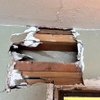
Lightning strike fries irrigation controller

8 years ago
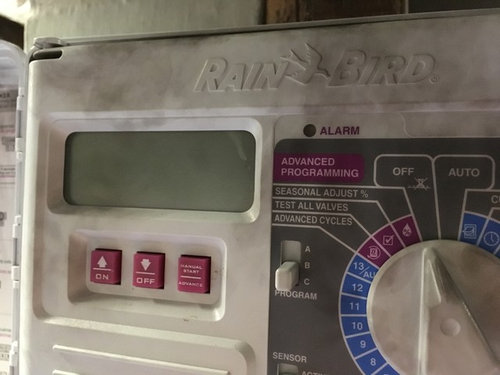
Does anyone have any experience with isolating the electricals of their automatic irrigation system from the house, so this doesnt happen again? We have a whole house surge protector, but these wires come into the house in a separate location.


Comments (12)

  • 8 years ago

    I would get an Electrician to have a look!

  • 8 years ago

    Call Rainbird and see what they recommend.

  • 8 years ago

    Hard wired TVSS (surge protector) will help protect it. Unless you're fairly experienced in home wiring, you'll have to get it installed by an electrician. It should be installed as close to the sensitive electronics as possible.

    The link is intended as an example and is not an endorsement.

  • 8 years ago

    so, you're saying a second surge protector. we already have one for where the power lines come in from the pole. aside from flipping the breaker on the gas cooktop, and frying the cordless phone system, all of the rest of the house was fine.

  • 8 years ago

    > so, you're saying a second surge protector.

    Long before seeking a solution, first understand the problem. No protector does protection. A 'whole house' protector is effective because it makes a low impedance (ie less than 10 foot) connection to what does that protection - single point earth ground. Any protector that does not make that low impedance connection is ineffective.

    Not just any earth ground. All four words have electrical significance. Any incoming wire must either connect to that ground directly (ie TV cable, OTA antenna, satellite dish). Or make that connection via a protector (ie AC electric, telephone, sprinkler controller wires).

    No way around this Those controller wires must enter at the service entrance to make a low impedance connection to earth. Or learn from the AC electric companies Tech Tip. See: https://www.duke-energy.com/energy-education/power-quality/tech-tips

    Then select Tech Tip 8 to view good, bad, and ugly (preferred, wrong, and right) solutions.


    Judy Mishkin thanked g thom
  • 8 years ago

    Most surge protectors come with a "joule" rating. The higher this number the more protection you get. In addition when a serious surge comes down the line the surge protector itself may receive damage. In a way it's a sacrificial protector and should be replaced.

    That said, no protector can completely isolate you from a very close or direct hit of lightning. It can only reduce the severity..

    Best fo luck, Doug


    Judy Mishkin thanked Doug Powell
  • 8 years ago
    last modified: 8 years ago

    Ineffective protectors, that will magically absorb joules in a surge, come with a joule rating. Something completely different, also called a surge protector, does something completely different - therefore has different spec numbers.

    Protector adjacent to an appliance must magically 'block' or 'absorb' a surge. No way around that reality. How does its 2 cm protector part 'block' what three miles of sky cannot? That says ineffective protection.

    How does its hundreds or thousand joules 'absorb' a surge that is hundreds of thousands of joules? Protectors, rated in joules, cannot protect from destructive surges. Unfortunately, naive consumers always ignore these numbers.

    What good is a hundred or thousand joules protector when destructive surges can be tens or hundreds of thousands of joules? Why did that article forget to mention facts and actual numbers from specifications and datasheets? Article is subjective so it is best considered a scam.

    Homeowners typically suffer a surge maybe every seven years. But a telco CO suffers 100 surges with each storm. Nothing can protect from direct lightning? Yes, if one is subjective, uninformed, does not ask damning questions, and is easily scammed. How often is your town without phone service for four days while they replace that surge damaged computer? Never? Direct lightning strikes without damage has been routine for over 100 years. But many consumers are scammed by plug-in (magic box) protectors. Therefore use wild speculation, hearsay, and advertising to just know protection is impossible. Even when examples to the contrary exist in every town.

    Every facility that cannot have damage always uses this well proven solution. As in always. Every wire inside every incoming cable makes a low impedance (ie less than 10 foot) connection to single point earth ground. Either directly or via a surge protector. Only those educated by propaganda would not know that. The informed learn from hundreds of years of well proven science. And read spec numbers.

    Ineffective protectors (that magically 'block' or 'absorb' surges are rated in joules. Near zero joules. Lightning is typically 20,000 amps. So a 'whole house' protector is at least 50,000 amps. Because protection is about what does damage - ie direct lightning strikes, linemen errors, stray cars, etc. Any protector that does not protect from direct lightning strikes and that fails on a first surge is a scam. And typically costs tens or even 100 times more money.

    How ironic that effective protection from direct lightning strikes was implemented over 100 years ago. And still many educated by propaganda (not by science) know otherwise. Clearly global warming also does not exist.

    OP had damage because some incoming wires did not connect low impedance (ie less than 10 feet) to single point earth ground. Either directly or via a 'whole house' type protector. (BTW, human safety says a protector rated in joules can cause a fire if located there.) Protection always means that surge finds earth ground on a path that is nowhere inside a building. Informed consumer inspect, maintain, and establish low impedance connections to what actually does the protection - single point earth ground.

    Scams that Doug was educated by cannot and do not claim such protection. It explains why some believe nothing can protection from direct lightning strikes - when direct strikes without damage have been routine in every town. But only when a human learns facts with specific numbers. And why all protection is defined by single point earth ground.

    Judy Mishkin thanked g thom
  • 8 years ago

    thanks very much. i'm not very conversant in information like this, i'll pass it on to my husband and we'll go from there.

  • 8 years ago

    Remember how and why a lighting rod works? What a lightning rod does to protect the structure is what a 'whole house' protector does to protection every appliance inside that structure. Both are only as effective as the earth ground. It really is that simple (and new).

  • 8 years ago

    The Duke Energy information is valid and valuable, but I would expect that most reasonable telco and CATV installers would bond their ground connections to the home's electrical system ground. I can't imagine them driving their own ground rods, they're in far too much of a hurry, but I could certainly be wrong about that.

    GThom's post above seems to be an indictment of consumer level TVSS protection. But if he provided any specific recommendations for what one might use instead, I missed or misunderstood them. Maybe he'll post back with clear examples of specific products that he considers essential to an effective protection system.

    As for consumer grade TVSS devices from hardware stores and electrical supply jobber, they might not be sufficient for GThom or for a telco, but they sure have worked for this homeowner. I stopped losing electronics during lightning storms after installing them. (I should probably add that I now also have gas-tube TVSS devices at every Ethernet port on my home computer network.)

    I won't deny that some are better than others, but in my experience, properly installed good quality protective devices aren't a scam.

    Being connected to ground via the grounding conductor in my wiring, the individual TVSS units at each sensitive appliance of course don't have as good a ground connection as the upstream units, but they still serve their purpose.

    If you have really deep pockets and want telco-grade protection, I'm sure you can find someone to install it for you. Maybe you can even hire GThom to do the job! :) Mine aren't that deep, and what I have and recommend works for me. YMMV.

  • 8 years ago
    last modified: 8 years ago

    Codes say that CATV, dish, OTA antenna, and phone installers must use the single point earth ground. Same ground also used by AC electric. Unfortunately this does not happen for many reasons. For example, technicians do not even know what impedance is; therefore do not appreciate the importance of that earth ground and a short as possible hardwire that is not inside metallic conduit.

    One cable installer literally routed his ground wire to dirt in a porch flower box.

    Two Comcast installers, who had just come from a lecture, were drinking coffee. As I explains this stuff, one would turn to the other and say, "So that is what they were saying." Installers had assumed, for example, that a coax wire into a second floor could go straight in. And its ground wire routed two plus stories down to the earth ground. If not obvious (due to impedance), that coax must first route down near the earth ground before rising back up to enter the second floor.

    TV cable has best protection by connecting directly to earth. Other incoming wires must connect via a protector.

    A commodity called a 'whole house' protector is easy and obvious. Simply go to any big box hardware store or electrical supply house and ask for their 'whole house' protector. That is consumer level (TVSS, arrester, SPD, surge protector) protection.

    Every effective protector has a dedicated wire for that low impedance (ie less than 10 foot) connection to earth. Not wall receptacle safety ground - earth. Since a typical surge (ie lightning) can be 20,000 amps, then a minimal 'whole house' protector is 50,000 amps. What else must one know? What can best fit in a breaker box or meter pan? An honest recommendation is defined by specifications. What else would anyone need? All numbers are layman simple.

    50,000 amps defines a protector's life expectancy over many decades and multiple surges. That low impedance (ie hardwire has no sharp bends) connection to and quality of earth ground defines protector effectiveness during each surge.

    Ethernet ports already have robust protection (typically rated at 2000 volts). A protector at each port is ineffective. It obviously has no low impedance connection to earth. If an ethernet wire leaves / enters a structure, then an ethernet protector with that dedicated (often green) ground wire must also connect low impedance (ie less than 10 feet) to the single point earth ground - at that service entrance.

    Ethernet wires inside a building need no protection. Because effective protection means no surge current inside. Nothing based in science and numbers disputes that.

    Experience says nothing if one did not / cannot trace a surge to locate a reason for failure. No damage to one appliance protected by a plug-in protector says anything useful. Also called cherry picking - a classic example of junk science reasoning. One can only say that protector was effective if every other appliances is destroyed - without exception. How did so many less robust appliances without a protector survive? What protected a dishwasher, door bell, furnace, every GFCI, refrigerator, LED & CFL bulbs, vacuum cleaner, dimmer switches, microwave, clocks, garage door opener, central air, and every smoke detector? Were those protected by invisible protectors? If not, then a conclusion was made by 'cherry picking'. Ignoring every example that contradicts that observation.

    Nobody can honestly say a plug-in protector did protection using observation. But we traced damage by literally replacing every IC. By restoring all electronics that never failed again. What did we learn? In one classic example, plug-in protectors compromised (bypassed) superior protection inside all powered off computers on a network. A few plug-in protectors destructively earthed a surge through all powered off computers on that network. One excellent outgoing path was a phone line via another computer's modem. And yes, we even repaired that modem - it never failed again.

    So yes, adjacent (plug-in) protectors can even make surge damage easier. We did not use observation or cherry picking. And our conclusions were also confirmed by numbers from datasheets.

    Martzloff, in his first conclusion in his 1994 IEEE paper, defines quite bluntly what 'point of connection' protectors can do.

    • Conclusion:
    • 1) Quantitative measurements in the Upside-Down house clearly show objectionable difference in reference voltages. These occur even when or perhaps because, surge protective devices are present at the point of connection of appliances.

    More. Observation defined in an IEEE brochure notes an attached TV was not damaged. That protector did not earth a surge destructively through its attached TV. Instead, is earthed that surge 8000 volts destructively through a TV in the next room. IEEE even gives a number - 8000 volts. Another example of why observation (without learning facts and numbers) results in junk science conclusions. Facts (and experience) says a plug-in protector can even cause damage to other nearby appliances.

    A plug-in (point of connection) protector should never be used without a properly earthed 'whole house' protector. An IEEE Standard defines how much protection - more numbers. A properly earthed 'whole house' solution does 99.5% to 99.9% protection. So yes, even a 'whole house' protector is not perfect. Meaning a plug-in protector might do another 0.2% protection - while costing tens or 100 times more money per appliance.

    IEEE then says

    • Still, a 99.5% protection level will reduce the incidence of direct strokes from one stroke per 30 years ... to one stroke per 6000 years ... Protection at 99.5% is the practical choice.

    Any recommendation without perspective (numbers) is best treated as a despicable lie. Show me any science or spec numbers that justifies a plug-in protector? Good luck. Even its manufacturers do not make that claim. Conclusion only from observation is classic junk science.

    One said he had no damage for three years. Fine. Potentially destructive surges occur maybe once every seven years. Another number that exposes junk science reasoning.

    Effective protection always answers this question. Where do hundreds of thousands of joules harmlessly dissipate? Answer, that applies to every protector, is obvious and simple. A protector is only as effective as its earth ground.

    I can easily double number of reasons for that conclusion - with specifications and citations. Hearsay, wild speculation, advertising, and subjective reasoning never create an honest recommendation. Did this stuff for quite a few decades. Too long to be scammed by products from APC, Belkin, Tripplite, Panamax, Furman, and Monster. Informed consumers buy products from other companies known by any guy for integrity. How many more reasons does one need to ignore soundbyte lies - and learn from over 100 years of well proven science. A protector is only as effective as its earth ground.

    OP asked, "Does anyone have any experience". Yes.