Software
Houzz Logo Print
titanicaart

Shrubs for a Japanese garden

8 years ago
Hi.

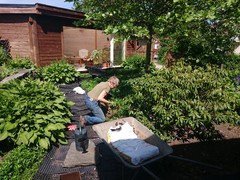
We have a Japanese inspired garden, and it's almost finished, but I need some small trees, bushes and shrubs for one of the sides.

Are magnolias a good choice or do they get too tall?

I welcome any ideas. I'll try to get a photo tomorrow.

Comments (19)

  • 8 years ago
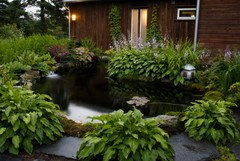
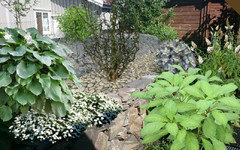
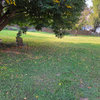
    This is the finished part of the garden to the right, and we're creating a new path on the other side. We have a lot of hostas and a red maple on the finished side.
  • 8 years ago

    There are lovely deciduous magnolias that remain very small, much more suitable in form and stature to a Japanese garden of that size.

  • 8 years ago

    Very small in a magnolia is 10-15 ft. Further details required to make useful suggestions.

  • 8 years ago
    Thanks for the replys. 10-15 feet will probably be too big so I guess magnolias are out of the question.
    I want to add a little colour to the garden, but very toned down and perhaps shrubs that bloom at different times of the summer.

    I'm in Kristiansand, the southern part of Norway and it gets cold with snow in the winter and approximately up to 23 degrees Celsius in the summer.
  • 8 years ago

    Magnolia seiboldii grows very slowly, although after many years would probably exceed 10 feet without pruning. This species would be highly suitable for a Japanese inspired garden. The blossoms have a very long history of use in tea ceremonies. Dwarf azaleas and rhododendrons would also be very suitable and are easily kept small through pruning and pinching. Although they would not have colorful blossoms, dwarf conifers can be found with unusual forms and interestingly colored new growth. These would also be very suitable and contribute textures not found in other plant groups. They would also provide a good deal of winter interest when deciduous plants are bare and the hostas, for example, are invisible.

  • 8 years ago
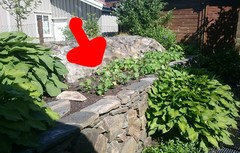
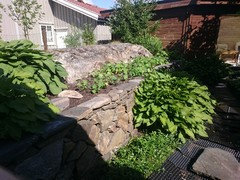
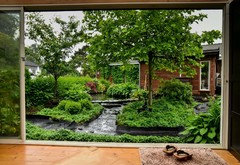
    I just took a photo of where I need some small trees or shrubs - on the top of the stone wall and on the small mountain.

    The green tree in the background (right side) is a Salix/Willow, so perhaps I could start with the right hand side and plant a small red maple to add contrast to the green?

    (I planted temporary groundcover to keep weed out, which I will remove)
  • 8 years ago
    (Is there any way to edit comments?)
  • 8 years ago

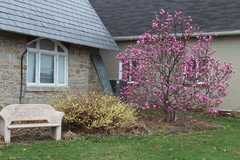
    Here's an example of Magnolia stellata.

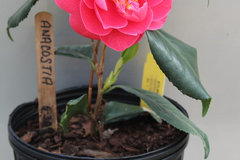
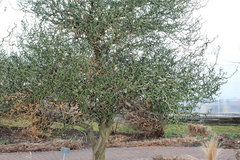
    Here's my favorite spring blooming camellia. You won't find this one but seek out one that is comparable.
    The yellow shrub is Corylopsis pauciflora . The pic doesn't do it justice. This shrub is neat, tidy and compact and very popular in Holland.
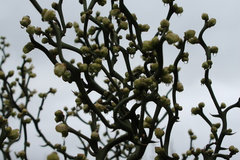
    Poncirus trifoliata 'Flying Dragon'

    Japanese gardens are usually very conservative with color and green predominates. I like this about them. They don't have the "detergent box" look that we have in the US. Seek out compact forms of Chamaecyparis obtusa for this reason.

    I have a diplomatic suggestion for you. Lighten up on the hosta. They currently dominate your design and have no winter interest. It is good that you are adding shrubs for structure.

  • 8 years ago
    Thank you, Sam. I'll start investigating what I can get hold of. Yes, the hostas. I have quite a few too many ;)
  • 8 years ago
    last modified: 8 years ago

    I have seen Oyama magnolia about 20 ft across south of Vancouver, BC (like Norway a cool climate area). Likewise here in the Seattle area (USDA 8) we have numbers of star magnolias over 20 ft tall. (I once had a landscape architect ask me what kind a magnolia tree in flower at the time was, that was over 20 ft tall and visible in front of us. When I replied that it was a star magnolia he blurted out "Oh that can't be!").

    And no, I'm not talking mistakenly about Loebner or Kobus magnolias either.

    A county park near me has Corylopsis pauciflora above head height. The magnolia next to the one in the above photo will be one of the Kosar and De Vos hybrids from the US National Arboretum (or another of similar parentage). The collection of these they have at the O.S.U. experiment station south of Portland (USDA 8) consists of specimens mostly big enough to set up chairs and sit under.

    However as always with woody plants selection of particular kinds relative to long term development may require a compromise between benefits enjoyed before mature size is achieved and how much of a problem that mature size might be when the time comes. If a planting bulging out well beyond what was visualized initially perhaps decades down the road does not seem important then there may not be a problem.

    At least for the party that did the initial planting.

    According to this

    http://www.plantmaps.com/interactive-norway-plant-hardiness-zone-map.php

    Kristiansand is also in USDA 8 which makes it quite mild as well. And should permit for plenty of flexibility in plant selection, summer conditions permitting.

  • 8 years ago

    Hi Titanica Art,

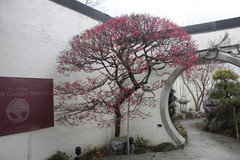
    Flowering Apricot is the one which features prominently in Oriental art such as silk screens and lacquerware. This small tree blooms in winter and has fragrant flowers on bare branches. Here is 'Kobai' and it takes careful pruning to keep it this small.

    My [THREAD [(https://www.houzz.com/discussions/prunus-mume-flowering-apricot-dsvw-vd~5150078?n=11)on flowering apricot has more about these shrublike trees.

  • 8 years ago
    last modified: 8 years ago

    Using the plaque visible to the left I was able to find out where the preceding photo was taken.

    https://www.bonsai-nbf.org/chinese-collection/

  • 8 years ago
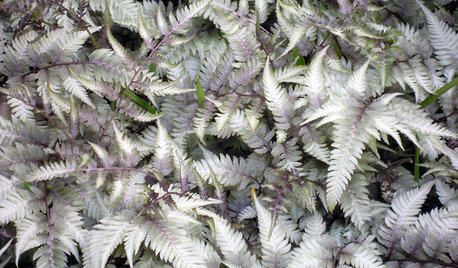
    Thank you for your advice and tips. I'll see what I can find. I'll probably get a couple of red small maples, since I already got one from before. And something green in front of them. The Japanese blood grass look amazing, but I think it's banned in Norway due to spreading into the wild.

    I have one question about rocks in Japanese gardens - are the shapes mostly rounded or sharp? I want to replace some rocks with the three small shrubs at the front left. A big, a medium and a small one.
  • 8 years ago

    Imo pinus thunbergii is a must for Japanese gardens. I would suggest pinus thunbergii 'kotobuki' as it is a dwarf and will never take over your garden. Plus you can always prune your pines to keep it small. Azaleas are also a very popular choice for Japanese gardens. I personally prefer azaleastrum kaempferi 'johanna' stunning reddish blooms. Very hardy compared to other azaleas as well. Clerodendrum trichotomum would be nice if you're looking for something unusual in your garden. White flowers followed by colorful fruits. Though it may get big overtime and if you really want to stay small my last suggestion would be callicarpa dichotoma. Its mature height and width is 5x5 ft and you can always prune in early spring. Beautiful purple berries in fall..can't go wrong with that

  • 8 years ago
    Thank you. I do have one azalea and I figured out the hard way that it prefers half shade, but I moved it and luckily it survived. It's beautiful.
    I'll look up your other suggestions :)
  • PRO
    8 years ago
    last modified: 8 years ago

    some ideas: Poncirus Flying Dragon, Miyama Mae Muraski Hydrangea, Bon Bon sedum, Dwarf Buddleia, Iberis Candytuft

  • 8 years ago
    Thank you very much!
  • 7 years ago

    Thank you, Pearl! :)