Software
Houzz Logo Print
jponix

Baker seeking convection wall oven

8 years ago

I am shopping for an electric convection wall oven for a new kitchen. I read a compelling review comparing various models' performance. Jenn Air was a winner. I'm looking at Jenn Air model JJW3430DP, which wowed me in the showroom. However, I cannot get any or any positive info on Jenn Air reliability. They are the same co. as makes Kitchen Aid and KA is not the best for ovens. My second choice is a GE oven, probably the Profile series.

Any bakers have experience with a great convection oven that precludes rotating pans during baking? I'm making cookies, breads, bagels, cakes regularly. Thanks.

Comments (13)

  • 8 years ago
    last modified: 8 years ago

    Julia, do you have convection now?

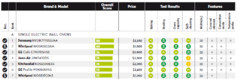
    is this the article you are talking about?

    https://blog.yaleappliance.com/best-convection-wall-ovens

    Julia PoNix thanked wekick
  • 8 years ago
    I went with Miele (30” convection, m touch). I love the oven for many things, but cookie trays have been a bit of a disappointment. I was hoping to not have to rotate trays but to get even results I find I still need to rotate.
    Julia PoNix thanked charpell
  • 8 years ago

    Wekick: Yes, it was the Yale Appliance tests that further swayed me towards the Jenn Air. I do not have a full sized convection oven now. I don't have a real kitchen as yet.

    The article made me think about having two fans. I doubt the GE has dual fans.

    Charpell: Good to know about the Miele. I had Miele appliances in my last house, but not an oven. Someone else told me she got the Kitchen Aid convection and has to rotate trays with it as well. If the high end ovens don't get you all the way there, I have serious doubts that the GE will cut it.

  • 8 years ago

    If you have not used a convection oven, one of the things that is oversold, to put it politely, is that you can evenly bake everything on multiple racks and never rotate a pan and that that the third (Euro or True) element allows you to do this.


    The person who wrote the Yale article makes some very questionable statements. I would disregard just about everything they wrote about heat transfer. These are the definitions of three types of heat transfer that take place in an oven.


    http://coolcosmos.ipac.caltech.edu/cosmic_classroom/light_lessons/thermal/transfer.html


    Every oven uses convection. An example is the air that is heated by the element at the bottom rises, hits the bottom of the pan and flows around it transferring heat to the pan and the exposed part of what you are cooking. It cools as it rises and flows back down. Some air will go out through the vent. By adding a fan, you change the pattern and speed of the airflow. This increases the rate of heat transfer where the current hits something. Radiant heat comes from the elements but also from the sides of the oven and is why it is important to have an oven well preheated. It does not surround food and can be blocked by anything you put between the source and whatever you are cooking. Most ovens manufactured now block a lot of the radiant heat from the bottom element by hiding the bake element. Once the heat hits the pan, heat is transferred by conduction to whatever you are cooking. By adding the fan, you are not going from radiant to convection cooking. You are just changing the convection part. By disrupting the convection that occurs in an oven by creating a different pattern with a fan you change the way heat gets to what you are baking. Increased air flow and heat transfer are drying to the surface of what you are cooking, which inhibits starch gelatinization, slowing rise on cakes and similar and promoting browning. If you have too much of a straight line flow, you can make hot spots, especially if you add a heating element by the fan. A faster speed makes this worse. Manufacturers try to break this up by having reverse air flow, baffles, dual fans and fans that stop and reverse every few minutes.


    When you do an "experiment" to show what effect the oven has, you first set up a standard method and control as many variables as possible so that the only the oven changes. There was no attempt to do either one of these things.


    -They used different recipes. It looks like at least three or four different recipes. The amount of sugar, moisture, fat and protein can all change the way the cookies brown. If you use a commercially prepared product, there might be things added to keep baking results consistent. The cookies are also different shapes and sizes.


    -The cookie sheets are different. Aluminized steel, bare aluminum and nonstick aluminum are also going to change your results. The size of the lip or even the parchment paper can block airflow which can change the results and has nothing to do with the oven.


    -They do not tell you what modes were used. Some of these ovens have more than one mode that could be used for cookies. It would be helpful to compare convection bake to standard bake to all convection. Some ovens have even more modes.


    -No confirmation of temperatures with any independent thermometers. It would be interesting to see some temperature mapping with standard bake compared to the convection modes. I would like to know how much the temperature varies from the set temperature.


    -Where were cookies placed on the rack? The Wolf M series has several complaints about foods placed on the sides of the oven because the tower fans creat strong airflow on the sides producing much faster browning. Were the cookies baked on different sized sheets? This needs to be explained and consistent.


    In their position as a dealer it would be helpful get some information about the ovens that is not readily available to the consumer. What are fan speeds? What type of baffles are used? She noted "cold spots" in front of the fan, but did not mention direction of airflow or if it reverses.


    This person states "I have spent the last 8 months baking in all of the ovens from every brand"


    Not even close! What about Monogram, Bosch, Electrolux & Frigidaire, Kitchenaid. GE, BlueStar, Capital, Whirlpool...


  • 8 years ago
    Given that convection cooking is better or worse depending on what it is you have in the oven, I was just wondering, is the convection something that can be turned on and off typically?
  • 8 years ago

    I am unhappy with my Bosch convection so don't choose that.


    Julia PoNix thanked mom2sulu
  • 8 years ago

    Janet, yes typically on and off and in some it can be fast or slow fan speed.

    mom2sulu, what don't you like about your Bosch convection?

  • 8 years ago

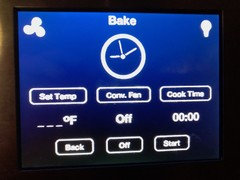
    Janet, Yes, you can select whether to have it on or off, and you can turn it on or off at anytime during the cooking by touching the fan icon.

  • 8 years ago

    wekick,

    My Bosch has never really baked well--uneven baking. And now the convection is turning off and on/quitting on me. It is only 3 years old and already I am going to have to have it repaired.

    Julia PoNix thanked mom2sulu
  • 8 years ago

    mom2sulu, I had a Bosch convection oven in my condo that was wonderful and stuck with Bosch for my new build. I haven't tried the oven in my new build yet.

    Now having said that, I found I preferred baking without using convection in most instances. Maybe I'm a dinosaur but without convection, I know exactly how long and what temp to bake at.

    I do prefer convection for most everything else I cook in the oven though.

    Julia PoNix thanked cpartist
  • 8 years ago

    I bought a Bertazzoni double oven and I’m thrilled with it. Nice, even baking and it performs like a high end oven should. It has quadruple pained glass doors and dual fans in both ovens. Both ovens are convection, which isn’t the case in most of the ovens - even the high end. It was 2k.

    Julia PoNix thanked Heather
  • 8 years ago

    consumer Reports April 2018

    Julia PoNix thanked badabing2