Software
Houzz Logo Print
webuser_81368426018

Landscaping assistance

8 years ago
last modified: 8 years ago
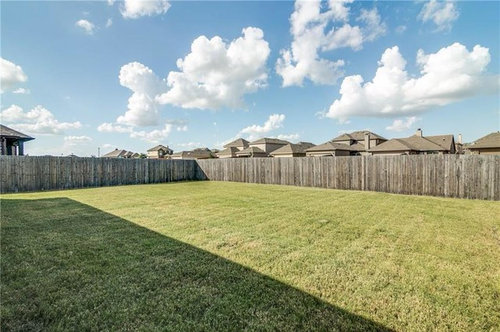
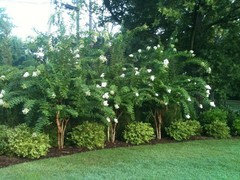
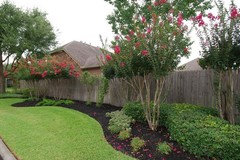
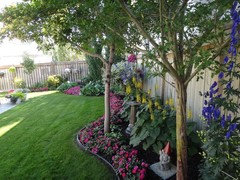
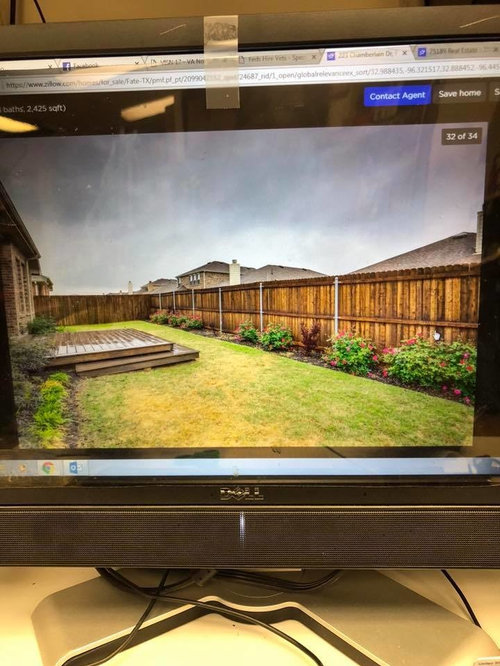
I want to take my back fence line and turn it into a garden bed. I live in royse city TX so pretty clay soil and Bermuda grass. What is the best way to edge out the back fence line and get the soil ready to plant roses other flowers and trees there? also there are three sprinkler heads there. i read that they could be made into a drip s? or just cap them? sorry lots of questions. Pictures of an idea of what im trying to accomplish.


?

Comments (17)

  • 8 years ago

    I also have heavy clay and bermuda grass. I have made MANY mistakes already trying to do this same thing piecemeal. I have a couple of beds that look nice against the fence right now, but a couple that are a disaster.

    I'm planning to use a manual garden bed edger. One of those half moon shaped things that looks like a weird shovel. I'm going all the way down the fence and trenching it. Because the bermuda grass absolutely will invade your beds. I used plastic edging and it hasn't helped much.

    Then I'm going to kill all the grass up against the fence with roundup. No survivors.

    After that I'm not sure. I want to put down landscaping fabric, but I'm not sure if I should do that before or after planting.

    I'm following this thread to see what good advice you get.

  • 8 years ago
    Looks like we are in this together!!!!
  • 8 years ago

    I work for a landscape company and we would dig it out the grass with a "flat point" shovel and then rake the bed clean with a "hard" rake. Stripping a bed is one of the most physical tasks that we do. If you don't want to dig it out you can always cover it up. Use 2 layers of cardboard covered with 4" of mulch and then wait for the grass to decompose before planting. If your clay is very heavy you might want to bring in top soil to cover the cardboard and make raised planting beds. That way you wouldn't have to wait for the grass to decompose to plant.

    We convert high flow irrigation to drip irrigation all the time. Its not hard to do. Someone at your local irrigation shop should be able to supply you with the parts needed. You would not even need to glue any pipe. We prefer the brown pipe with pre installed inline drippers. Netafim is the best but Toro and Rainbird also make good products.

    The good thing about this kind of work is that you can beautify your yard and get in great shape at the same time.


  • 8 years ago
    Too bad you don’t live in DALLAS I’d be calling you!!!! That’s awesome thanks.
  • 8 years ago

    Too bad you don't live in Gainesville Florida. Our local county has a program called Turfswap where they pay half of the cost of removing turf and high volume irrigation, replanting and mulch.

    You live in an area that has tremendous rose growing support and wonderful rose nurseries. Good luck with your project.

  • 8 years ago

    Naaahhh a GA Bulldog could never live in Gainesville, FL!!! Lol that’s crazy. I wonder if they do something like that. Yeah we are actually going to Tyler to this weekend to check out a rose nursery. Super excited!!! Thanks for your advice!!

  • 8 years ago

    Oh no, a Bulldog?!

    Nobody give any advice!


  • 8 years ago

    ‍♀️

  • 8 years ago
    Crape myrtles and goldmould spirea
    K Rod Zone 8 thanked Irene Morresey
  • 8 years ago

    I hope to visit Tyler this weekend too, maybe I'll see you there. I'm visiting my daughter in Houston, it's a short visit, Still, maybe I can slip away.

    Like Bart_2015, I'm not a fan of landscape fabric either. Bermuda growing through landscape fabric is much hard to weed than Bermuda in soil.

    I also do not use roundup.

  • 8 years ago
    last modified: 8 years ago
    Your garden looks like it will be lovely. Please post pics at the rose forum when it's finished.

    Although I don't have a problem with Bermuda grass in MA we do have some very tenacious weeds including thorn bushes, wild violets and poison ivy. Cut the grass as low as possible and cover with a thick mat of newspaper or cardboard. Overlap a bit so there are no open seams for the grass to sneak through. The grass can't perform photosynthesis, which feeds the roots system without light and will die. Put a thick layer of mulch over the newspaper to keep it in place. If it's windy out wet the paper after placing it down to keep it from blowing away. I was able to kill several thorn bushes on a hillside using this method. The smothering method works. So much easier than digging up the grass. The roots will also die and be easier to dig through in your planting holes. This way you only need to dig the grass up from the actual planting hole not the whole length of the fence. And it is very easy to dig through the newspaper. As a benefit the newspaper also creates a barrier between the soil and the mulch which robs the soil of nitrogen as it decomposes.

    JC- please no round-up. The toxicity is possibly damaging to children, the user, and is damaging to aquatic and amphibian life not to mention that it poisons the soil for months. Roses are expensive, should they be planted in a toxic soil that will kill them?

    sharon

  • 8 years ago

    Mulch only uses nitrogen right at the soil surface, so “robbing the soil of nitrogen” isn’t an issue unless one is mixing it below the surface.

    I think from other posters’ comments that with Burmuda grass, just cardboard and mulch doesn’t do the trick and smother it. It needs removal before you can plant so plan to strip it out and keep a well maintained edge so that it doesn’t creep back in. If your neighbor has grass against the fence, you will need to have a buried edging at the back of the bed as well. After the grass is gone, then do the cardboard and mulch. Be sure that it doesn’t rest against the fence to avoid rot issues. You can do this prep work now and then plan to plant in the fall when the weather is cooler.

    The bed in your inspiration photo is quite shallow and too close to the fence to allow maintenance. Be sure to leave at least a foot at the back of the bed to give space for maintenance and so that the wood has a chance to dry. Your yard is deep enough so that for this to look really good from the house, make it at least 6’-8’ deep (though deeper is fine) and allow for a mix of shrubs and groundcovers along with some flowering perennial plants. Some taller plants will be a good idea. Keep in mind any water restrictions that are likely and choose plants that will do fine if there is an irrigation ban, ones that will be drought tolerant once established.

    K Rod Zone 8 thanked NHBabs z4b-5a NH
  • 8 years ago

    Yeah we got the buried edging because there is an easement behind the fence and it doesn’t go into the ground so it will leave a massive gap after the sod is removed. I wanted to plant a couple fruit trees in the corners and shrubs along with the roses just have to get full sun tolerant plants because there is no shade back there at all. I feel like i need a master class lol. There’s so much to learn.

  • 8 years ago

    "not to mention that it poisons the soil for months. Roses are expensive, should they be planted in a toxic soil that will kill them?"

    RoundUp/glyphosate does not "poison" the soil for months!! It actually breaks down pretty rapidly once in contact with soil, which is why one can replant a treated area almost the next day!! And it certainly does not make the soil "toxic".....that is not how it works and planting a rose in an area that was previously treated with glyphosate will NOT kill it.

    K Rod Zone 8 thanked gardengal48 (PNW Z8/9)
  • 8 years ago
    last modified: 8 years ago

    You are so right, Babs, about just putting cardboard over existing Bermuda not working like it does with non-invasive grasses. Putting cardboard over it to start, without digging it out, can create a lot more work later (I tried it as a newbie gardener). Ime, it just made the bed harder to work around during initial planting — with Bermuda still popping up around it and harder to dig out as it spread under the cardboard, as well as possible seed left over. (Bermuda spreads by seed, rhizomes, and stolons, over and under.) And your last paragraph — spot-on.

    I’ve been doing this a looooong time (beds in Bermuda and clay yards) and it’s literally impossible to get ALL of the roots out initially. Even the popular method of spraying with Round-Up and covering with black plastic in the heat for a couple of weeks ... it works temporarily, but not any better in the long run. No reason to spend time and money that way. (Plus, I don’t like to leave even dead Bermuda in a bed, so I still have to scoop it out. But that’s just me.)

    I dig the border edge I want, then dig out the grass. It’s not an easy job. Once it’s dug out, I break up the soil — if it’s rocky, caliche, gumbo, etc, I mix a bit of amendment in, but if it’s none of those, I don’t. I plant whatever and then put layers of newspaper over the unplanted areas. No landscape fabric, trust us. It’s a total nightmare with Bermuda and other weeds (especially Nutsedge). Mulch over everything.

    The Bermuda will want to creep back in (or pop up from deep, existing roots) .... I use Grass B Gone to spot treat it, it works great and won’t harm other non-grass plants. If you prefer not to use poison, just dig out the grass as it comes. If you stay on top of it, after a while it’s easier to deal with. Add more newspaper and mulch as needed. The biggest challenge for you will be the fence side, if your neighbors also have Bermuda. I have used metal/other edging along fence lines ... it’s not fool-proof, but helps.

    Good luck! Hope you’ll update us with “after”. :)

    ETA: If you don’t mind waiting, it’s easier to dig the grass out during winter (before March is best), while it’s still dormant, and you can get a head-start on it. One more tip regarding if you ever want decorative edging: I love rock borders, but so does Bermuda (getting in through gaps). We put the stones inside the metal edging for looks. Easier to weed-eat, too. Some beds, I just use metal edging alone, and at one house, we mortared the stone. Just as long as you have something continuously solid.

    K Rod Zone 8 thanked User
  • 8 years ago
    last modified: 8 years ago

    Valrose, I’m not sure where in Houston you will be but I’m pretty sure Tyler could be a several hour drive from Houston. I think it’s like a 3 hour drive and if you can go it would be totally worth it!

Sponsored
Peabody Landscape Group
Average rating: 3.5 out of 5 stars8 Reviews
Columbus' Reliable Landscape Design & Contracting