Software
Houzz Logo Print
maxwell_sarles

Possible Citrus Black Spot?

8 years ago
Hello,


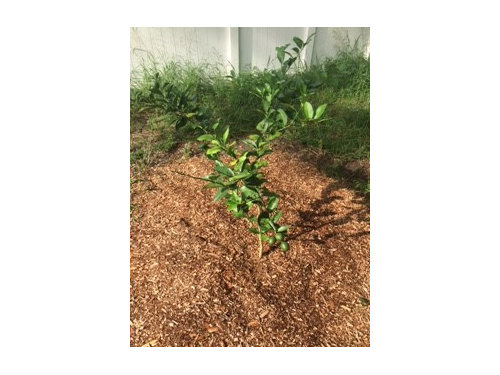
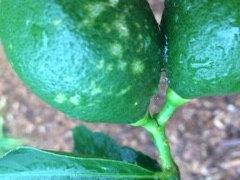
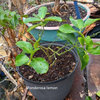
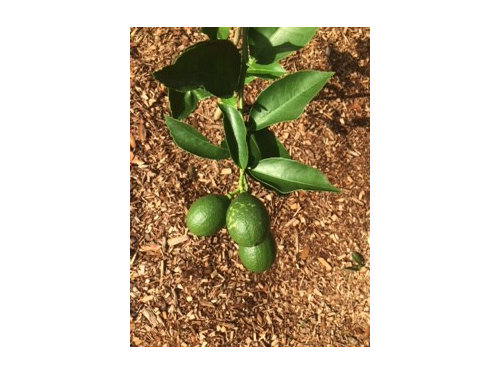
I planted my first citrus tree about 4 months ago and it was doing well and developed some fruit however now some of the fruit 2 out of 6 is developing abnormalities on its skin. I am just wondering if this is the beginning of citrus black spot. The tree has also been attack by leaf miners recently so I have spray it with Spinosad.


Comments (19)

  • 8 years ago

    I can't tell from the pictures. You need a closeup. Have you looked up blackspot on Google?

    Maxwell Sarles thanked Dee
  • 8 years ago

    I could take a closer picture... The black spot pictures ive seen on google only picture mature fruit so its hard to tell.

  • 8 years ago

    Hard to see clearly, but it certainly is not citrus black spot.

    Maxwell Sarles thanked Silica
  • 8 years ago

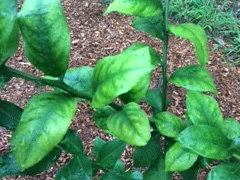
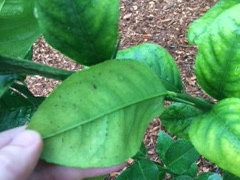
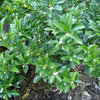
    Thanks for the input. The tree has seemed to be plagued by pests pretty much since I put it in the ground. So I wonder if maybe thats it? There are some leaves with black spots on the bottom which I think are left by insects that are causing the leaves to yellow so maybe thats related? I included a couple more pictures. Excuse the rain drops.


  • 8 years ago

    Are those hard black dots that don't rub off? If so, I had them last year on my leaves. I came to the conclusion that it was caused by a fungus or bacteria from decomposing leaves from my gutters. My trees were positioned right under my rain gutters which have a tendency to overflow at times. This year I pulled the trees away from the walls and no problems.

    Maxwell Sarles thanked Dee
  • 8 years ago

    Are you fertilizing your tree? i ask because it has some sort of nutrient deficiency - possibly magnesium. Fertilizer will take care of that.

    Maxwell Sarles thanked Vladimir (Zone 5b Massachusetts)
  • 8 years ago

    Silica, thank you for correcting me.

    Maxwell Sarles thanked Vladimir (Zone 5b Massachusetts)
  • 8 years ago

    Hi Denise yes they are hard and dont come off so maybe its the same problem you encountered. Unfortunately its in the ground so cant do much about moving im just glad to hear its likely not a virus. And I resisted fertilizing the tree because I had heard that doing the too early after putting it in the ground could cause issues. I recently fertilized with a 6-4-6 fertilizer so hopefully that takes care of any deficiency.

  • 8 years ago
    last modified: 8 years ago

    Maxwell, during the first few years, apply fertilizer to young trees to stimulate vigorous growth of leaves and branches that will become the framework of the mature tree. Beginning about 2 weeks after planting, frequent light application of fertilizer should be made approximately every 6 weeks. Avoid burning the roots with high levels of soluble fertilizer applied all at once. Fertilizer should not be applied between October 1 and February 1.

  • 8 years ago

    'Fertilizer should not be applied between October 1 and February 1.'

    That is highly dependent on where one grows one's trees...

  • 8 years ago

    Nik, I suppose Maxwell is in the USA. Even in Florida ( the warmest state of the Union) winter fertilizing in ground trees is a no no.

  • 8 years ago
    last modified: 8 years ago

    I have no reason to doubt this. I have no clue about Florida weather. However what I meant to imply is that while temperatures support growth AND there is no fear of freezes, fertilisation can continue adjusted to the prevailing conditions and degree of fruit maturity. Of course all this really refers mostly to the provision of N.

    Maxwell Sarles thanked nikthegreek
  • 8 years ago
    last modified: 8 years ago

    Maxwell,

    I'm curious about how effective spinosad is against CLM in your area. Over here it is not really worth it considering the price. You either use neonicotinoids or you just let it be, trying to manage the timing of flushes via controlling nitrogen supply.

    Maxwell Sarles thanked nikthegreek
  • 8 years ago

    Maxwell, I am not positive that was the issue. I just did some Googling and took a guess. I live where it's hot and humid so I figured it was water related in some way. It was on multiple citrus trees and I was worried it would spread to the rest of my unaffected trees. The affected trees were only on one side of my patio which helped with my diagnosis.

    My suggestion is to take a leaf sample in to your local ag extension office and let them diagnose it for a definite answer. I found it on my leaves last fall so I am hoping it isn't going to come back. If it returns, I will be doing the same.

    Maxwell Sarles thanked Dee
  • 8 years ago

    Nikthegreek,

    Ya im in florida the Spinosad seems to be working but I only started spraying last week so cant say for sure yet. The tree is developing a bunch of new branches and leaves which I know the leaf miners tend to go for so Ill find out if its effective soon I guess.

  • 8 years ago
    One of your pictures appears to show an Iron deficiency. Distinct dark green veins with the rest of the leaf lighter green. I asked the owner of the greenhouse where I buy what his secret sauce is for Citrus. His answer was IRON. He said they experimented with epsom salt and didn’t find it very helpful. The role of iron in plants is to help produce chlorophyl. Without it the plant lacks oxygen and wont be green. Also check you PH and make sure it is in the correct range for your root stock. If PH is to far off the plant can’t use available iron or other nutrients correctly.