Software
Houzz Logo Print
blueberrybundtcake

Adding veggies and flowers to a small backyard

8 years ago
last modified: 8 years ago

Hello,

I was hoping you all might be able to help with some advice for a small backyard. The yard is located in Washington D.C.. The owner and I were thinking that they would be adding an easy-to-maintain raised bed with some flowers and veggies that small children could help with. Veggies could include anything really (tomatoes, peppers, squash, lettuce, carrots, etc.), though the more kid-planting/tending friendly the better. Annuals might be more fun for the kids to plant, but some perennials wouldn't be out of the question, so long as they're easy and not too delicate. We're open to other suggestions, too, but that's what we had in mind.

Veggie garden people, what's your experience with making mixed beds for veggies and flowers? What works best in terms of tending and harvesting without damaging the flowers? Flowers don't need to be edible, though I'd be wary of things have parts that look edible but aren't.

Main goals:

1) add a raised bed for flowers/veggies

2) keep backyard mostly grassy for kids to play

3) avoid difficult to mow arrangements

4) make it attractive yet functional

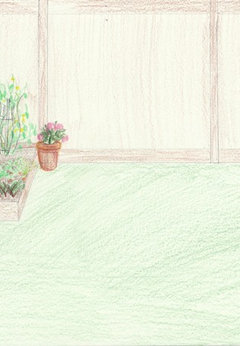
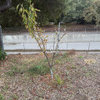
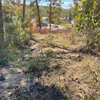
Overhead view of the yard:


And a diagram of the space (with dimensions):


The southeast corner is the sunniest spot in the yard, and there are sprinklers set on a timer for the grass.

We'd love any suggestions for where to place the raised bed and how to shape it.

Comments (18)

  • 8 years ago

    Put flowers in large free standing pots unless they are edible. With little kids, it’s just easier to avoid mixing edible and nonedible.

    If the SE corner is the sunniest area, you want the veggie bed there unless you are mainly growing greens which may be OK with some shade. If you can grow some veggies trellised up a welded wire fence on the north side of the bed, that may let you fit more in.

    The sprinkler that works for the grass won’t work for the veggies, but I don’t know enough about irrigation to know how it would need to be modified, but there is an irrigation forum.

    If the soil is acid, you could replace the row of shrubs with blueberry bushes, though they might need netting on a frame to keep the birds from eating them. I don’t know if you would need Northern or southern blueberries in DC.

  • 8 years ago

    They might be able to set up a soaker hose; I think they've done that before along the west edge.

  • 8 years ago

    Agree with keeping the flowers and vegetables separate - both for kid safety and ease of management. Not only do they very different nutrient and watering needs but you'd have some real harvesting issues. Babs had a good idea with putting the flowers in pots.

    I assume since it is so late in the season that this year will be devoted to getting bed ready and amending the soil as needed in preparation for planting the vegetables next spring.

    With the garden going up right next to the fence in the corner you will want to consider leaving a space between the fencing and the garden for both access and to keep the fence from rotting due to all the moisture.

    Dave

  • 8 years ago

    So I drew up an idea, if anyone has any suggestions or comments, it would be appreciated.

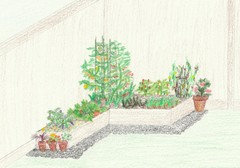
    The idea is that this would be about 3' deep and 8' long (about 1' high bed). The bed was drawn in to scale ... I can't guarantee I kept the plants to scale; they're more approximate. (Examples: The onions are shown more or less in their own space ... they would be more in between other plants. Squash plant likely to take up more room than drawn.)

    Close up:

    Plants depicted:

    Tomato, nasturtium, eggplant, peas/beans,

    nasturium, onions, peppers, carrots,

    strawberries, squash, onions, beets

    Pot: large flower/peony?


    Comments:

    I picked nasturtiums because they're an edible flower, and my mum reminded me that she used to plant them with me and my sister when we were young.

    Peas/beans might be able to fit one then the other in the DC growing season, or they'd pick one each year.

    I tried to keep in mind plants that do better or worse together: I made sure to keep the beets away from the beans, in case they want to do pole beans, and I made sure to keep the onions away from the peas/beans.

    Squash is a general term. I think she's done zucchini, but maybe patty pan or cupcake squash. (I was thinking a small variety ... if they pick something large, they'd probably need to skip something else.)

  • 8 years ago

    You should keep both flowers and veggie separately. You can plant flowers in the big pot and place them in a row and plant veggies in a different corner. This will provide sufficient space for kids to play.

  • 8 years ago

    I'm a couple of miles outside the DC line, so here are some general observations:

    Spring is very short here-- the weather goes from cold to hot very quickly -- so cool weather crops can be iffy even if you try to shade them. I gave up on lettuce, peas, etc. The only early crop that works are radishes. These are quick and fun to grow with kids.

    Warm weather crops love it in DC! Tomatoes, eggplant, squash, some peppers (banana types), cucumbers and beans do great. However, diseases are rampant in our humidity. Resist the urge to get heirlooms and go for disease-resistant hybrids instead.

    Blueberries and raspberries do great here. Strawberries -- not so much. We often get tons of rain in May and June, and they end up tasteless and moldy. Figs can also be grown here, especially in protected areas in the city.

    Good luck with your project!

  • 8 years ago

    I will be a dissenting voice on keeping flowers and veggies separate :-) There are many, many types of edible flowers, most of which are easy to grow and would appeal to kids - nasturtiums, calendula, violas/pansies, sunflowers, dianthus, borage, daylilies, etc. Many lists available online. What you will have is a potager or mixed edible/ornamental garden. Much more attractive than just a veggies garden!!

    I would keep the veggies simple and with a short harvest....kids lose interest quickly otherwise. Cherry tomatoes are typically very early to bear fruit and are tasty right off the vine. Teepees made with pole beans or snap peas are always kid popular. And radishes and cut and come again greens are very fast growers and will keep the kids interested. And you need at least one pumpkin vine!! If space is an issue, go with one of the smaller sugar pumpkins rather than the big jack'o lantern type.

  • 8 years ago

    I have three young kids and they have friends over frequently who go through the garden. They don’t go walking around accidentally eating flowers.


    in terms of excitement of harvesting, ease of growing, and kid friendliness we‘ve done the best with the following:


    dahlias

    zinnias

    sunflowers

    cherry tomatoes

    sugar snap peas

    carrots

    bush beans


  • 8 years ago
    last modified: 8 years ago

    I always liked a few short mostly yellow marigolds among the tomatoes because this seemed interesting and attractive.I am not a follower of any companion planting cult.

    I like to plant the rooting-end of a few green onions from the grocer in back of a border of flowers because it was mostly just interesting.

  • 8 years ago
    last modified: 8 years ago

    So I've done a second version based on discussion with the owner and comments here.

    The path/border would be patio pavers, to give somewhere to walk and make it so that they wouldn't have to mow all the way to the bed; it also gives a place for pots. This would be present in the rectangle format, as well.

    In this version, the corner is about 2'x2' with a 4' branch along the back fence and a 3' branch coming forward.

    I have a number of the same plants in there still, but a few modifications:

    tomatoes in the corner, with onions poked in around them

    peppers and beans across the back

    beets and carrots and radishes in front of them

    sugar pumpkin plant in front of the tomato

    eggplants surrounded by marigolds on the north end

    I added a few more pots to the end of the L; they could be flowers or herbs. I drew bronze fennel, nasturtiums, and tri-color sage. (I had been thinking maybe pineapple sage, but then I put the fennel in the pot by the fence, and I wasn't going to erase it.)

    Flowers might get mixed in more, but I'm trying to depict veggie options in small space at the moment ... she may decide she'd like more flowers and less veggie. I think it's also easier to think about replacing a veggie with a flower than the other way around, since veggies tend to have more specific space requirements to be practical.

    I love the idea of bulbs for spring interest!

    Festiva Maxima, thanks for the feedback on what grows well in the DC area ... being from MA, I'm only sort-of familiar with how well different things will grow there. She did grow some veggies last year, but one year doesn't really make a trend.

  • 8 years ago

    I think this second drawing is much better than the first one. But I feel it is still too over-crowded.

    By mid-season it will be an over-grown jungle with the tomato and beans shading out everything low growing and the pumpkin vine will have crawled way out into the yard. And it doesn't take into consideration the very different nutrient and water needs of the different vegetables. For example, root vegetables and beans won't tolerate all the nitrogen the tomato and eggplants need so you will end up with bushy tops and little production and the peppers can't handle the high moisture levels needed by the root vegetables

    There are simply too many things on the list for in the bed for such a small space. Needs more things moved to pots outside the bed and much less things IN the bed IMO.

    Dave

  • 8 years ago

    I agree that it looks very crowded. My advice is to focus on crops that are better when homegrown (tomatoes) or gourmet/not available in stores (French fillet beans). Pumpkins are fun to grow but you simply don't have room for it.

    Also, please keep in mind some of the plants on your list, e.g. carrots, are not easy to grow with the kids. The seeds are tiny, they take long to germinate, require careful thinning, keeping the soil consistently moist, etc. I know harvesting them is fun, but getting to that point is not going to be low-maintenance.

  • 8 years ago

    Also, remember that certain things, like beets and kale, can be grown over the winter.

  • 8 years ago
    last modified: 8 years ago

    I drew the pumpkin in due to suggestion from members here. In my first rendition, I had been thinking patty pan or cupcake (another compact, small squash), and I probably continued to think that when I added it back to my second rendition despite drawing sugar pumpkins; a grid design in between omitted the squash plant in the L and had that length one foot shorter.

    I used square foot gardening assumptions in my layout, combined with my experience, which is almost entirely container based (so small).

    Here are my charts:

    Grid 1 (rectangle plan):

    ...... 1 ... 2 ... 3 ... 4 ... 5 ... 6 ... 7 ... 8

    1 ... T ... T .. N ... E ... E ............ P/B .

    ........................................... P ...............

    2 .. T ... T . O .. Sq . Sq ......... C ... C

    ..... N ... O O ................... P ...............

    3 . St . St . St .. Sq . Sq . O ... B ... B

    Tomatoes get 1-4 sqft each (depending on type and support), eggplants get 1 sqft each (so actually allotted space for 2), peas and beans can have about 8-9 plants per sqft (I counted them as taking 2 spaces), strawberries can have about 4 plants per sqft, peppers get 1 sqft each, carrots and beets are 10-16 per sqft, and then squash I'm pretty sure will take whatever it can get, but wants at least a couple sqft. The onions and nasturtiums weren't really designed to have their own space ... though after subtracting off everything else, there would be about 3 sqft for them and open space throughout the garden.

    Grid 2 (L plan 1):

    ...... 1 ... 2 ... 3 ... 4 ... 5 ... 6

    1 ... T ... T ... P ... P .... P/B .

    ................. O .........................

    2 .. T ... T .. B . B ... C ... C

    ......... O ....

    3 .. E ... St

    4 St .... St

    Same allotments as above, though only one eggplant space, and the onions don't have extra space to fill, they're just in there.

    Grid 3 (L plan 2):

    ...... 1 ... 2 ... 3 ... 4 ... 5 ... 6

    1 ... T ... T ... P ... P .... P/B .

    ................. O .........................

    2 .. T ... T .. B . B ... C ... C

    ......... O ....

    3 .. S ... S .

    4 . E ..... M

    .......... E ....
    5 M ...... M

    This one has the squash back in there, as discussed above. Eggplants are jammed two to the space, but I intended them to be Gretel and Fairy Tale, which are dwarf varieties, and it's just marigolds around the edge, so they could be skipped if it was really too tight.

    So there's the logic behind my madness ... I'd love to see some other suggestions that I could present along with these grids/pictures.

  • 8 years ago

    You didn't say what kind of strawberries. I don't think a small planting will provide very much at all. If you want strawberries for nibbling, maybe alpine.

  • 8 years ago

    "I used square foot gardening assumptions in my layout"

    Ahh that explains a lot. I must have missed it if you mentioned that before.

    SFG is totally different approach to gardening than what is practiced by most home gardeners (thus its own forum). And it has its own guidelines and over the years, many suggested modifications of those guidelines that have been made by those who tried it (myself included).

    But it also has its problems and limitations and one of those is the intensive amount of extra work required to make it healthy, productive, and worth the time and effort required.

    Most find that in the end that less plants and more space per plant = less problems and more production.

    If you haven't already I suggest some reading over on the SFG forum here.

    Dave

  • 8 years ago

    Oh, I didn't know there was a square foot gardening forum ... I guess I must have missed that one on the list. I'll have to poke around there some.