Software
Houzz Logo Print
saypoint

Soil amendments for small beds

Hmm. Thought I posted here last night but I don’t see it. Anyway, I have an area where our contractor removed our lovely topsoil while doing work on patio, septic and driveway. When they came to do the finish grading, the soil they brought was less than lovely. Now I am trying to plant in the smallish planting areas around the patio. I recently moved and don’t have access to compost yet. My town has composted leaves but I’m concerned about chemical residues/junk and I don’t have a truck anymore. That leaves buying amendments in bags. The areas are relatively small, I wouldn’t need much.

I’ve never had to buy amendments from a store. :o/ What’s the best option? Black Cow? Peat? Garden Soil? Something else? Thanks.


Comments (10)

  • 8 years ago

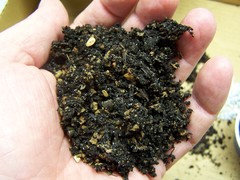
    Ok thanks. My soil went from sandy loam to rocky sand. :o(

  • 8 years ago
    • Black Cow? Yes, that is aged manure and compost.
    • Peat? No - not that great for water retention.
    • Garden Soil? Not the best - there is no real definition for "garden soil", but it is usually composted sawdust mixed with topsoil.
    • Something else? Composted leaves or leaf mould is the best stuff ever. Of course if you have deciduous trees then you can make your own over a couple of years and you should. You can also often find a bagged product called "Leaf-Gro" that uses primarily leaf mould. Aside from that, you are looking for compost and aged (composted) manure.
    Saypoint zone 6 CT thanked Richard Brennan
  • 8 years ago

    You so have my sympathy. I experienced the same soil switcheroo and it's caused me a lot of heartache. Your lovely topsoil, like mine, got mixed with junk and resold.

    Saypoint zone 6 CT thanked annpat
  • 8 years ago

    Fortunately, much of the area is now under the driveway, walks, lawn (with septic), and patio. The sodded portion seems to be doing well so far, installed last fall. There are three smallish planting beds that are left with crummy soil to plant in, at least it’s not a big area to deal with.

  • 8 years ago
    last modified: 8 years ago

    They really should have piled YOUR topsoil up and reused it rather than bringing in crap. Someone else got yours. Water under the bridge now I guess.

    With store bought compost you pretty much get what you pay for. Examine the product (find a torn bag or make a tiny hole if you have to). Does it have soil in it, does it smell earthy vs. bad, is it fully composted or are there pieces of wood etc. in it? I often get more than one type and blend them to compensate.

    One of the best I have come across is Cotton Burr compost, it has high organic matter and nutrient content. Costs a bit more than the cheap stuff. You may have to be near cotton growing parts of the country to find it.

    It's all regionally produced so the brands I see in my store may not be the same as yours, and even if they are, the contents of any two bags may be quite different.

    Saypoint zone 6 CT thanked toxcrusadr
  • 8 years ago

    Yes, it would have been nice if they had saved my topsoil, they took it away in multiple dump truck loads as I dabbed at my eyes and waved my handkerchief. There wouldn’t have been a place large enough to hold it, but you’d think they would at least bring back something decent. And pile it on a bit thicker. I hate them.

  • 8 years ago

    What to do depends on what the soil needs. The answers to these questions will help make those decisions.

    How much organic matter is in the soil?

    How well does the soil drain? How well does the soil retain moisture?

    What does the soil smell like?

    What kind of life is in the soil?

    Perhaps these simple soil tests may bne of some help.

    1.Testing for organic
    matter. Put about 1 cup soil (enough to fill the jar to 4 inches) in
    a clear 1-quart jar, with a tight fitting lid. Fill that jar with water and
    replace the lid, tightly. Shake the jar vigorously and then let it stand for 24
    hours. Your soil will settle out according to soil particle size and weight.
    For example, a good loam will have about 1-3/4 inch (about 45%) of sand on the
    bottom. about 1 1) Soil test for organic material. From that soil sample put
    enough of the rest to make a 4 inch level
    inch (about 25%) of silt next, about 1 inch (25%) of clay above that, and about
    1/4 inch (about 5%) of organic matter on the top.

    2) Drainage. Dig a hole 1-foot square and 1 foot deep and fill that
    with water. After that water drains away refill the hole with more water and
    time how long it takes that to drain away. Anything less than 2 hours and your
    soil drains’ too quickly and needs more organic matter to slow that drainage
    down. Anything over 6 hours and the soil drains too slowly and needs lots of
    organic matter to speed it up.

    3) Tilth. Take a handful
    of your slightly damp soil and squeeze it tightly. When the pressure is
    released the soil should hold together in that clump, but when poked with a
    finger that clump should fall apart.

    4) Smell. What does your
    soil smell like? A pleasant, rich earthy odor? Putrid, offensive, repugnant
    odor? The more organic matter in your soil the more active the soil bacteria
    will be and the nicer your soil will smell, to a point. Too much organic matter
    can be bad as well.

    5) Life. How many
    earthworms per shovel full were there? 5 or more indicates a pretty healthy soil. Fewer than 5,
    according to the Natural Resources Conservation Service, indicates a soil that
    is not healthy.

    Saypoint zone 6 CT thanked kimmq
  • 8 years ago

    Developers do it all the time in new neighborhoods. Strip off the farmland topsoil, pile it up and sell most of it, and put back a small amount on the yards of the houses. :-\

    Saypoint zone 6 CT thanked toxcrusadr
  • 8 years ago

    If available in your area, Michigan peat, AKA reed/sedge peat is a good choice.

    My RB soil:

    Turface, sand, pine bark, reed/sedge peat ^^^


    Al

    Saypoint zone 6 CT thanked tapla (mid-Michigan, USDA z5b-6a)