Software
Houzz Logo Print
hzdeleted_1333051

Shade Tree recommendation sunset 17

8 years ago
We live in Santa Cruz CA, Sunset zone 17 - lots of microclimates here but we are closer to the foothills in the “banana belt” which gets the most sun, as the name suggests. Our lot is level and on higher ground than most areas, drains well enough but the soil is silty clayish stuff and we did have some standing water this past winter during heavy rains. It drained away within hours of rain stopping but the ground got quite saturated, so trees need to be able to withstand some wet roots seasonally. Gophers keep the ground very well aerated

We would like a medium-large shade tree for our backyard. There is at least 25’ clearance in all directions from any structures other than a wooden fence, and no septic or anything underground to worry about.

Here’s our list of considerations:

- we have a toddler so no extremely toxic fruits or leaves
- grows on faster side so we can enjoy the tree before our child is grown up! (Yes I am aware of trade offs with faster growth and limb strength - so balance here, and we can have a regular arborist maintenance)
- low litter: seasonal leaf drop fine but avoiding gum balls, spiked leaves that drop all the time (ie live oak), sticky drips, leathery leaves that drop all year like magnolia, etc. we want to sit under it and not have to clean it up every weekend
- I love the sound of rustling leaves, so that’s a bonus
- prefer interesting shaped limbs and broad spread, rather than upright symmetrical.
- doesn’t need too much babying like spraying for pests
- no fruit trees (we have as many as we can harvest)

Don’t care about:
- doesn’t need to be very low water requiring
- we don’t care if the shade is too dense for lawn - we removed almost all turf anyway to plant with natives, and the remaining turf where the tree will go is gopher-riddled Bermuda grass and plantain... if it gets shaded out (ha!) we would celebrate. We will eventually build a deck or stone dust patio or something around the tree.

Our short list so far based on the city and other gardeners’ recommendations:

- Chinese pistache
- black gum (not sweetgum with the spiky balls)
- London Plane

Thanks in advance!

Comments (18)

  • 8 years ago

    A visit to the SC Botanical Garden may be helpful. Lots of interesting trees there that you could see at their mature size.

  • 8 years ago
    Unfortunately I am not very mobile right now so visiting gardens isn’t going to work for me.
  • 8 years ago

    London plane is very fast growing but I don't know about black gum and Chinese pistache. My impression is that they are somewhat slow growing.

    I wouldn't consider London plane low litter, though. It has tough (deciduous) leaves, not leathery like Magnolias, but still take long to decompose. It also has (soft) seed pods and also drops twigs and bark.

    I suggest Ulmus parvifolia (Chinese elm) to look into. In my opinion, it satisfies many of your criteria: fast growing, low litter, interesting and pendulous limbs with broad spread (does need structural pruning when young though), disease resistant (although bark is thin and easily damaged by mechanical impact). There are different varieties: one (I don't know which) is white trunked with sparse foliage so stay away from that one.


  • 8 years ago
    last modified: 8 years ago

    The plane grows enormously and is covered with irritant hairs.

  • 8 years ago

    The London Plane around here is a perfect sized tree for our yard. There is one a few houses down and they like many streets . I’ve been under them a lot and have never noticed them being covered in irritant hairs! They are a recommended tree on several lists for our city.... nontree is “perfect” or litter free obviously.

  • 8 years ago
    last modified: 8 years ago

    Change need elm looks nice but I’ve never seen one here and I’m guessing has been wiped out by its many pests... it’s also listed as an allergy hazard (almost all trees are!).

    https://selectree.calpoly.edu/tree-detail/ulmus-parvifolia

    yes Chinese pistache and black gum (Tupelo) are fast to medium growing.

  • 8 years ago

    I like the Planetree/Sycamores in big spaces, residential settings.....go hang out with some in parks and see. Their seed balls are less annoying than the sweetgum balls you mentioned OP. Over the winter I love the attention getting bark and the big leaves amuse me also.

    Blackgum (nyssa sylvatica) is near perfect in places it grows well but it isn't the fastest growing fellow. They have been fussy transplants for me but I like them, a lot.

  • 8 years ago

    There is a site called Dave Wilson Nurseries that has annotated lists of shade trees with Sunset zones. I know nothing else about it.

  • 8 years ago
    last modified: 8 years ago

    >The London Plane around here is a perfect sized tree for our yard<

    And the size they are now is?

    If you are thinking in terms of an eventual 50 ft average crown spread your space is not big enough for this tree. For instance one in Seattle (USDA 8) was over 100 ft. wide in 2005.

    >I’ve been under them a lot and have never noticed them being covered in irritant hairs!<

    stiff hairs shed by the young leaves and the dispersing seeds; these are an irritant if breathed in, and can exacerbate breathing difficulties for people with asthma

    The large amount of leaf drop in winter and small hairs on the under leaf can cause irritation.

    The ball of tiny flowers matures to a dry seed head (the 'itchy ball') that when broken up and brought into contact with the skin, causes severe itchiness.

    it has a number of problems in urban use, most notably the short, stiff hairs shed by the young leaves and the dispersing seeds; these are an irritant if breathed in, and can exacerbate breathing difficulties for people with asthma

    Attention should be paid to the location of planting, as the hairs on the leaves can cause irritation to some people's noses.

    The foliage of all [Platanus]species is pubescent (hairy) and these hairs can become a skin or breathing irritant.

    Hairs from seeds and leaves are also released in spring and can be a source of intense irritation. The seeds and hairs are dispersed into the air by wind or vectors, such as birds, butterflies and bees, or from people pruning branches and raking leaves.

    https://www.bing.com/search?pc=COSP&ptag=N1140D060418AE20BDC3E2E&form=CONBDF&conlogo=CT3210127&q=platanus+irritant+hairs

    https://www.gardenweb.com/discussions/1713810/do-i-really-want-a-sycamore-tree#n=15

  • 8 years ago
    There are no London Planes in our city anywhere near that big, the biggest/oldest are probably 50’ across at the most. They live up to 150 years so in places with very old planted trees yes they may eventually get that big. Im not actually going to worry about a tree being too big long after I am dead. Who knows if this house will even be standing then, and likely the tree would not make it to that age.

    I have hung out under them at the park, and like I said there is a nice one a few doors down - I don’t see anyone requiring face masks to be in their yard! Some cultivars may shed more than others. I’ll ask the neighbors if they know what they have.

    Chinese pistache still sounds like a winner, have yet to hear serious negatives on it.

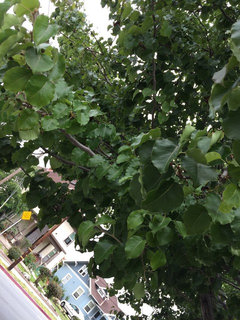
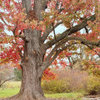
    Saw this tree during a walk - looks like some kind of beech maybe?
  • 8 years ago

    no tree is “perfect” or litter free obviously.

    Very true. London plane's size, litter and allergen/irritant level may not be a problem for you and that's fine I think. It's actually a very tough tree surviving in high urban pollution. Very common street tree. People just generally don't like them for yards but to each his own.

    'Columbia' cultivar is supposed to be better suited to the Bay Area climate.

    Chinese pistache still sounds like a winner, have yet to hear serious negatives on it.

    Yes, just make sure that the scaffold branches are spaced on the trunk and don't all originate from the same point. Chinese pistaches are often topped in the nursery to encourage them to branch, and then multiple branches originate from the same point. Just plan to eventually remove some of them so they're not all permanent branches. Also the females will have more litter due to colorful berries but some like them as an ornamental feature.

    I agree with Callery pear. Spectacular fall color and spring blossoms, but poor structure and people complain of a bad smell when it blossoms.

    User thanked ofdm (South Bay Area CA zone 9b)
  • 8 years ago

    Chinese elm (Ulmus parvifolia) is a great tree and is DED resistant. The cultivar 'Drake' is especially nice and is available in the trade. It will need pruning - the crown gets crowded - but is otherwise easy to care for. It is in leaf for about 10 months of the year in this area and the leaves are small so don't create annoying litter. Its crown makes deep shade and if you buy a decent sized one (24" box say) it will be good sized in a few years. Even the tiny #15 that I bought and planted a year ago is showing good growth. U. parvifolia blooms in the autumn with interesting papery flowers that the bees adore.

    A fruitless mulberry produces just about the deepest shade of all - it's about 10 degrees cooler under the tree! However, mulberries have large leaves that will have to be raked and the roots are notoriously shallow. You can avoid some of the problems with the roots by the way that you plant it.

    User thanked Sara Malone Zone 9b
  • 8 years ago

    Yikes, pear - I can’t stand the smell of those blossoms and the wasps that come for the rotting fruit.

    I will check out more about Chinese Elm.

    Fruitless mulberry I am told is very short

    lived, as in maybe 10 years - is that true?


  • 8 years ago

    Not true on fruitless mulberry. It's short-lived compared to a beech, which can live hundreds of years, but I have plenty that are 20 years plus in the ground and are just fine.

  • 8 years ago

    Looks like Dave’s is a no on Chinese elm for our area - highly allergenic and invasive are common complaints.


    https://davesgarden.com/guides/pf/go/173/#b

  • 8 years ago
    last modified: 8 years ago

    Dave's Garden may be useful for many things, but I can tell you that Ulmus parviflora is not invasive (I have never seen a seedling) and I"m not sure why anyone thinks it is allergenic. The vast majority of allergenic pollen comes from trees that are wind-pollinated. Those are trees that evolved before the insects, such as conifers and olives. I doubt very much that Ulmus is allergenic in any way. Most people have very hazy ideas about what is causing their allergies; they tend to focus on what catches their eye (Acacia get blamed a lot, for example, and they have heavy pollen that is not easily airborne.)

    So if you like Chinese elm, go for it. If you don't, then don't. But it's not invasive or allergenic.