Software
Houzz Logo Print
raytucker

What's Your Take?

8 years ago
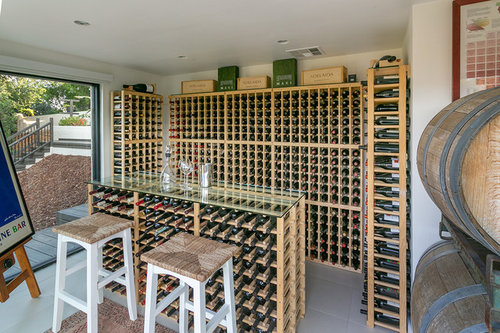
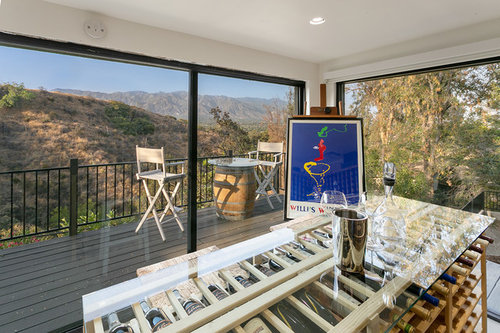
We have recently sold our home and in staging it we set up a wine display room...which was a big hit and the feed back was that visitors liked it and indeed were a bit envious. However, the buyers want the wine racks we used for the staging because they say that as the wine racks were secured to the wall for earthquake-protection, they are no longer considered free-standing. Is there anyone out there, particularly realtors, who has an opinion or, better yet, experience with this situation. Thanks.


Comments (31)

  • 8 years ago

    In my area (WNY), unless specifically excluded in the contract of sale, anything attached stays in the house.

    raytucker thanked pamghatten
  • 8 years ago

    I'm also in New York, and I would expect those to stay.

    I've sold 2 homes here in the last few years and my recollection is the same as Pam's above - if it is attached to the wall, it stays with the house.

    raytucker thanked User
  • 8 years ago

    be thankful they are not asking for the wine.

    But yes, attached = conveys unless specifically excluded.

    raytucker thanked just_janni
  • 8 years ago

    Leave them. (In hindsight, as I’m sure you realize now, you should have said they didn’t convey. But you didn’t.)

    raytucker thanked littlebug zone 5 Missouri
  • 8 years ago
    last modified: 8 years ago

    They stay. You must specifically write in the listing that they were to be excluded. Because they are attached to the wall, they stay. They become what is termed "a fixture." You have to exclude them. It sounds like you didn't exclude them.

    If the table is free standing, it doesn't convey. So, you wouldn't have to give them the table. If it's screwed to the floor, it's theirs.

    You may have to chalk this one up to lesson learned. You realtor should have brought this to your attention and asked you how you wanted to handle it.

    They do look really nice. If I was a buyer, I'd want them, too.

    raytucker thanked homechef59
  • 8 years ago

    Hmm... so if I secured my china cabinet and other furniture to the wall for earthquake safety I'd need to leave it?

    raytucker thanked Mimou-GW
  • 8 years ago

    what about dressers and bookcases that are anchored to the wall to avoid tip hazards?

    raytucker thanked wiscokid
  • 8 years ago

    Agree with Bry911.

    Yet.....What percentage the cost of shelves relative to your house sold price? If it is very very small, it is not worthwhile to fight over used shelves.

    raytucker thanked User
  • 8 years ago

    You would also need to add the cost of repairing the walls behind the shelves and any possible scratches on the floor. Although personally I would never have a wine collection in a room with that much light. Looks nice but does not help the wine.

    raytucker thanked User
  • 8 years ago

    maifleur01: You are in principle correct about the light...but in practice it is a North-facing room with blinds that are drawn unless we are entertaining -- or, in this case, having photographs taken :)

  • 8 years ago

    bry911: The distinction between personal property and real property is a well-argues version of the point I was trying to make. Securing a free-standing item didn't, for me, eliminate its free-standyness :) None-the-less, the lessons learned by me are to use a realtor who has our best interests at heart and to be very explicit about what we consider personal property. Thank you for your thoughts. R

  • 8 years ago

    azmon: You are sage in your advice and there is no fight. The wine racks will stay and are a tiny fraction of a percent of the agreed price of the house. I was exploring, in principle, what other people thought on this topic and have learned so much in a wider context from the discussion. Thank you and other respondents for sharing your thoughts R

  • 8 years ago

    Mimou-GW: " Hmm... so if I secured my china cabinet and other furniture to the wall for earthquake-safety I'd need to leave it?"

    My new understanding is leave it or very explicit disclose the items as personal property that will not convey with the house.

  • 8 years ago

    My greater point is if you secured something to a wall, you need to include it in your exclusions if you want to take it. I make it a practice to list all of my decorative mirrors in my exclusions. If I had wired a picture to a wall or a chest of drawers to a wall, I would exclude it with a detailed description as well it's location.This way, there is no misunderstanding or hurt feelings. You just can't be too detailed. It's a contract and you need to treat it as such.

    raytucker thanked homechef59
  • 8 years ago

    homechef59: You're points are very well taken...a lesson has been learned and now shared so that others may benefit...Thanks R

  • 8 years ago
    last modified: 8 years ago

    It's a contract and you need to treat it as such.

    It's a contract for real property. It is not a contract for personal property any more than it is a contract for employment.

    The term real property refers to land. Land, in its general usage, includes not only the face of the earth but everything of a permanent nature over or under it.

    For peace of mind you might specify everything that you have ever attached to the wall, but you don't have to. Permanent nature is obviously not intended to include those items which were attached in a manner other than permanent.

    The law says that real property is everything attached to the property in such a way that it effectively becomes inseparable from the land itself. The confusion comes in because they actually use the words, screws, nails. etc. But that is specifically because lumber is personal property until you have nailed or screwed it to the floor and then it becomes real property. It doesn't mean that anything you ever attach with nails and screws becomes real property.

    Having said that, local customs may dictate things that are personal property do convey.

    ETA: Personally, I ignore all conveyance documents. My offer includes all items that I want conveyed. In the end, most conveyance claims go in favor the sellers because the buyers write the offer. If you want something to convey then put it in the purchase agreement, if you author the agreement the onus is on you to clarify anything like this.

    raytucker thanked bry911
  • 8 years ago
    last modified: 8 years ago

    Recently sold a home and everything secured stayed. We had a very heavy mirror, secured by bolts into the wall studs. Because it was secured, we did have to specify to the buyers in advance that it would not be staying. To be honest, if I saw those wine racks I would expect that they would be part of the house and would be staying. Our realtor helped us to understand exactly which items would have to be excluded.

    raytucker thanked kriii
  • 8 years ago

    For those of you that have a very broad interpretation on the "attached" part, what would you think of an ELFA shelf system (from The Container Store). The hanging rail is screwed to the wall, but the actual shelf system just hangs, so the whole closet organizer is not permanently attached at all. If you think it stays with the house, then every piece of art/photograph/TV/etc you have hanging should also stay.

    As I understand it with wall mounted TVs, the bracket stays attached to the wall, but the TV is not included.

    I wouldn't expect those wine rack to stay as I've seen enough of them to know those are freestanding ones. I have also seen listings with substantial wine collections and they have stated in words, that the wine is not included! Obviously some buyers have tried to get the wine to stay too!

    raytucker thanked chispa
  • 8 years ago
    last modified: 8 years ago

    I think, as with many things, it depends. The listing includes under Other Rooms: Bonus, Wine Cellar and Wine Tasting. Was the pictured room the specified wine tasting room? If so, it isn't a Wine Tasting Room any longer if it is stripped to the bare walls upon sale. Yes, I know the MLS isn't the contract document. But you shouldn't be surprised if the purchasers are expecting to have a Wine Tasting Room, if they purchase your house that touted having one. If the Wine Tasting Room is in the house, just not included in the listing photos, then that expectation would have been met and the expectation of the wine storage in the OP photo conveying would be lower.

    raytucker thanked gyr_falcon
  • 8 years ago

    gyr_falcon: How did you track down the listing :)


    What is being reinforced by every useful piece of feedback that we have received is that a disclosure needs to be very detailed and explicit and also that our realtor was negligent. He has frequently wined with us over the past twelve years and knew we had every intention of moving our 'wine room'. To not explicit disclose this to potential buyers is a lack of professional effectiveness at best.


    To address your interesting and more general point. I feel that a Bonus room staged to show one potential use doesn't commit the staging materials to the buyers. We have previously used it as an office...by your logic we would be expected to leave our computers and other office equipment and supplies. And at other times it has been used as a gym. Would we be expected to leave the freestanding treadmill?


    Because we have staged a Bonus room to illustrate a possible function I'm not convinced that that commits us to facilitate the buyers in replicating that function...but I remain open to counter-argument :) Thank you for your feedback. R

  • 8 years ago

    There is a difference between a bonus room, which is understood to have many possible uses and can be staged to show one or more options, and specifying the house contains a Wine Tasting Room, that would be expected to contain something to make it such, as opposed to being a bare room. With the listing spelling out under Other Rooms: Rooms: Bonus Room, Wine Cellar, Wine Tasting, I would be expecting all of those to be a part of the house. If the bonus room is the Wine Tasting Room, and all of the wine tasting elements were going to be completely removed, the listing should have just stated the house as having a bonus room (or two bonus rooms, if two is the case).

    Nowhere in my post did I say, or even suggest, that I thought unattached personal items (computers/treadmills) should be assumed or expected to convey. And I agree completely with the earlier posts that is always better to specifically list if attached items, appliances, window coverings, and things of that nature, will be included, or excluded.

    raytucker thanked gyr_falcon
  • 8 years ago

    gyr-falcon: You [JP-S?] are missing the parallel.


    If the listing -- and I am still intrigued how you found it -- had spelled out "Other Rooms: Bonus Room, Home Office" we both agree that the seller is not responsible for furnishing the Home Office. By the same token "Other Rooms: Bonus Room, Wine Cellar, Wine Tasting" should not hold the seller responsible for furnishing a Wine Cellar or Wine Tasting. And yes you can taste wine in a room devoid of wine racks -- the minimum requirements are: A stable, level surface a glass and a wine source; perhaps just a glass and a bottle; perhaps just an open bottle :) -- which is how 98.78% of Home Wine Tasting is done.


    I remain of the opinion that, in an earthquake zone, stabilizing free-standing wine racks does not make them permanent fixtures


    Total agreement that there is no substitute for competent realtor support in defining explicitly what stays and what goes. We lacked that and are moving on regretting its inevitable consequences and hoping that our experience is illustrative for others.

  • 8 years ago

    You [JP-S?]

    ????? I cannot figure out what JP-S? means.

  • 8 years ago

    Hi gyr-falcon: Just curious how you tracked down the listing :) I'm ready to be impressed :)

  • 8 years ago

    Well, heck. Then you would not be impressed at all. [Google Image search & about 20 seconds]

    raytucker thanked gyr_falcon
  • 8 years ago

    Not many people realize you can search on an image.

    raytucker thanked ncrealestateguy
  • 8 years ago

    Beautiful house. And yes, google images.

    raytucker thanked cpartist
  • 8 years ago

    Photo searches freak some people out, and not all are aware of them, so I was reluctant to say how it was done in the thread. Since raytucker kept asking, and didn't have messaging enabled, I put up how I found the listing, but intended to delete that [ ] part after he read it. Of course, he didn't see it soon after posting and it now has a few more mentions, so shelve that! ¯\_(ツ)_/¯

    raytucker thanked gyr_falcon
  • 8 years ago
    last modified: 8 years ago

    Late to comment here: In our P&S contracts we have paragraphs that specifically delineate the personal items included, with blanks to add additional items and specifically delineate items to exclude in the sale with blank spaces to fill in the exclusions. In addition to the above, we have a large final paragraph with nothing but blank lines to add specifics. I would think your P&S contract has a similar set up. Even if it doesn't, there are blank addenda to specify items that do not convey.


    Having said the above, I have run into sellers that want to use X to market the home (as an example a fire pit), and then want to take the item ( in the example: fire pit) with them when they move. There is nothing wrong with staging, but if you say "wine tasting room", then the shelving attached would be included, unless specifically excluded by the terms of your agreement. That is the convention here in our area.

  • 8 years ago

    Thank you Denita. Makes absolute sense. Lessons learned, etc. :)