

GLYPHOSATE ON TRIAL
Sometimes the Trees forum receives queries about treating noxious trees, IOW how to kill them. More often than not, the answer is to use Roundup herbicide either as foliar spray or basal application. Consider this:
Recently a California jury found Monsanto liable for a groundskeeper's NHL cancer. Monsanto makes Roundup whose active ingredient is glyphosate. Monsanto was ordered to pay $289 million in damages.
Monsanto's response: "Today's decision doesn't change the fact that more than 800 scientific studies and reviews---- and conclusions by the US EPA, USNIH and regulatory authorities around the world support the fact that glyphosate doesn't cause cancer and did not cause the plaintiff's cancer".
If glyphosate is carcinogenic we have a problem. Even if a poster here doesn't use it on his property consider it is routinely used on the playfield, golf course, parks, roadsides and widely used in agriculture. Consider the veggies you recently bought at the roadside stand or farmer's market. If they were "Roundup ready" for sure they were zapped with glyphosate. How about the cotton clothing you are wearing, is it from RR Cotton? Is that an issue?
As for me, I use glyphosate in a backpack sprayer every week. If it wasn't for that I would be up to my ears in weeds. How is it considered to be transmitted through the skin, is it breathed in?
Tobacco fields nearby are spotless, I don't know if they use glyphosate or not but I suspect they do.
What do you think, is this hysteria or something to be concerned about?
Comments (39)
 8 years ago
There aren't too many chemicals that kill living things which are good for you.
Round up applied by farmers is on a whole different scale than what I use on my acre of yard.
I bet standing behind my car inhailing the exhaust isn't that great for me either and neither is charging them lithium batteries in the house. They smell funny.
Related Professionals
Dover Landscape Architects & Landscape Designers · Augusta Landscape Architects & Landscape Designers · Erie Landscape Architects & Landscape Designers · Amarillo Architects & Building Designers · Butte Architects & Building Designers · Shreveport Landscape Architects & Landscape Designers · Waterloo Landscape Architects & Landscape Designers · Bozeman Landscape Architects & Landscape Designers · Alexandria Landscape Contractors · Lake Charles Landscape Contractors · Utica Landscape Contractors · Grand Island Home Additions · Mansfield Home Additions · Youngstown Home Additions · Kalispell Home Additions- 8 years ago
World wide use of glysophate is now above 900 million kg. per year, 300 million lbs. in the US alone. It would probably now be impossible to find any substance from rain to the most remotely sited plants without trace amounts of glysophate present. One of the most telling parts of the recently concluded trial in San Francisco was the introduction of evidence from Monsanto's own studies which the company has suppressed for many years in much the same way the tobacco and asbestos industries did. Human cancers are overwhelmingly genetically based and are present in a person's DNA from the moment of conception. They remain dormant until something triggers them into active growth. This can be the inevitable decline in a person's immune system that occurs as we age. It can also be something outside ourselves such as the bi products of tobacco smoke. At this point, it appears quite certain that there is something present in glysophate that triggers the onset of non-Hodgkin's lymphoma in a great many people. A powerful corporation like Monsanto is unlikely to acknowledge any problem with its vastly profitable Roundup. The plaintiff in the San Francisco case will almost certainly die before receiving a penny from the jury's verdict and his family will go years without any compensation - if they ever get any - as endless appeals and retrials stretch into the future. Meanwhile, glysophate will continue to be used in ever increasing quantities. Having seen two avid gardening friends die from non-Hodgkin's lymphoma in the last 4 years, I will continue to pull weeds by hand even though the prospect for any control of this product or even acknowledgement of its dangers seems hopeless.
- 8 years ago
Most independent studies (not either funded by Monsanto or by organizations specifically opposed to it) have been unable to find a link.
While I wouldn’t suggest drinking the stuff, (although at worst you’d probably just get a wicked stomachache), it’s less harmful than things a lot of people (even those protesting against it) do every day, like smoking, drinking, etc.
The hysteria is misplaced. We “want to believe” that chemicals are all bad. So even if we see proof that they’re safe when used as directed, we choose not to believe it. Instead we believe anecdotes and internet memes. - 8 years ago
TL;DR...if you drink or smoke regularly, that harms your body FAR more than glyphosate.
 8 years ago
MY dh's BIL has a very high position over at Monsanto. He's worked there his entire adult life. Dh's nephew also works there. I worry about both of their jobs, but I don't feel sorry for a company that hides the fact that they KNEW back in the 70's that their product caused cancer, and chose not to put the warnings on their labels.
Still, any household chemical could cause cancer or other gene mutations if you have a few accidents with them where you are literally bathed in them. .. 8 years agolast modified: 8 years ago
It's also not just glyphosate itself, but the other chemicals included in Roundup to make it work... If you think these synthetic herbicides are safe...then you are living in fantasy land and have bought into "Tobacco science," hook, line and sinker! From just one article in SCIENTIFIC AMERICAN nearly 10 YEARS AGO:
---------------------------------------------------------------------------------
Glyphosate, Roundup’s active ingredient, is the most widely used herbicide in the United States. About 100 million pounds are applied to U.S. farms and lawns every year
But now researchers have found that one of Roundup’s inert ingredients can kill human cells, particularly embryonic, placental and umbilical cord cells.
Until now, most health studies have focused on the safety of glyphosate, rather than the mixture of ingredients found in Roundup. But in the new study, scientists found that Roundup’s inert ingredients amplified the toxic effect on human cells—even at concentrations much more diluted than those used on farms and lawns.
One specific inert ingredient, polyethoxylated tallowamine, or POEA, was more deadly to human embryonic, placental and umbilical cord cells than the herbicide itself – a finding the researchers call “astonishing.”
“This clearly confirms that the [inert ingredients] in Roundup formulations are not inert,” wrote the study authors from France’s University of Caen. “Moreover, the proprietary mixtures available on the market could cause cell damage and even death [at the] residual levels” found on Roundup-treated crops, such as soybeans, alfalfa and corn, or lawns and gardens.
The research team suspects that Roundup might cause pregnancy problems by interfering with hormone production, possibly leading to abnormal fetal development, low birth weights or miscarriages.
One label requirement for Roundup is that it should not be used in or near freshwater to protect amphibians and other wildlife.
For example, a Croatian team recently found that an herbicide formulation containing atrazine caused DNA damage, which can lead to cancer, while atrazine alone did not.
POEA was recognized as a common inert ingredient in herbicides in the 1980s, when researchers linked it to a group of poisonings in Japan. Doctors there examined patients who drank Roundup, either intentionally or accidentally, and determined that their sicknesses and deaths were due to POEA, not glyphosate.
POEA is a surfactant, or detergent, derived from animal fat. It is added to Roundup and other herbicides to help them penetrate plants' surfaces, making the weed killer more effective.
Glyphosate, POEA and all four Roundup formulations damaged all three cell types. Umbilical cord cells were especially sensitive to POEA. Glyphosate became more harmful when combined with POEA, and POEA alone was more deadly to cells than glyphosate.
The two ingredients work together to “limit breathing of the cells, stress them and drive them towards a suicide,” Seralini said.
The researchers saw cell damage at all concentrations.
For example, in 2005, University of Pittsburg ecologists added Roundup at the manufacturer’s recommended dose to ponds filled with frog and toad tadpoles. When they returned two weeks later, they found that 50 to 100 percent of the populations of several species of tadpoles had been killed.
---------------------------------------------------------------------------------
So, Americans are willing to risk all this toxic damage from using 100 million pounds of it yearly...simply to more easily kill "weeds" and make their sterile lawns look purdy???
 8 years ago
The environmental issues with glyphosate that
concern me are almost never talked about. The most significant is the fact that
there are now glyphosate-resistant weeds that have evolved from the
carpet-spraying of GMO corn, etc crops that are purposely glyphosate-resistant.
These weeds are then almost impossible to eradicate easily, and since most of
their competition has just been eliminated, are free to reproduce at will. I
also wonder whether glyphosate interferes with the mycorrhizae. I have been in
meetings where this has been brought up and no one has been able to provide an
answer. As with so many other things (e.g. antibiotics), personal use is
dwarfed by industrial/agricultural use. We can each make our own decisions
about what we want to do in our gardens, but as noted above, the ww use
commercially is so massive that what we do individually will make little
difference environmentally (although may be important for our own health).I used to use it
with some regularity and now save it for very specific problems that are
difficult to solve in other ways, which means I use it once a year at most. I
don't have the weed issues that those in places with summer rain have to deal
with, so this is an easier decision for me to make than for others. 8 years ago
Then there is Dr. Don Huber, professor emeritus of Purdue University's plant pathology department and what he has to say.
tj
 8 years ago
Be careful of what you read and take at face value. Dr. Huber has as much negative press regarding his very extreme viewpoints as he does positive. In fact, much of what he purports to be the " truth" about pesticides and GMO's has not been established scientifically (peer reviewed) and his posturing on these subjects is denounced by many of his former peers at Purdue.
- 8 years agolast modified: 8 years ago
He’s the Joe Bastardi of his profession, basically.
The thing is, we as a species tend to develop our viewpoint first, THEN find sources to back it up, ignoring those that may disprove our belief.
We should be researching first, then coming to a conclusion, but most of us don’t do that.  8 years ago
I believe in being careful with every agricultural chemical. I use them only rarely, once every few years, when absolutely necessary. Wear a cartridge respirator, Tyvek suit with hood, chemical proof gloves, eye protection. Take a shower immediately afterwards. It won't do any harm to be very careful, and it might help.
sam_md
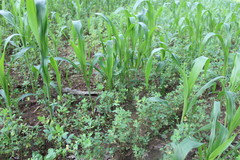
Original Author8 years agoHere is a local RR alfalfa field
I thought RR crops were supposed to be free of weeds. Does anyone want to take a wild guess as to what last year's crop was? What happened here?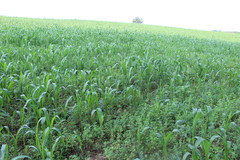
- 8 years ago
Looks like the F2 progeny of RR corn is mostly RR...but why was so much corn seed left behind?
Not a very efficient harvest.
 8 years agolast modified: 8 years ago
Sam, you old troll. This is totally off-topic here, as discussions of AGW would be. Thank goodness we've kept that chaos away, mostly. But someone was bound to post about it...
Anyhow, this would not be the first in a long line of incredibly dumb verdicts by ignorant American juries, and I have absolute confidence it will be overturned at either the appellate or Supreme court level. Most people just don't have the scientific background to properly decide something like this. I, otoh, actually worked in pharmaceutical research for a while and continue to keep updated with all life sciences research, generally. There are THOUSANDS of studies out there that "demonstrate" things that later prove to be untrue. If some PI wants to create a study showing glyphosate is linked to some cancer, that can certainly be arranged. People who do agricultural field work almost certainly have OTHER lifestyle factors that would cause a link to various cancers. Don't correct those, and presto, you can claim roundup causes cancer! I am confident that roundup/glyphosate was sufficiently tested that it is safe to use _in a horticultural setting_, with proper precautions. A lot of the myths and accompanying hysteria are ridiculous. "It kills all the amphibians". I used A LOT of the stuff*...and I challenge anyone to find a residential garden with more toads per square meter. Those guys are thriving on roundup LOL!!! They are all over the place! (the wet year is helping, but there are always a bunch of them.) Of course, I use the proper surfactants for wetlands, and Rodeo, the wetlands-approved form of glyphosate. (a bunch of utter fools are saying roundup is a "form of Agent Orange". LMAO. completely different molecule, not even close! it's like saying "sucrose is a different form of methanol! It will make you go blind!")
That being said, am I a fan of Monsanto? Am I a fan of genetic engineering of food crops? Do I think modern agricultural practices are a good thing? Absolutely not. But those actually are separate issues. Used appropriately - and it's clear this guy did not - it's not any more dangerous than various other household products or foodstuffs, for that matter. People don't actually understand what 'carcinogenic' means. But if you did, you'd know there's actually a lot more solid research showing red meat, dairy, and various types of processed foods are WAY more carcinogenic than glyphosate. (though, NOT carcinogenic enough to prove that ANY PARTICULAR CANCER would have come from them!) Do we see quarter-billion dollar verdicts for people because of those? Of course not! It's absolutely absurd!
* - well, i have to use a lot of herbicides, generally, but it's probably like 50% selective broadleaf/annual grass, 40% Rodeo, and 10% "other". There would be no way to have a garden otherwise, unless I lived off a trust fund and wanted to spend 8 h a day weeding.
- 8 years agolast modified: 8 years ago
BTW,
I only skimmed the thread when I posted (had to get this out of my system obviously) but Sara raises the most salient ecological point. Round-up intensive agriculture is bad for lots of other reasons besides the toxicity of roundup et al. (and I do try to avoid grains that are GMO...though as much for bioethical/ecological reasons, as health ones) One main reason being it's creating herbicide resistant super-weeds. So, I'm not saying those things don't have problems. But being ecologically undesirable doesn't prove a link to cancer.
Blakrab raises the important point it's actually the cheap, bad surfactant long added to Glyphosate that is proven to be toxic. I read about that almost 10 years ago which is why I eventually switched to the the non-surfactant containing form of GlyP. (Rodeo)
"If you think these synthetic herbicides are safe"
But what is safe? Life involves tradeoffs. We could set the highway speed limit to 30 mph to almost completely eliminate the possibility of fatal car accidents. Would we want to live in that world? A statement like this could easily be rephrased, "If you think driving at 65 mph on a highway is safe..." Use of roundup, agriculturally, is just the tip of an iceberg of humanity's problems related to overpopulation and planetary resources. (and yes, AGW, which is real LOL) If you suddenly ban the molecule from the face of the earth, either farmers will switch to other, equally or more dangerous herbicides, or everyone but the super-rich will starve to death. Which do you prefer?
 8 years ago
How may people have developed cancer directly or even indirectly from this product? Its just a question if anyone knows.
- 8 years ago
With the lack of chemistry education in our schools, the population has developed a warped view of Chemicals. What they don't understand is that the earth is made from chemicals; dirt, plants, trees, and you.
One of the things they don't understand is that just because a molecule is in the compound it does not mean that all compounds with the molecule have the same properties.
Someone mentioned above he was concerned when he used "agricultural" chemicals, Does he realize that there is one chemical in the US that is unregulated and kills more people per year than any other?
As an example, many years ago we went to a church and the minister sermon was on alcohol. To summarize, he stated that since there was an OH in alcohol, and alcohol was bad; you should avoid every think that has an OH in the molecule. He did not understand that OH was a common element, and found in millions of molecules; water, fats, etc.
Until people learn about chemistry, there will be those that panic when they hear something is a chemical.
I suspect that the whole glyphosate problem originated in the ambulance chasing lawyer office. Even though the verdict, mention above, is quite recent, one ambulance chasing lawyer, already has advertisements on TV looking for more "victims"
sam_md
Original Author8 years agoregarding my corn/alfalfa post I think HM got it right. The corn is the residue from last year's crop. I will watch and see how the farmer handles this. He may do nothing, let the frost kill the corn, problem solved.
- 8 years ago
OH is actually not an element, rather the hydroxyl group of the molecule. Elements cannot be broken down using chemical reactions. Sorry, my pilpul moment.
- 8 years ago
" Blakrab raises the important point it's actually the cheap, bad surfactant long added to Glyphosate that is proven to be toxic. I read about that almost 10 years ago which is why I eventually switched to the the non-surfactant containing form of GlyP. (Rodeo) "
Yes, and roundup is now adding something to make their product "rain safe" within an hour.And now adding a 'pre-emergent' too. Makes me wonder if they've divulged the ingredients they're adding to do all that?
As far as surfactant goes, the 2-1/2 gal. jugs of 41% Glyphosate I buy at the ag store do not contain surfactant, you have to buy that separate and it comes in a 2 gal size jug only and is pricey.
So what a lot of people around here do, including farmers I know (me included), is use a small amount of Dawn dish washing detergent in the mix.
I've tried pure Glyphosate and ended up with tiny dead spots on the quack grass and weeds, which slowed them down a little but didn't kill them. You need to break the surface tension of the water, so the product will spread evenly on the leaves of weeds/grasses.
Dawn works just as good as any surfactant I've used and it only takes a couple of drops per gallon. I use about an ounce in my 25 gal sprayer. Added near the end of filling to prevent excess foam. And I haven't heard of any problems with using Dawn anyways. - 8 years agolast modified: 8 years ago
Thanks hairmetal!
I think it was at the Ag store, I asked about surfactant and being I didn't do enough acres to warrant buying in such a large quantity, they suggested Dawn for a substitute.
I used it for a couple of acres, that I had an awful quack grass problem on clay loam soil. The quack would grow so thick and tall, from the established roots, it would choke out anything else no matter what. It was the nicest blue/green color, very healthy looking quack you ever saw.
Cultivating just did not work on that ground, period.
A few days after spraying, I planted turnips and radish and had an outstanding, pure clean crop.
I looked at that same field this summer and there's still no quack grass. There's some weeds from seed but no more of that #@% quack grass from roots problem.
- 8 years ago
Did you see the report today that Glyphosate has been found in a number of oat cereals at a higher level? One of my favorite organic cereals by Barbara's was even on the list.
- 8 years agolast modified: 8 years ago
"Any levels of glyphosate that may remain are significantly below any
regulatory limits and well within compliance of the safety standards set
by the Environmental Protection Agency (EPA) and the European Food
Safety Authority (EFSA) as safe for human consumption."Modern day analytical chemistry is incredibly precise. Eating a poppy seed bagel 30 days ago can make you fail a test for opiates. (at least until the threshold for counting as failed was changed)
I do find it somewhat amusing the problem even affected 'organic' products, since one of the most 'commonsense' objections to them is 'how do you really know'? How do you really know the rules were followed? As far as I know, an organic field shouldn't even be sprayed with GylPO for seasonal burn-down. So is a distributor sneaking some non-organic oats in there, are the farmers cheating, or something else.
In any case with sensitive enough equipment and techniques, you're going to find scads of random chemicals in the food and water we consume. GlyPO would concern me about 10X less than various pharmaceuticals, for example, being found in tap water. Or other, more dangerous industrial chemicals. Or chlorination by-products.
- 8 years ago
Well, just like Anniston, Alabama, Monsanto is saying, "Move along. Nothing to see HERE."
tj
- 8 years ago
^I believe that source about as much as I believe InfoWars or Mother Jones.
- 7 years ago
So far in lab rats, the most damaging genetic mutations caused by glyphosate were actually found in their grandchildren and onward:
dramatic increases in pathologies in the F2 generation grand-offspring, and F3 transgenerational great-grand-offspring were observed. The transgenerational pathologies observed include prostate disease, obesity, kidney disease, ovarian disease, and parturition (birth) abnormalities. Epigenetic analysis of the F1, F2 and F3 generation sperm identified differential DNA methylation regions (DMRs). A number of DMR associated genes were identified and previously shown to be involved in pathologies. Therefore, we propose glyphosate can induce the transgenerational inheritance of disease and germline (e.g. sperm) epimutations. Observations suggest the generational toxicology of glyphosate needs to be considered in the disease etiology of future generations.  7 years ago
FWIW. I have used Glyphosate for several years, but always as "tool of last resort". I am not anti-chemical, as, after all, compost is a chemical cocktail, but I am always reluctant to use synthetic compounds.
The manufacturers, even if they were 150% honest, CANNOT test their product to cover each and every possible scenario that the product could be used in. Even if they could, there is no way they can predict that it will NOT cause a problem 5/10/20 years down the track, as these are the timelines that cancers take to develop.
A few years ago, while living in Australia, I had a discussion with a professional gardener, regarding Glyphosate. He was totally convinced that it was was harmless, to the extent that he was quite happy to prove his point, by drinking some of it in front of me. I have often wondered what happened to him.
Fof
- 7 years ago
I've been using the "extended control" that lasts 4 months, and, I put on a face mask and they now have a longer wand that is about 3 feet long. I know there's a risk BUT, I will take my chances. I've seen risks on paint and paint remover containers, you just need to try and protect yourself. I love that you use it once and it lasts 4 months. I'm sure many will think it's not worth the risk, but, I can't just hand weed in some places, it is too large an area and it's easier to just treat it with Roundup.
- 7 years ago
I'll bet most of the "sky is falling" crowd probably eats hotdogs, deli meats, and other processed meats without even considering the fact that they are much much more likely to be carcinogenic than glyphosate. A valid reason for concern about glyphosate usage (especially in the vast quantities it's currently used) may eventually come to light, but the current paranoia-based concerns don't worry me at all. I even suspect that some of the concerns are rooted more in "politics" regarding Monsanto than in actual health concerns.
- 7 years ago
As I noted above, there are very good reasons not to use it, none of which have anything to do with cancer or politics. I doubt that the tiny amount of glyphosate that I could use would make a difference in the development of glyphosate-resistant weeds. But until someone can prove to me that it doesn't interfere with the micorrhizae, I'm not using it.
- 7 years ago
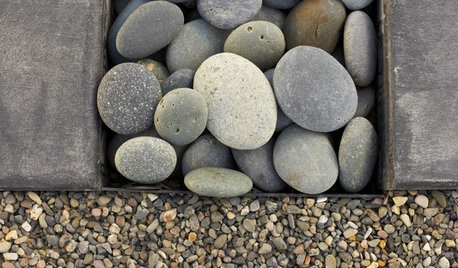
RoundUp/gyphosate is an excellent product for weed control in areas like gravel driveways or parking pads or between pavers, where its impact has little to no effect on desired plantings and where underlying soil biology is not critical. The concentrate painted directly on cut stems is also effective against very hard to control weeds like Himalayan blackberry, Japanese knotweed or horsetails. However, I would never use for weed control in a cultivated garden or where spray could possibly drift to desired plants.
And the amount used by homeowners or hobby gardeners is highly unlikely to have any negative health impacts on them. It is the repeated, almost daily use in agricultural or groundkeeping settings and without proper safety concerns that is the issue.
- 7 years ago
Gardengal, can you say how a residential user should set up a safety protocol? Makes sense that use should be restricted to non planting areas but should a mask be worn? Gloves should be a given. Anything else?
- 7 years ago
Long sleeves, long pants, proper shoes or workboots and a mask and gloves.

gardengal48 (PNW Z8/9)