Software
Houzz Logo Print

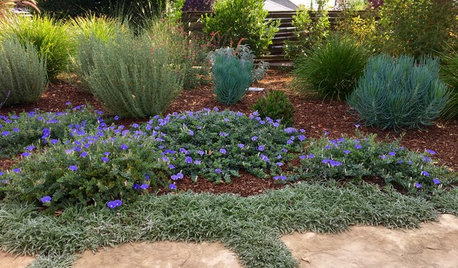
About 4 years ago, I hand-pulled every weed from my 400 square-foot garden, applied a pre-emergent weed preventer and applied a 4-inch-deep layer of "hardwood" mulch. (Since then, I have had zero weeds).


About 2 years ago, the original mulch had largely decomposed so, without removing or incorporating the original mulch into the soil, I applied another 4 inches of the same mulch. Now, the second application of mulch has largely decomposed.


The garden is shaded by a crepe myrtle tree and a flowering plum tree and has about 15 roses and various other shrubs.


Before applying another 4-inch layer of the same mulch:

  • should I have a soil-test done?
  • how do I take representative samples of the soil without "skewing" the samples with the overlaying mulch?
  • when I get the results of the soil test, is it better to apply the recommended amendments to the entire garden or just around the individual shrubs?
  • should I remove the existing mulch or incorporate the existing mulch into the soil?

Comments (22)

  • 8 years ago

    Why do you think you need a soil test? Are the plants not growing well or showing some obvious signs of deficiency?

    If you feel you do need a test, scrape or rake all the mulch away and dig down 6 inches to take the sample. And do so from various different areas, mixing the samples togther before submitting for testing. And it might be better to do this in late winter or early spring as any fertilizers that may be suggested should be applied then, not at the end of the growing season.

    Or you can just bag the test and apply a basic, granular all-purpose fertilizer to your shrubs in spring. But you will again need to scrape or rake the mulch away before applying but then rake it back in place after application.

    You never need to remove old mulch. And I'd avoid working older, wood based mulches into the soil if possible. They can tie up nutrients as they decompose in the soil but do not have the same negative effect if just left as a top dressing.

  • 8 years ago

    While I generally agree with the above, I reckon working two year old partially decomposed mulch into the soil would not tie up nutrients much, if at all. It may depend on specifics but most likely is already covered with the bacteria and fungi and close to steady state nutrient recycling. Depending on the organic content of the soil below it might be better for it. YMMV, IMHO.

  • 8 years ago

    I get the sense that you are worried that your regular mulch application may be harming the soil or skewing the soil balance. Let me address that concern by saying that your mulched soil is likely in the best condition of anywhere in your garden. You are basically recreating nature's forest floor in your yard, with a constant overlayer of decomposing wood product. And since it is essentially cold composting, it is holding on to nutrients and returning them to the soil.

    While I wouldn't turn the soil or otherwise dig in the wood - as others have said that could tie up some nitrogen - letting it sit on top of the soil is perfectly fine. Again, that is exactly what happens in nature.

    The bottom line is that year by year you are adding to the wealth of nutrients and trace minerals in your soil by letting the wood naturally decompose on top.

  • 8 years ago

    Let me state this very clearly.......hundreds of thousands of gardeners over the years have managed to garden very successfully without ever having a soil test done. It can be helpful and in some cases, a recommended procedure, but it is never a requirement!! If your garden is doing well - plants are healthy and of good color and are flowering and fruiting as intended - then other to satisfy your curiosity, a soil test is unnecessary. As would be the need for any additional or supplemental fertilization.

    If things are not doing very well, then I agree that a soil test may be advised as it will point out what any nutrient deficiencies may be present and how to address them with suggested fertilization.

    I also agree with Richard above that the mulched areas are probably just fine. Using an organic (degradable) mulch will add a lot of nutrients to the soil over time as it continues to degrade/decompose. It will also improve soil texture and water holding capacity, which is why routinely mulched planting beds tend to be very friable and of good tilth.

  • 8 years ago

    I rake the mulch away from my roses, incorporate Milorganite into the soil and rake the mulch back around my roses.

  • 8 years ago

    Why test? Because it’s cost-effective, that’s why. You get a lot for your $20.

    First, it’s a myth that large and indiscriminate applications of organic matter eventually solve any and all nutritional needs. My compost tests marginal or low in about half the categories. Of course the soil brings nutrients to the party, but don’t just assume it’s all there because you have a lot of composted matter there.

    You also don’t want to overload in categories. If your soil is say,rich in Potassium, don’t add potassium even as part of a balanced fertilizer.

    Finally, there is the issue of the minor nutrients. You won’t likely detect a Boron deficiency or a Copper oversupply by eyeballing it. Verify with a test. Get what you need bypass the rest and you will save the cost of the test.

  • 8 years ago

    Steady additions of compost over a long period of time can lead to some high nutrient levels, especially in clay soil. I ended up with very high P and K after years of compost additions. If you have a more sandy soil they will tend to leach out faster.

    Wood chip mulch will not have such a drastic effect on nutrient levels as compost made from a brown/green mixture of materials. In fact it was recommended by people here that I switch to that kind of arrangement to maintain organic matter levels while controlling nutrients.

  • 8 years ago

    You cannot know the pH level of your soil without a soil test and if the plants you are growing are in that large category of plants that prefer to grow with a soil pH in the 6.0 to 7.0, where most all soil nutrients are most readily available, but the soil is not in that range things can happen to those plants that would not be good.

    A soil test could help- someone decide whether to apply a fertilizer or not which not only could be economical but also environmentally responsible since not adding excess amounts of fertilizers will reduce the pollution of our water.

    Would you start out on a trip to some place you have never been without consulting, at the very least, a map to determine the route? Why would any reasonably intelligent person not use soil tests to see what the soil may need?

  • 8 years ago
    last modified: 8 years ago

    This is a false comparison, and to suggest that "reasonably intelligent" people must do a soil test (and if they don't, then they're clearly not reasonably intelligent) is absurd.

    I don't want to be anti-testing here: there are lots of cases where soil tests make sense. Included in that, before applying chemical fertilisers, for almost any commercial operation, and on and on. Please, go ahead and test if you want.

    But for a very large number of home gardeners, if they are happy with their results, have no significant issues, and simply tending what they have with minor adjustments here and there - then testing may simply not be needed.

    Some may choose to test anyway, and I've no problem with that.

    But please don't imply that "reasonably intelligent" people must do exactly as you think. That's not a "reasonably intelligent" position to take.

  • 8 years ago

    Agree with armoured. There are all sorts of valid reasons to test but it is never a requirement! I have managed to garden very successfully for going on 50 years without ever having had a professional soil test done. As a degreed horticulturist I might have a bit more knowledge about soils than does the average homeowner so I would not list my experience as necessarily typical, but if your garden is performing as you wish and your plants look good and are healthy, then I can see no valid reason to have one done.

    And testing for soil pH can be very easily done at home and just finding out that piece of information is not a requirement for a professional test either. Home pH test kits are remarkably accurate if you follow the directions and use distilled - not tap - water.

  • 8 years ago

    I’d argue that a $20 soil test that reveals that your soil is perfect is still worth more than $20.


    your time is worth something. Spending your gardening time or other leisure time or money on needlessly applying ferts and futzing with a compost pile Is at least a waste of time. Prune that tree over there instead.


    My my experience with home ph tests is evidently not all that accurate, even using distilled water. But even if it were, there is a cost to that. So now you are talking about a net saving of maybe $10 by not getting a decent comprehensive test.


    The reality is that those who judge soil quality by the seat of the pants are not going to have perfect soil even if they are very good at eyeballing it.


    They at least going to have surpluses and trends that are worth knowing. If my soil tests at the high end of good for copper, for example, I may want to think twice about applying a copper-based fungicide this year.


    knowledge is power. It is worth something.

  • 8 years ago

    Where can I get a "decent comprehensive test"?

  • 8 years ago

    Most states you can get a soil done at a college that has a Agriculture program or a Master Gardeners program or at the Dept of Agriculture. Google them for your area.

    I would avoid testing at a garden center or any place that wants to sell you something after the FREE test. It's no longer FREE at that point and they won't have your best interest in mind either.

  • 8 years ago
    last modified: 8 years ago

    The California Extension Services do NOT do soil tests.


    In 2002, I had my soil tested by EarthGro in St. Louis, MO (but they are no longer in business)


    In 2008, I had my soil tested by UMass in Amherst, MA (but that testing was done by students and were skewed toward soil types in the northeast, not in southern California).


    Can you suggest a more-appropriate lab?

  • 8 years ago

    To be clear, I I am not saying that testing soil is a bad idea, or not 'worth it' sometimes or a bad recommendation for many circumstances. But the line that not testing is not intelligent - ie stupid - is ridiculous. Whether it's worth it or necessary or worth the hassle is up to the individual.

    I have a similar aversion to the attitude that only hot composting is the Right Way.

  • 8 years ago
    last modified: 8 years ago

    Microbac Laboratories, Inc.

    Soil Testing Service

    Riverside, CA · (951) 779-0310


    Aragon Geotechnical, Inc.

    Soil Testing Service

    Riverside, CA · (951) 776-0345

    Opens 9AM Mon

  • 8 years ago

    UMass Amherst worked great for me even though I live out west. Chemistry is chemistry.

    . This stuff is well within the ken of a grad student.