Software
Houzz Logo Print
edaehnicksubs

Plant identification?

8 years ago
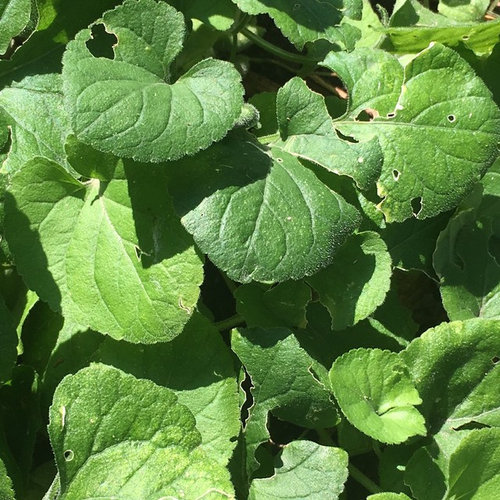
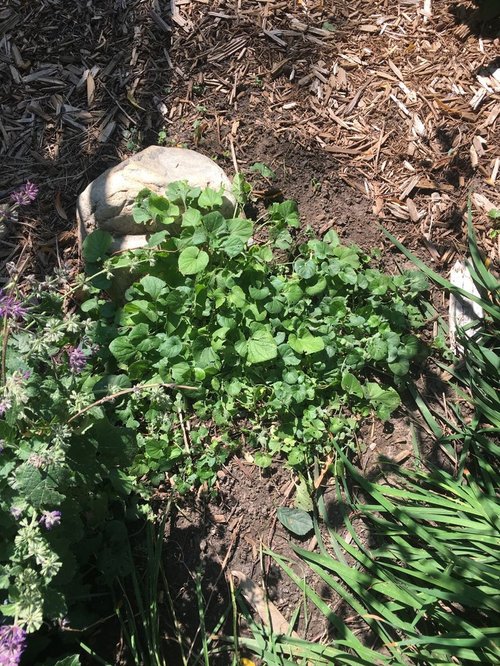
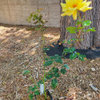
Hi - I’m a new gardener, and one of the things I’ve pulled a lot of this year is a low-growing plant that seems to have sturdy little root nodules, with deep-ish taps and good connection to the next nodule over. My plant app and searching the web lead me to think it might be a type of creeping Charlie, but the leaves don’t look right to me. I’m in Denver, and I’ll appreciate any guidance. Thanks!

Comments (13)

  • 8 years ago
    Thanks @floral_uk!
  • 8 years ago

    Violets are nice plants that most consider to be flowers. If you pull them all out and leave the soil exposed, more undesirable weeds will take up residence.

  • 8 years ago

    In some climates and soils, violets are thugs that spread aggressively, crowd out more desirable plants, produce little or nothing in the way of flowers and are very, very difficult to control. IMO, any plant that has naturalized in a place you don't want it is a weed by definition. You are the steward of your garden and can make your own choices. (And yes, as Jay suggests, bare ground left to its own devices is likely to go to weeds.)


  • 8 years ago
    last modified: 8 years ago

    I wouldn't say they're difficult to control. Actually I'd say they're easy to control. Running bamboos, Jerusalem Artichokes, Campsis, Gooseneck Loosestrife, now those are truly difficult to control. Violets, you just pull them out with the rhizome, easy, Violet seedlings, you just scratch them out, easy. A thug plant is a plant that's really difficult to remove. I don't think of Violets as thugs. I think they make great natural looking groundcovers.

  • 8 years ago

    As I'm sure you realize, Jay, many plants are well behaved in one area and thuggish in others. I'm glad you don't have a problem with violets and that they suit your needs as a groundcover. Ellen's experience may match yours... or not. She probably needs to get input on the matter from others in her area.


  • 8 years ago

    Well everything else aside. Many think of Violets as being one plant and they base all their opinions on the common blue violet, when in reality the genus Viola contains several species, some of which are quite beautiful and desireable. Take the Birdsfoot Violet, for example. It has beautiful, unusual foliage, and a beautiful flower. There are a lot of Viola species that I would love to grow. The common blue violet. I don't view it as a threat. I leave it to grow in wilder areas, and if it's in the way of new plantings I remove it. It baffles me that anyone would allow such a benign plant to get under their skin.

  • 8 years ago
    I don’t have enough knowledge to have an opinion, but I’m enjoying the discussion. And I laughed at the notion of a thuggish plant.
  • 8 years ago

    I'm glad you're enjoying it, Ellen. As you may have gathered, "thuggish" is generally used to describe a plant that some people find desirable (and cultivate) but that can easily get out of hand. These are often non-native, introduced ornamental plants and frequently find themselves on state weed control lists eventually. Russian olive is a good example in Colorado, for example. And purple loosestrife nationwide -- first brought in as an ornamental, but now a real threat in many areas. (A textbook example of introduced ornamentals out of control is purple lupines in Iceland. They were introduced in the early 1900s and have completely taken over large areas of the country -- beautiful, but harmful at the same time.) "Thuggish" would generally not be used to describe plants that everyone agrees are weeds and wouldn't plant on purpose, like bindweed.

    Jay, I don't really disagree with you about the variety of violets and desirability of many of them under the right circumstances. Common purple and white violets are a problem for me (and many of my neighbors) in the East because they're widespread in lawns (I blame the previous owner) and not what I'm looking for there. They're very resistant to chemical control and are so numerous that the only viable mechanical control is a rototiller. At the same time, I love johnny jump-ups and let them grow freely wherever they want, as they're cute and well mannered.

    By way of contrast, at my second home in the Colorado Rockies, the "lawn" is a meadow, the violets less numerous and more varied (but mostly dogtooth violets), and the interplay of species entirely welcome.

  • 8 years ago

    After seeing the effects of lawn fertilizers on the local wetlands, I decided to stop using fertilizers and weed killers. I'm letting other plants grow into the lawn. It's more natural. I would welcome some Violets in there. Much easier on the eyes than dandelions. Trying to keep a perfect monoculture lawn and keep up with the Jones's is worse than just vanity, when you consider the effect it has on the enviroment.

  • 8 years ago
    This discussion is helpful to me as a beginner. I thought we had very vigorous grapevines on the back fence. Of course it’s Virginia creeper. So I’m learning!
  • 8 years ago
    Update: I’ve pulled the violets where they were crowding out groundcover (a smattering of bindweed got pulled too, now that I know what it is). But by the rock in that photo I posted, I’ve decided to leave them be. No groundcover over there yet, they don’t seem as k-razy aggressive as Virginia creeper, so they stay. Thank you again for the help!
  • 8 years ago

    To continue the violet discussion, there are violets that smell heavenly like violet. You can order them from catalogs. They bloom right before the common unscented (weed) violet. I let them grow wherever they want because they make the house smell wonderful for a few weeks in early spring, and a few rebloom in fall. They're a treat.


    I don't find violets hard to control here, and I do enjoy wildflowers in my "mowed areas."