Software
Houzz Logo Print
alli_tait

HELP: Droopy Lemon Tree

7 years ago
last modified: 7 years ago

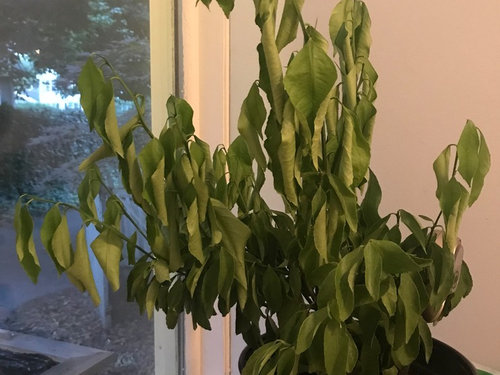
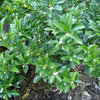
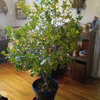
I’m being told it’s transplant shock. I planted it in a large pot, but the soil wasn’t draining well enough. After a day, I moved it back to a small pot and it looks like this. And dropping leaves. Is it toast or can it be saved?!?


Comments (25)

  • 7 years ago

    @bklyn citrus - I had to repost to add a photo for some reason. Here you go!

  • 7 years ago

    It looks like it hasnt received enough water,I would water it thoroughly and leave it alone,

  • 7 years ago

    Well, it could be shock. What type of soil was it in before the repotting and what was used after? Did you bare root into 5-1-1?


    As long as you can see green on the plant, there is always a chance of recovery.

  • 7 years ago

    I have no idea what it was in when I got it, but I repotted originally into the miracle grow moisture control with perlite for the big pot. It was WAY too wet and that is when the poor plant started to decline. The next day, after I realized the soil still wasnt draining properly. I was worried about root rot. I again repotted back into a smaller pot and with just the miracle grow cactus mix, with bare roots. I went and got a moisture meter and this soil seems to be draining better. Can anyone advise what moisture level the plant should try to stay at? It’s currently reading around a 4. Thanks!

  • 7 years ago

    I hope you’re right that she’ll recover!! I’m in NY..zone 6. Her permanent home will be inside next to a south facing window. I need to figure out the watering :-/ I’ll try your trick and see how it works! How much water do you usually give at a time? I used the cactus mix because I kept reading about it on the web...what do you recommend? I’ve heard about 511, but honestly don’t know what it is. Im afraid of introducing more stress by reporting her again with different soil right now :( so I think i’ll to give her some time and see if she bounces back. If she does I might repot her later with a different mix. Would the tree do okay in a large pot or is it better to keep it smaller? Thank you for all the help!

  • 7 years ago
    last modified: 7 years ago


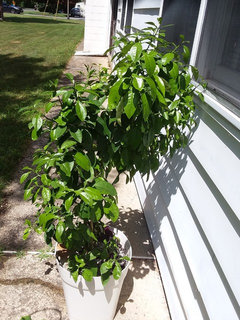
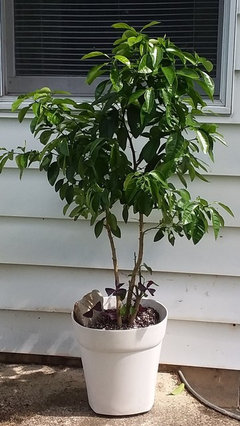
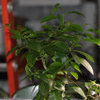
    I'm in the Hudson Valley, right outside of Woodstock so you must be south of me, you can leave your tree in the soil and the pot she's in til next Spring, no point in stressing her more, search on this forum for Al Tapla's gritty mix, thats something you can think about for next year. My tree is about 3 1/2 ft tall in full sun so I give her 1/2 gallon in the moring, now with the extreme heat coming back I'll give her a gallon every other day, she doesn't drink as much in the heat as you'd think. Since Summer is winding down I'll have to bring her back into my living room before the first frost. I hope I've answered all your question, if not ask more,I'm glad to help. I'll post a picture of mine,started on a bet that I couldn't grow it from a seed,I won $5.00 lol

  • 7 years ago

    After I pruned her in late July, she's 5 years old

  • 7 years ago
    last modified: 7 years ago

    Going from too wet to too dry has damaged the roots. That also looks like fertilizer burn. The cactus blend may have become hydrophobic and dried out the roots. Cactus soil is not really recommend as it has too much sand and drains to quickly. Most citrus rootstock performs very poorly in sandy soil. Potting soil with wetting agents are not recommended for citrus either as they keep roots too wet. Personally I use a mixture similar to rose soil. Citrus like soil between 15-60% moisture. A Sustee aqua-meter is worth its weight in gold. It stays in the soil permanently for 6 months. Or you can use a Xiaomi smart meter which tells you if you are meeting light requirements, when to water, the general fertility of the soil, and the room air temperature. I have just about every moisture meter on Amazon. They all work great but the problem moisture meters or sticks is poking holes in the soil. Over time you can do significant damage to the root structure in a pot by checking moisture on a regular basis. If your leaves are not perking up with water you could pull them out of the pot and rinse them in water and try a different soil. When I experimented with cactus mix I found the root ball did not expand into the cactus mix as I had hoped it would. Survey the top 6 largest citrus growers you can find anywhere in the USA or UK and look at their online potting instructions for citrus. keep it simple.

    Alli Tait thanked Lemon Lime Orange Zone 6a
  • 7 years ago
    last modified: 7 years ago

    When growing indoors the first thing you should look at is the VPD and make sure the plant is not stressed. If the plant could be saved putting a humidifier beside the plant might help pick it up.

    Alli Tait thanked Lemon Lime Orange Zone 6a
  • 7 years ago

    Would it be too stressful to repot the tree again now?

  • 7 years ago
    When I first started growing citrus I read a plethora of advice that implied more or less water was the root cause pardon the pun for a host of ailments. True, but as I dug deeper into the hobby the problems usually are a host of factors that water is but one variable.
  • 7 years ago
    Repot, flush the roots in warm 80f water, and use a different type of potting soil. By the way, using cold tap water can shock roots.
    Alli Tait thanked Lemon Lime Orange Zone 6a
  • 7 years ago
    Most typical potting soils have peat moss. When peat moss is watered it looks like dark chocolate. As it dries out it looks like a less intense cocoa. When it is dry it looks like stale chocolate.
  • 7 years ago

    Thanks! I’ll look into repoting it. To flush the roots, do I soak for a certain period of time or leave running water on them? What soil do you recommend? I’ll follow the instructions exactly haha poor little tree needs some intense love!

  • 7 years ago
    last modified: 7 years ago

    The idea is to rinse off any soil that contains wetting agent, fertilizer, sand, or anything else that has caused the roots to dry out and try to rehydrate the plant with a different soil structure. The method is not really important. Four Winds Growers recommends rose soil which is readily available anywhere. A citrus leaf is about 95% water. When the leaves start curling in like your photograph the leaves have already lost a great deal of moisture. When the soil is flooded for a period of time, it reduces root hydraulic conductance to about 12% of a normal draining plant. When leaves dry from overwatering (wetting agent) or from hydrophobic soil it becomes a catch 22 to rehydrate them indoors with limited humidity. If the plant can be saved high humidity immediately would greatly help reduce stress and hydrate the leaves. Short term you have to fix the soil issues. When you repot always try to find a soil similar to the soil it was originally grown in. If you introduce a completely different soil structure around the root ball, one soil may act as a wick and the other a sponge and this could lead to root problems as well.

  • 7 years ago

    I have read to get Azalea mix and now soil for roses for citrus. I have not seen either at my local Lowes or Home Depot stores.


    I transplanted a tree not long ago and noticed the medium was about 50/50 of peat and perlite. I thought that was interesting. I don't understand how nurseries can grow trees in peat based mixes while the owners cannot. I really would love to spend some time with a nursery owner and ask what the secret is.

  • 7 years ago

    Alli, I wrote a long reply and added my pictures, I dont know what happened to it, I've had a lot of problems with this site, I'm sure you now have all the answers you need.

  • 7 years ago
    last modified: 7 years ago

    Denise those are great questions. Roses are grown from True North to the Equator so in theory rose soil should be easy to find just about everywhere but not always the case. Home Depot sells a product called Dr Earth Rose soil and Dr Earth Azalea mix. I don't like either product as they use aloe vera as a natural wetting agent. If you can't find a prepackaged rose soil locally than you could blend your own using a 1/3 compost and other potting soil blends. Here is an example of what your aiming for in a rose soil. https://www.wikihow.com/Prepare-Soil-for-Roses

    The reason nurseries can grow citrus so well in anything is because they are grown in temperature controlled greenhouses with very high humidity (70%). Green houses also have the advantage of sunlight passing by at various angles. Indoors in a window plants will only get sun from one angle and the leaves dry out with the low humidity.

    Depending on where live your local rose society may have some suggestions on where to buy a good quality rose soil. Where I live Fafard products are readily available and that is why I was using a combination of Fafard Compost with Peat and Bark Biofor and Fafard Acid-loving plants and berries soil mix. Outdoors in my rose garden I use aged manure and cocoa shell mulch.

    Alli Tait thanked Lemon Lime Orange Zone 6a
  • 7 years ago
    last modified: 7 years ago

    Most of the peat moss used in the United States comes from remote bogs in Canada. Obviously it is expensive to ship to California or Florida. Some nurseries use Pine Bark Fines as a substitute because it is a local forestry byproduct. There is no market for pine park fines in Canada because peat if so readily available and cheap. From what I have read pine bark fines are readily available in some States and hard to fine in others. It is all about using what is available to you locally to your advantage and making substitutions where necessary for your micro climate.

  • 7 years ago

    Lemon Lime, I really like what you have to offer. Thank you

    Mike

  • 7 years ago
    Thanks again Mike for your kind comments. Your posts are always so positive and a pleasure to read.
  • 7 years ago
    last modified: 7 years ago

    I was going to import some pine bark fines from a popular Bonsai supply company to augment my soil. Then I read the fine print, "We comply with State laws which require products containing Pine bark to be treated with a Bifenthrin drench. This helps prevent the spread of invasive species and provides some residual pathogen control for your plant." Bifenthrin is a restricted product, it seems to be used for turf grass and ornaments. One supplier of Bifenthrin drench said, "NOT for Fruit & Vegetable Gardens". After reading this I decided to stop and not to order as I prefer to keep my soil as organic as possible.

  • 4 years ago
    last modified: 4 years ago

    My Meyer lemon tree lost all its leaves. After a year and a half, with no leaves and stems dying it's just now coming back to life. New leaf growth and flowers. Never give

Sponsored
Franklin County's Heavy Timber Specialists | Best of Houzz 2020!