Software
Houzz Logo Print
elaineal_gw

Growing Satsuma in a Circle

8 years ago
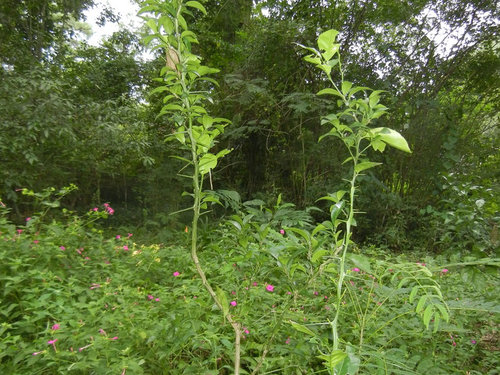
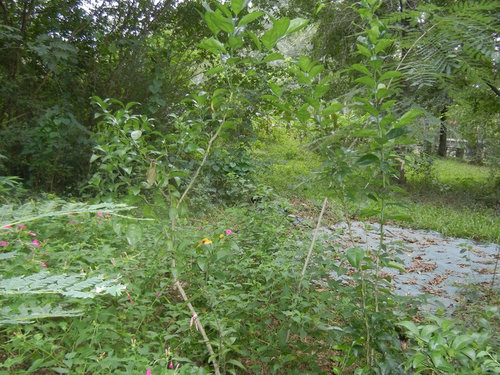
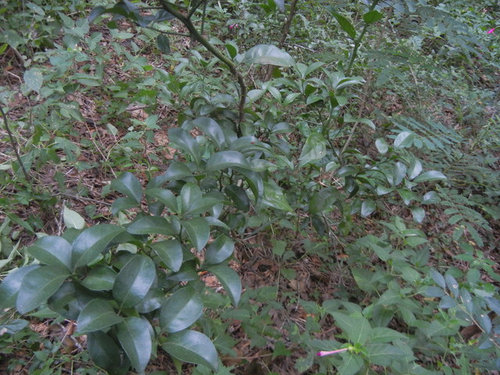
I need advice about growing five 4-6ft Satsuma. They are located in an area about 7-9ft in diameter. These came up from where an older Satsuma had been. It was killed when temp went down to 10-12 degrees. This tree would make over 100 fruit each year. The water table is high so they get plenty of water. Would these trees grow well if I kept the inward limbs trimmed back? They are in rich soil and appear very healthy. I don't believe they would survive if transplanted because our summers are so hot. Not only that, but they would have a huge root system by now. Ignore the Mimosa and Four-O-Clocks. They like all that water, too! I live just above the Florida Panhandle in AL.


Comments (16)

  • 8 years ago

    If I understand you correctly these came up from the root stock where your Satsuma was growing that was killed by a freeze. If so it is very unlikely that they are Satsuma as the vast majority of Satsumas are grafted onto some other variety of root stock, on the upper gulf coast this is most commonly some type of trifoliate root stock, which yours does not appear to be.

    elaineal thanked Ike Stewart
  • elaineal thanked sunshine (zone 6a, Ontario,Canada)
  • 8 years ago

    I don't think those are true satsumas as those thorns look wicked. I have 4 Owari satsumas and not one had thorns even when they were really young.


    Do you want to move what's left or are you asking us if the branches are going to produce what you had before? If you want to move it, I would dig up what's left of the old tree when the temps are cooler in your area, late fall or early spring, and see what you have regarding the root system. You won't know until you dig. I don't think what you have is worth keeping, but if you wait 4 years, you will know for sure when it eventually produces fruit. I have seen larger trees than this transplanted as citrus are shallow rooted.

    elaineal thanked Dee
  • 8 years ago

    I was also looking at those thorns and thinking rootstock. Satsuma shouldn't have thorns like that. http://www.idtools.org/id/citrus/citrusid/factsheet.php?name=Mandarins+%28Satsuma%29

    elaineal thanked lucky_cloud
  • 8 years ago
    last modified: 8 years ago

    I've seen very thorny growth coming out of my young Satsuma. So thorny, in fact, I've been suspicious it must be rootstock, but despite looking very hard I don't see any graft line above it.

    As far as I'm aware, any of the standard rootstocks that would be much cold hardier than Satsuma are all trifoliate-leafed, so that's another reason to lean towards believing it's not more likely to be rootstock.

    I might be wrong, but I think I remember reading that Satsuma can be a little bit thorny when young, and that would probably apply if it's trying to send up new shoots from the roots.

    So, I'm sort of thinking it may or may not be rootstock.

    If you had wet ground, and since it looks like you're in a humid lush green climate area, it's possible some seedlings got established underneath the tree while it was still alive and you never noticed. These seedlings might have been only 3 or 4 inches high. Now that they are no longer being shaded out, they would be taking off.

    elaineal thanked socalnolympia
  • 8 years ago
    last modified: 8 years ago

    Normally Satsuma does not have any problem growing where you live, but the Southeast Coast was hit with an unusually severe Winter this year.

    According to a climate zone map, it seems your area is in 8a.

    elaineal thanked socalnolympia
  • 8 years ago

    I guess I should have said more about the original tree. It was growing in a area where workers on my house had been eating Satsuma. It got about three feet tall before I moved it to the location of these plants. The dead stump was dug up with a small backhoe. This makes me think that outer roots were brought up to the surface enough for them to sprout. Also, with the way they are in a circle makes me think it is from underground roots growing away from the truck. But again they could be from fruit falling on the ground. What I was interested in, can they stay where they are. I can keep limbs growing on the inner side of the trees trimmed back. At least until they get taller than I can reach. I have plenty of room for them to grow where they are located.


  • 8 years ago

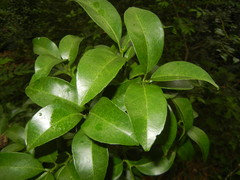
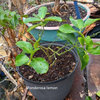
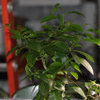
    A close up picture of the leaves.


  • 8 years ago
    last modified: 8 years ago

    The leaves look like they could be Satsuma.

    Then again, it could also be Volkamer lemon rootstock. Although mandarins normally aren't grafted onto Volkamer, and I wouldn't think they would sell Satsuma in your area grafted on to Volkamer because it's not as cold hardy (but when bought from big-box stores you never know).

    elaineal thanked socalnolympia
  • 8 years ago

    Do you know if the tree was a grafted tree.

    elaineal thanked poncirusguy6b452xx
  • 8 years ago

    They are almost never not grafted.

    elaineal thanked socalnolympia
  • 8 years ago

    The original tree was not a bought tree therefore it can't be a grafted plant. It grew from seeds where workers were eating and threw them on the ground. I transplanted it to where it grew 20+ft tall and made hundreds of fruit over a period of 8-10 yrs before it died from a freeze. It also had thorns on it, too.

  • 8 years ago
    last modified: 8 years ago

    Well, then it's very likely it is Satsuma, coming back up from the roots.

    I made the observation in another thread that citrus grown from seed tend to be cold hardier in zone 8a than regular grafted citrus.

    (This is only true for climate zone 8a and may not necessarily be true in zone 7, because when it gets really cold it's important to have trifoliate rootstock that can force the top scion into dormancy so it doesn't get completely killed. Still, own-root citrus can bounce back from damage faster if it's not on dwarfing rootstock)

    Also bear in mind that since it is not grafted, it will very likely take much longer before it begins producing fruit, and the tree will end up getting much larger than a normal grafted tree. For Satsuma, I'm thinking it might take somewhere between 6 to 13 years, considering where you live, and the tree is going to be over 5 feet high by the time it begins producing fruit.

    elaineal thanked socalnolympia
  • 8 years ago

    Either way if it actually was a seed grown Satsuma, and not some other type of Mandarin, Clementine, etc. it is very likely to be true to type as Satsuma are considered nearly completely male sterile, and female ova have a high nucellar seedling rate of around 20 to 1 being true to type.

    elaineal thanked Ike Stewart
  • 8 years ago

    The information I have actually shows the seeds in Satsuma to be 90 percent nucellar.

    H.B. Frost, R.K. Soost, (1968) Seed reproduction: development of gametes and embryos.
    In: W. Reuther, L.D. Bachelor, H.J. Webber, The Citrus Industry, Volume II. Division of Agricultural Sciences. University of California Berkeley, pp 292-334

    elaineal thanked socalnolympia