Software
Houzz Logo Print
jenniferyoungfineart

Moving large hydrangea paniculata


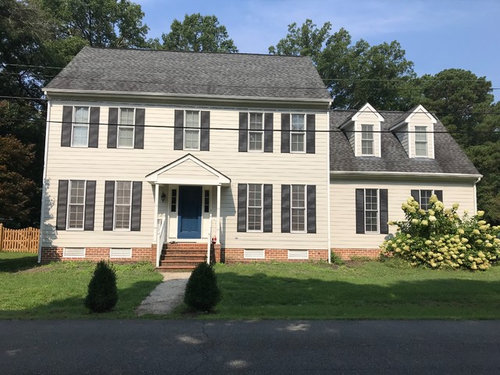
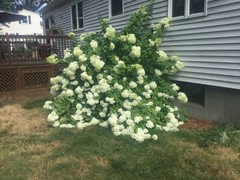
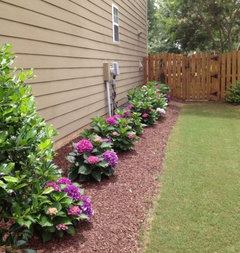
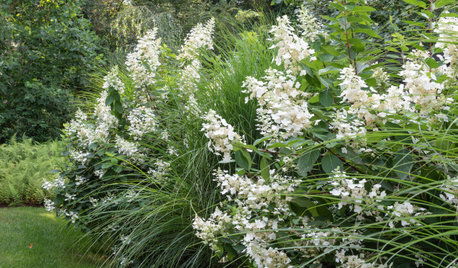
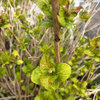
We are redoing our foundation plants and I am hoping to be able to move these remaining shrubs. I like the hydrangea (actually it's three shrubs, a mama and two offsprings, which have grown outside the borders of the bed) but I would prefer a shrub like this in the back yard along the fence line rather than where it is covering the windows. My questions are:

Should I wait until dormancy to move it?

How far back can I cut these shrubs without damaging or killing them?

If I can't move them, can I cut them back to manage the size and still get blooms?


I don't think I can move them without cutting them back considerably because where I want to put them is quite a distance away. I am in zone 7b central Virginia. Thanks for any advice!

Comments (14)

  • 8 years ago

    Blooms on new growth so can be cut back without losing flowering. Try pruning down low before attempting moving of large plants. If deciding to go ahead and transplant do it when the shrubs are leafless.

    Jennifer Young Fine Art Studio thanked Embothrium
  • PRO
    8 years ago

    Thanks for the advice! Do you have an opinion on how low I can go? 2 feet high? I had a beautiful limelight in my prior yard and it was pretty tough. I don’t think this is a limelight but looks pretty similar.

  • 8 years ago
    last modified: 8 years ago

    You're trying to dwarf it so you will want to go quite low - maybe something like 6 in. high. And the flowering may be impacted at first by doing this. Also when these shrubs are pruned back hard each year they need to be compensated with fertilization and mulching.

    Do the pruning at the end of winter, before new growth starts. Maybe with starting it over, then pruning each year to the lowest pair or two of buds (on the previous year's growth) you can have it at about half the height it is now for some years. But it will always be genetically programmed to grow 10-20 ft. tall and wide over time, keep trying to achieve such size.

  • 8 years ago

    Hi Jenn, cut back a overgrown PG last Sept.

    Today

    Jennifer Young Fine Art Studio thanked hyed
  • 8 years ago
    last modified: 8 years ago

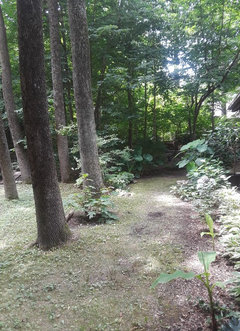
    I'm going to respectfully disagree with cutting it back drastically and moving it when it's dormant..I've heard that it's better to move when the ground's warm and the plant needs 6 to 8 weeks before a freeze..we've moved quite a few large shrubs in the summer and all of them are doing fine..we use a garden fork to loosen it..we dig carefully..we water faithfully after planting..we were prepared that they could die but we wanted to keep them big for screening so we went for it..

    a limelight on the left that was moved on the 4th of July a few years ago..hard to see it behind the tree..it's tall but not as full as yours..we have a shady lot..we have minimal blooms and the bottoms of the shrubs die out but they were clearance plants and add some screening below the tall trees..you have to work with what you've got right?..
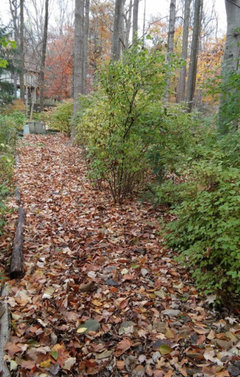
    a viburnum that was at least 8 ft tall..it needed more space so we moved it and filled a gap in our back hedge..the path belongs to us..I planted the hedge away from the boundary..I made this comment just to show that it's possible to move a large shrub..
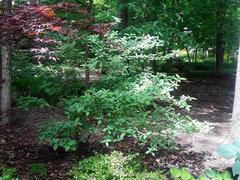
    another limelight..there's actually 2..taller on the left and a short one below it on the right that I might move..I plan to shape everything up a little next year..

    Jennifer Young Fine Art Studio thanked nicholsworth Z6 Indianapolis
  • 8 years ago

    Consider not moving it. It seems fine in that spot. Just prune it hard in late winter.

    Jennifer Young Fine Art Studio thanked guyground
  • PRO
    8 years ago

    Thank you everyone for taking the time and care to advise! Though I must say now I'm still a little confused about what to do. :-D I have read online to move plants early enough so that the root system re-establishes itself before winter dormancy, and then other articles about hydrangeas specifically that state one shouldn't move them UNTIL dormancy. That's why I thought I'd ask here. But it seems like there are folks having success either way, so maybe they are hardier (and/or heartier) than I imagine them to be, at least with the right amount of TLC.


    One other option I have considered is doing something similar to what hyed has done and prune and reshape the hydrangeas under the window, fronting them with some miniature boxwood type shrubs. But I would still have to end up moving two of them (albeit just steps away rather than several yards) because they aren't lined up and are growing out into our very small yard. I also spend almost all of my available time in the back yard gardening and playing with my veggies and flower beds, and really want to keep it that way. So I question how "good" I will be at keeping these shrubs a manageable size if they remain in the front. I really do think they would be great as a screen in the back yard along the fence line between my house and the neighbor's house, so my inclination is to move them and let them do their 10 foot spread with abandon there.


    One additional question once I've settled on the question of "when or whether" I should move them, is what kind of fertilizer do y'all recommend to help them along? Thanks a million!

  • PRO
    8 years ago

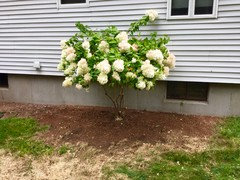
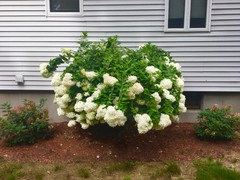
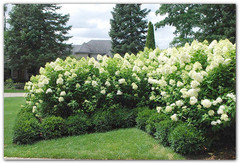
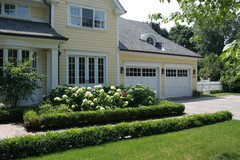
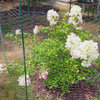
    Here's a pic or two of the hydrangea/ box combo idea. I really love this combo but I'm not sure I'd have enough room in my front bed to do it, even with pruning.


  • 8 years ago

    Jenn those are Little Quickfire

  • 8 years ago
    last modified: 8 years ago

    I haven't used any fertilizer..I put my homemade compost around them occasionally..I think the hydrangeas in your second photo are arborescens not paniculatas..you can grow macrophyllas in your zone right?..I would use them if I were you..they won't be too tall and they're so pretty..these aren't mine..just a screenshot..

  • 8 years ago

    Jennifer, I would move the really large ones you currently have since they are just too large for the space you have available. IME panicled hydrangeas aren’t easy to keep very much smaller that they want to be because they regrow so quickly, even when hard pruned. If you like the look of the boxwood in front of panicled hydrangeas, choose a smaller cultivar such as Bobo (3’-4’), or Little Quickfire or Little Lime, which get to 5’ or so in all directions, and replace the front planting with some appropriately sized for your space. Be sure to choose a boxwood cultivar that is both slow growing and resistant to boxwood blight. When planting, give them enough room to accommodate their full size plus about a foot more on the house side so that they aren’t brushing against the house and you won’t have to be regularly pruning. It will look a bit sparse for a couple of seasons, but will look far nicer with less work in the long run.

    As far as using big-leafed hydrangeas (H. macrophylla) or smooth hydrangeas (H. arborescens), they will both need afternoon shade in your area, so unless you can provide that, use the more sun tolerant panicled hydrangeas, just a smaller cultivar.

    Jennifer Young Fine Art Studio thanked NHBabs z4b-5a NH
  • PRO
    8 years ago
    last modified: 8 years ago

    Thank you! I will look into your suggestions. I am planning to try and stick to a largely "blue and white" theme for the front yard, so maybe Bobo would be a nice choice if I go the route discussed previously. Yes I would worry that this location would be too much sun for anything but a panicled hydrangea. It is more or less east facing but even so I estimate around 6 hours of full sun in mid summer. I do agree it would be better to move what's there. We've had a pretty awful bare look for a couple of months now but our plan is to address the area around the front porch this fall and then just clear and mulch the rest of the beds for spring planting when I may have more selections in the garden centers.

  • 8 years ago

    It is worthwhile checking garden centers in your area now if you haven’t. I planted a huge bed ~15’x60’ a few years ago, largely with fall planted shrubs and perennials and didn’t have any problems. In my area it works well because the soil is warm but the air is cooling and days are shorter, so less stress on the plants than in the spring when days are longer, the soil is still cold, but the air tends to be warm to hot. I mulch well to keep the soil warm as late as possible for better root growth in fall and to reduce any possibility of winter heaving. And you may find that plants are reduced price so that the garden center doesn’t have to winter them over. I went to the garden center with size and general plant in mind, such as gold evergreen under 15’ in height or Rhododendron between 5’ and 15’ or gray-leafed groundcover. I didn’t find everything, but found more than half of what I needed.