Software
Houzz Logo Print
christopher_cnc

Not Your Typical Houzz Landscape

7 years ago
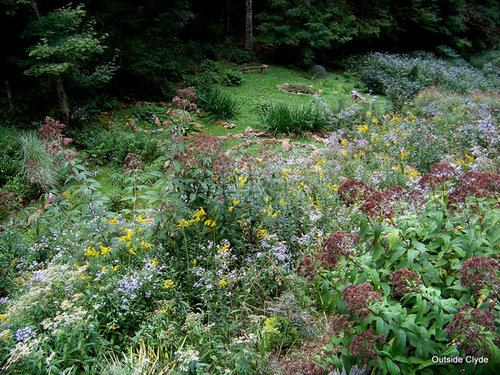
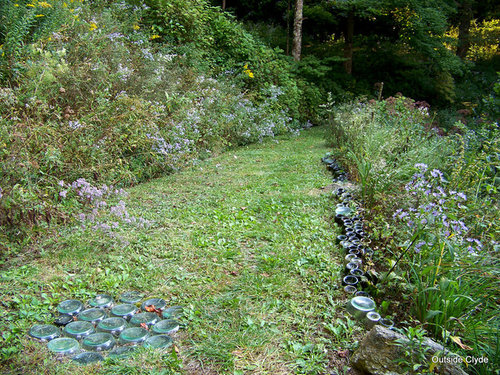
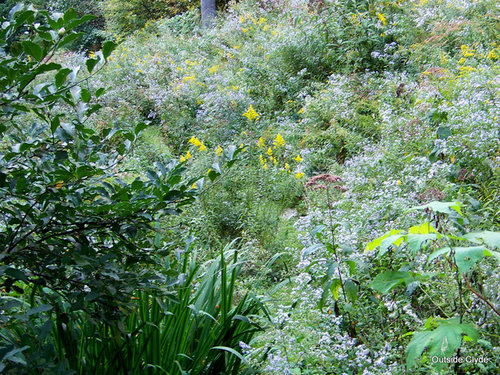
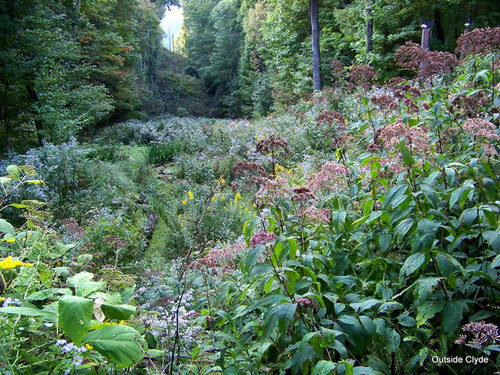
This is the Tall Flower Meadow at 4000' elevation in the Appalachian mountains of WNC on the first day of fall in 2018. The garden is now ten years old. The meadow is created by editing; a form of maintenance that involves planting directly into the mix, seed sowing, self sowing, removal of the dull and obnoxious and most importantly allowing the free flow of nature to fill in the open space left by the gardener.


Three acres of gardens are maintained in this manner. This photo shows a generous one quarter acre, enough space for the house and grounds of most landscapes you see here. The meadows are all cut down over the course of the winter to have a clean slate in the spring for the arrival of thousands of daffodils and millions of minor bulbs.


The civilized looking main entry path is a trap to lure people into the wild.


One of the dominant species in bloom right now is the pale lavender blue of the straight species New England Aster, Symphyotrichum novae-angliae. Not my favorite, but that is what happened this year. No two years are alike.


Working in collaboration with the flow of nature, the collection of plant species that live here is nudged in the direction of wild flowers. The need for editing has slowed down over the years as the desirable plants claim and hold space. The only real chore of summer is keeping the paths mowed. The very idea of weeding in a conventional sense simply does not make sense. There are no weeds in a meadow.


Come the first killing frosts when the Tall Flower Meadow is no more, the evergreen Under Garden of Winter comes out of hiding. A whole new garden takes over into late spring.


Comments (12)

  • PRO
    7 years ago

    It seems like a nice solution for the size area you have. Love your bottle stepping stone. Would love to see a whole path like that. Someone would need to drink a lot of wine!

  • 7 years ago

    Lucky I know a lot of wine drinkers. The jug wine bottle stepping stone is my mom's ripple. She's slow though. I only get one per year from her.

  • 7 years ago

    I

    JUST

    LOVE

    THIS!!


    I have a small area of "yard" that was only established last year due to a building project. Standard "loam" was brought in and your typical grass mixture was sown. Last summer was too dry, so the grass didn't take off well. This summer was also dry, so it still isn't lush. The Red Clover is by far healthier than the grass.


    I decided over the winter to make it a meadow, because who wants to mow? And, we love the insect wildlife it brings. I have planted a small number of seedlings this summer, but first I dug up and removed the existing grass/weeds to put in my seedlings. (I grow everything from seed). I was worried that if I put seedlings directly into the grass, they would be overwhelmed and wouldn't make it. This fall I did glycophosphate some small areas with the plan of tilling and then covering them with leaves and mulch so they can sit all winter and be ready for Spring. I found out the hard way that Spring is too busy here for me to remove grass, dig the soil, and get seedlings in. I need to have the spots ready for planting next year.


    Can you give me some insight into the editing method and how your seedlings survive? When I say "seedling," I mean some will have very few pairs of true leaves. Are there some that just can't out-compete the grasses? Some people might say if they can't outcompete grasses then they shouldn't be there, but I'm not convinced of that. Plants, once established, can compete with grasses, but I don't know if that guarantees their seedlings will.

  • 7 years ago

    I tried something that was a prairie version of this in Oklahoma, and found that without yearly burning, it became woodlands.

    How do you cope with tree seedlings...it must be worse in your area than in Oklahoma?

  • 7 years ago

    Deanna I have grown and planted a number of species from seedlings I wanted to add to the meadows like Baptisia, Thermopsis, Veronicastrum and Amsonia. The grasses were just another and pretty minor plant to deal with since I did not start from a lawn, but a hacked and sprayed electric utility easement. I'm now a designated no-spray zone.


    The most critical thing for these small plants in a tall meadow is sunlight. To that end my editing for their survival is making them a skylight while they grow big enough to compete. Essentially I make sure they do not get smothered and shaded out by their neighbors. I don't worry about getting the roots of the close plants. I just cut or pull the tops off things so the seedling plants have some sunlight from above and elbow room. I actually prefer not to weed down to bare soil since open ground is an invitation to more seeds germinating, often the more aggressive things.


    The skylight principle applies to everything I plant, trees, shrubs and purchased evergreen conifers since I usually start very small, many times with rooted twigs and sticks that follow me home from client's gardens.


    Doing this in a 'lawn' is going to be a bit different because turf grasses will have stronger more competitive root systems, but it can be done. You can certainly spray, dig and pull the grass to speed things along. I wouldn't worry about getting every bit of it. Over time the wild flowers you plant will get taller than the grass and it will start to weaken from the loss of sunlight.


    dbarron I most definitely get a lot of tree seedlings, maple and birch the most. Here in WNC you can't turn your back on any kind of landscape because the forest will take it back faster than you think possible. I will pull tree seedlings after a nice rain if I see them while wandering the meadows, but I don't make any big effort to do that.


    The meadows are cut to the ground once every year in late winter leaving the shrubs and evergreens of the winter Under Garden. Small tree seedling can't handle being cut down like that long term and as the meadow thickens with the wild flowers there is less open ground for tree seedlings to germinate. That amounts to the same thing as mowing a lawn or hayfield to keep trees out. Burning is another way of doing that. Burning is also likely to favor particular prairie species too.


    So seeing tree seedlings in the meadows is not a big worry since I know they will be cut down on an annual basis killing off most of them.

  • 7 years ago

    I love your philosophy ,... maybe because it is what I use but because I live in Central Texas , I get a totally different product, more grassland . We are just coming out of another big bad drought and I need to do some clearing out < or trampling down of the dead. We had the wettest September ever so the spring promises to be a glorious one. Drought always ends in RAIN and lots of it. Fall is pretty muted since not much germination and growing happened. What grew was tagged by hungry critters wearing high heeled shoes and tiaras.

    My Base is a a Live oak /cedar brushland /grassland. I love annuals that seed over and over. I need to work mostly in Natives because of what works here that can put up with the floods and desert rhythms of nature. I am dealing with 13 acres , but really just the 2 around the buildings is intensely messed with. I am planting Large plants out in the grass. Mostly prairie silphiums Salvia farenacia , agaves, echeandia texensis . I plant turkscap and Ageratina havanese in the woodlands. I pick sites where seedlings of red spanish oak are growing. Deer love to eat the oaks but don't like the Ageratina. It is still on the level of spot planting in the wilds. The wilds are damn pretty in themselves.

    My problem is that I never know when the drought will nix a years or two plantings since irrigation is out of the question.. I planted out 100 Nolina texana and ageratinas this spring but we had 11" of rain (august - August) and 50 days above 100 so most of all those are dead. I felt bad putting them out in the dusty in April soil. , but I needed the room to get the next batch of molina's going. I did see 5 that made it.. My solution is to grow nolinas and ageratinas every year and what make it make it and what doesn't , oh well, so it goes. This year seems to be a more friendly year. I put out the coddled Nolina seedlings early into the hills. I will go and collect my turkscap fruits soon for next years plantings and spread out my Pavlonia lasiopetala seedlings. The drought killed some west Texas Muhlenbergia emersleyi seedlings. The parents are blooming beautifully so I will collect and try again. I like to garden in drifts of large grasses in the native mix that is there naturally ( which is mostly invasive KR bluestem Lately )

  • 7 years ago

    "The wilds are damn pretty in themselves." Absolutely! And it only takes a little bit of maintenance to kick them up a notch.


    It makes the most sense by far to select plants from the wild flowers that grow naturally in your region as the main base for the most success. It is the gardeners in us that encourages experimentation in other plants that have similar needs.


    My meadows are naturally on the wet side and this has been one of the wettest years since I have been here.

  • 7 years ago

    Our meadows can be cracked and dry or knee deep in mud. I had 16" of rain in the last month after11" in 12 months. It is schizophrenic gardening. Nothing stable about it. I accept dead years as just part of the cycle. I look to north Mexico (which isn't that far) to kick it up a notch. They might as well be natives regardless of the international border. Monterey is closer than Oklahoma city. I have collected from New Mexico but I have found that what works in Sandstone based soils does not always work in Limestone based soils. I now collect from southern New mexico and Arizona cloud forests but I have to watch out because our humid periods will be the death of them. They have not always been a success.

    I wander around looking for where water will trail in a light rain and where it will settle in heavy periods. Where would a seed settle and grow naturally. I wander aimlessly with my hori hori knife in hand . I call myself the directionally challenged Garden Thug when I am like that.

  • 7 years ago

    A very nice flora for a Garden Thug to explore. I never would have felt deprived as a gardener if I had lived in that ecoregion.


    This is the Tall Flower Meadow today during the rains of Hurricane Michael as seen from my front porch. I get this same view inside the house. The bottom of the garden which closely follows the mowed areas is a natural drainage. In the recent past it was a shaded mossy seep.


  • 7 years ago
    last modified: 7 years ago

    God it is more than lush. More rain. Just what you guys need.

    I am not a fan of Horse herb but I think I will let it go. Tired of fighting it and it does make a foot hardy ground cover, so why am I fighting it.

  • 7 years ago

    I had to look up Horse Herb to see what it was, but it is definitely something I would have to learn to live with. For me it can be the Wild Strawberry and Cinquefoil. I just pull it when it tries to cover/smother something I planted or prefer.

Sponsored
Buckeye Basements, Inc.
Average rating: 5 out of 5 stars40 Reviews
Central Ohio's Basement Finishing ExpertsBest Of Houzz '13-'21