Software
Houzz Logo Print
canishel

Some questions about tropical milkweed

7 years ago
I'm just learning about milkweed, so apologies in advance for ignorance...

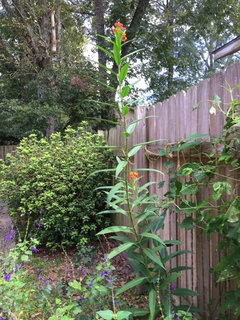
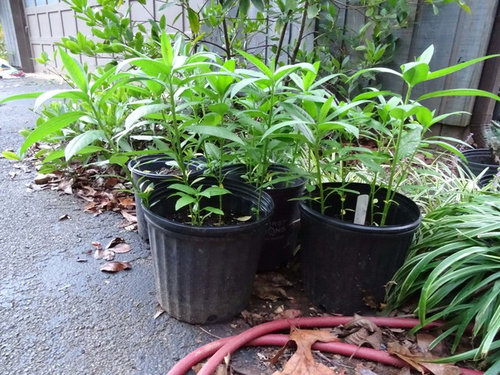
I was given some seeds labelled "southern milkweed". The following photo is what grew from those seeds this summer:


Are they A. curassavica? The leaves don't look like those of A. viridula. They may be beginning to flower; I can't tell yet.


I'm in zone 6b (east Tennessee). If left out during the winter, they will probably freeze. So should I bring them inside for the winter as is? Should I cut them back before bringing them in? If so, how much? Or should I wait until spring to cut back when I put them outside? Last frost date is usually late April. Then, should I grow them in pots, or in the ground and take cuttings for the following year?


Do I need to be worried about Ophryocystis elektroscirrha for this first growth? Does OE infect aphids? I just cleaned some aphids from these plants. How is OE spread? That is, I read that infects some species of butterflies, but is OE carried by anything else? Are the spores killed by cold weather?


I'm so confused...

Thanks for any help, and for any advice for questions I haven't thought of.


Comments (12)

  • 7 years ago
    last modified: 7 years ago

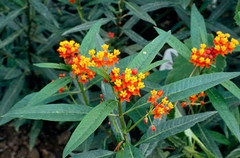
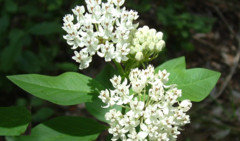
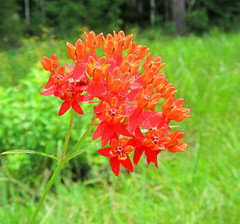
    Canishel, the leaves look a bit wide for A. curassavica, but I'm not totally sure. Once they flower they should be able to i.d.. The plants look more to me like Gomphocarpus physocarpus, A. perennis or A. texana. Those species have wider more flexable leaves. Those of us with cold winters don't have to worry about OE as much because our milkweeds die to the ground in winter, taking the disease with them if they have spores. The Asclepius perennis, Aquatic Milkweed is a perennial. The tropical milkweed, A. curassavica, the swan/balloon milkweed, Gomphocarpus physocarpus, are grown as annuals in our areas. The tropical and swan milkweeds will grow fast from seed and flower in the 1st year, so if it were me, I just start new plants from seed in early spring rather than fuss with trying to overwinter them inside The Texas milkweed, I don't know if that would be a hardy perennial for you or not. If you can just show a pic when your milkweeds are in flower we should be able to make a posative i.d..

    canishel thanked Jay 6a Chicago
  • 7 years ago
    last modified: 7 years ago


    If you have a sunroom or place that's sunny inside then overwintering them inside is fine. I don't have an indoor sunny spot. I do have a light system that I'm going to start the tropical milkweeds under in a few months. I grew the African swan milkweed, Gomphocarpus this year for the first time. I got off to a late start, and then the Monarch caterpillars ate it down to a stick, so it had to recover, and it now has flower buds, but the leaves are turning yellow and falling off so it is a beautiful milkweed, but I'll have to wait until next year to see the plant in all its glory. There are some folks in this forum that know a lot more about OE than me. Hopefully they will chime in and answer any more of your questions about that. Tropical milkweed, swan milkweed, Texas milkweed.

  • 7 years ago

    Jay,

    Thanks so much for the info and the pix.

    The buds on my plants are very tiny. Don't know if they'll flower before it gets too cold. But we'll see.

  • 7 years ago

    Canishel, if you can take a closeup of the flower buds it might help make the i.d. more apparant.

  • 7 years ago

    Thanks. I'll wait a few days or so until they get bigger.

  • 7 years ago

    ok, cool.

    canishel thanked Jay 6a Chicago
  • 7 years ago
    last modified: 7 years ago

    OE infections are worse in the deep south and the west coast because the milkweeds live year round so they build up spores that can infect any butterfly that comes in contact with them. There is also speculation that growing Asclepius curassavica in the deep south where it will grow all year is drawing some of the migrating Monarchs away from their flightpath to mate and lay eggs on tropical milkweeds that are likely infected. The other butterfly being affected by OE is the Queen butterfly. It's closely related to Monarchs and uses the same hostplants, milkweeds which is where they also pick up the pathogen. You and I don't have to worry as much because the milkweeds die back up here. I did lose 2 Monarch crysalises that I believe were infected with OE. It's very sad. Yep, there's a good chance your plants are A. curassavica. All of the three I mentioned are beautiful milkweeds.

    canishel thanked Jay 6a Chicago
  • 7 years ago
    last modified: 7 years ago

    "Tropical" Milkweed (Asclepius curassavica) may be native to tropical, frost free regions..., BUT, it is quite aggressive even in the North. I am in NJ/Zone 7 and they have become weedy. I originally planted ONE a few years ago, now they are EVERYWHERE! Mind you, I do like them and the Monarchs LOVE'EM big time! (My "cold hardy" native species seemed to die off by comparison.)

    They die back after the first hard frost, BUT seeds overwinter with ease and every year their range spreads.... Still, there are worse weeds. I weed some of them but remove others.

    P.S., MissSherry, not sure if mine, or yours, or ours are coming back from the roots or from SEED.

  • 7 years ago
    last modified: 7 years ago

    I get lots of volunteer seedlings scattered all around the plants, too, Myrtle, but mine also come back from right under the root. Actually, I can see where the new growth is growing out of the root, because some of the roots are right on the top of the soil. I was surprised that mine came back this past spring, since we had a long cold spell in January, with several nights of below freezing weather, but they did come back.

    Hattiesburg's Lowe's has A. curassavica for sale now, so I bought 6 of them, pretty big plants, and the flowers are red and yellow, my favorite - the Lowe's in nearby Petal has the ones with all yellow flowers. I bought a lot of them to plant in my new butterfly host/nectar plant bed. Some people warn against A. curassavica, because it can keep monarch infections going if the leaves don't die back, but the tops of mine ALWAYS die back, they always start fresh the next spring just like native MWs do.

    Next time I go to Wiggins, I'm going to look and see if the A. lanceolata that grow roadside has any seed pods. Probably not, since the mowers always get them before they have time to mature. I've never found eggs or cats on this type of MW, but I used the leaves to finish feeding monarch cats one year when I had more cats than MW leaves in my garden - it worked well, brought them to adulthood!

    A. lanceolata -


    Speaking of volunteer seedlings, the one A. curassavica in my garden in Hattiesburg was a volunteer I dug up out of my old garden and planted here - it's tall!


    Sherry

  • 7 years ago
    last modified: 7 years ago

    Thanks for all the help so far.

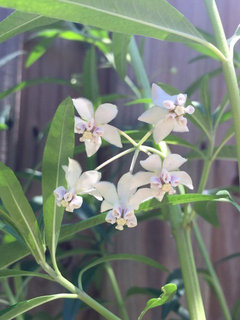
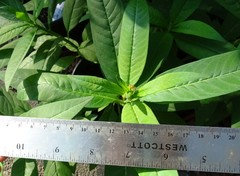
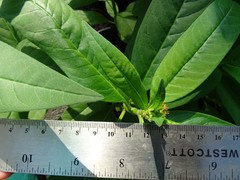
    Here are two pix of the buds. Curassavica?

    Miss Sherry and Myrtle Ivy, you're scaring me with the comments about volunteers. Here, tomato plants come up from seeds formed the previous years, as does thai basil.


  • 7 years ago

    From my very limited experience -- and abundance of tropical MWs in my yard -- they certainly look like curassavica to me. And I'm oh so jealous of how lush and healthy your leaves are! :)

    canishel thanked javiwa
Sponsored