Software
Houzz Logo Print
richard_cavell

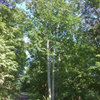
What tree is this?

8 years ago
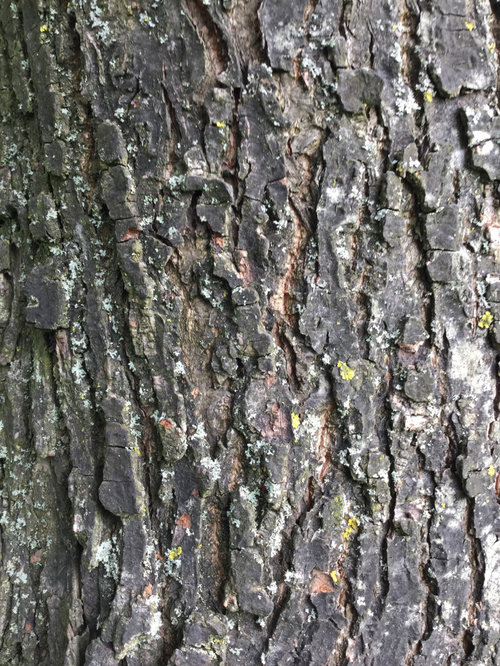
Ashton Gardens, St Anne's-on-the-Sea, Lancashire, England. September 2018.


Comments (25)

  • 8 years ago

  • 8 years ago

    It’s a Tilia. You and I would call it a Lime tree. Our American friends would call it a Linden.

  • 8 years ago

    Floral, pardon my ignorance, but I was just wondering if calling this tree a lime tree causes any confusion with the gardeners in the UK who grow citrus in pots?

  • 8 years ago

    No, it doesn’t. Very few people grow limes since they require a lot of warmth and need to be grown in a heated greenhouse. People who grow citrus usually grow the hardier ones like Meyer lemon and kumquats. Linden trees are so common, and limes so rare, here that anyone referring to a lime tree would be assumed to talking about a Tilia.

  • 8 years ago

    Yeah, some herbal tea blends list "lime" as one of the ingredients and they don't mean the citrus lime as they mean linden flowers.

  • 8 years ago

    Very interesting, thank you both for your enlightening comments!

  • 8 years ago

    I'm not sure gardener's here are quite as with it as floral suggests there... if you said your tree is a 'Tilia' they wouldn't know what you're talking about, unless reasonably well versed in horticulture, or planted the thing themselves [usually lost the label], and if you said it's a Lime tree, they would want to know where the limes are...

    A bit cynical but I think near the mark... speaking from experience..

  • 8 years ago

    Not sure about that, Malorena. I wouldn’t expect people to necessarily know what a Tilia is but outdoors in a park, street or wood I think a lime tree would clearly not be presumed to be a citrus. Anyone interested in gardening, nature or woodwork would know that I think. Lime is used in street and house names and I don’t believe there’s much doubt they’re not talking about citrus. Context would make it pretty clear imo. I don’t know when lime took over from the older name, linden.

  • 8 years ago

    Per Wikipedia: "Lime" is an altered form of Middle English lind, in the 16th century also line, from Old English feminine lind or linde

  • 8 years ago

    Yes, but when did we start saying lime instead of linden? Btw Wiki mentions lime bushes which is a thing I’ve never heard of or seen. I just did a few google for ‘lime tree’ and the UK sites unequivocally talk about Tilia, not citrus.

  • 8 years ago

    Back in 1995, yes a while ago, my neighbour had a tree and I asked what it was,... she said 'a Lime tree'... I looked it up and found it was called a 'Tilia' which I had never heard of, and my first thought was... where are the limes?... lol...

    ..and I had been gardening for 10 years at that point in time... which included killing off a Meyer Lemon after one season...

  • 8 years ago

    My Dad grew up in New Malden on a street called Lime Grove which indeed had a number of Lindens (& no citrus) at that time in the 1950's. The new subdivision and street names probably dates to 1890-1910.


    This link suggests as far back as 1570.

    Lime etymology

  • 8 years ago

    I once lived in Lime Walk. I knew from the age of four what a ‘lime’ tree was. They’re common street trees, often pollarded. I’ve lived in two other streets with limes. . Much of the Tree debacle in Sheffield is about limes. I’m really surprised you managed to grow up here without coming across limes, Malorena.

  • 8 years ago

    Actually if you're talking about a wild tree in the US the common name is Basswood. The USDA pages call the introduced and hybrid Tilias 'Linden' or 'Lime' but for the native species the common name is listed as Basswood, which is what I always heard it called. I don't know enough about Bass (the fish, I suppose) to make a guess as to why, though.

  • 8 years ago
    last modified: 8 years ago

    There's lots of trans-Atlantic differentiation between common names for familiar plants. Blessedly a Brit that used to pop up on this site just about every time an American used an American common name for a plant on forums that I followed, to insist that name was invalid - with of course only the European common names they were used to being the "correct" ones - moved on awhile ago. (Also they would complain that Americans using American common names in America amounted to Americans trying to force these names onto British persons. At the same time this party was telling American posters they should be using European common names instead of the "wrong" American ones).

    "Basswood" is from "bast-wood", in reference to the once economically important fibers contained within the bark.

  • 8 years ago

    The USDA confirmed my guess as to the name. It is because of the bast you get from the tree. Native Americans used the inner bark which is very fibrous as an excellent source of cordage fiber.


    I attended a cordage workshop at the Native American historic site where I used to work and they cut down and collected this bast from a young basswood. Pretty cool stuff and so neat to see one of the local answers to the human need across the globe for fibers and cordage.


    Here's the USDA link: https://www.plants.usda.gov/plantguide/pdf/pg_tiamh.pdf

  • 8 years ago

    Wasn’t that Pineresin, Embo? Although he was pedantic he was very knowledgable. And of course he was niggling about British, not ‘European’ names. I don’t think he was asking that Americans use German, Italian, Spanish, French, Dutch, Lithuanian....... ....... or any of the many other languages spoken in Europe.

  • 8 years ago

    I'd agree w/others that the most common vernacular for this tree in America is basswood. Similarly, buckeye in America & horse-chestnut (or something or other) in Europe for Aesculus. Sycamore in America and plane in Europe for Platanus.

  • 8 years ago

    The only people in Europe who call Aesculus ‘Horse Chestnut’ or Platanus ‘Plane’ are those inhabitants of the British Isles who use English. The majority of Europeans call them a wide variety of completely different names. This is, of course, stating the obvious but is just a reminder that it does rankle when all of Europe gets lumped together.

    The OP is asking about a tree growing in a park in Lancashire, England. So using the British English common name makes sense, or Tilia if he wants to use the botanical genus name.

  • 8 years ago

    The deal with common names is that they are just vernacular appellations - nicknames as it were - so they will vary from country to country, language to language and even from region to region within the same country. And different plants can carry the same common name. So there is NO "correct" common name nor a right or wrong one....they are what they are and whatever one is common to your region or area or country is the one to use.

    And because of the huge variations in common names, it is always best to refer to the plant in question by its botanical name, as that will remain the same regardless of your place of origin or native language. Unless of course the taxonomists get their hands on it............... :-)

  • 8 years ago
    last modified: 8 years ago

    Common names for birds were somehow standardized awhile back and certain subsequent British publications have been presenting particular individual common names for trees as being for instance the "preferred" ones. This is what the former forum pest stated they were up to, trying to train posters here to use a single "correct" common name for each species of tree that came up. In an attempt to help institute a standardization of common names for trees, just as had been done with birds.

    With again, the acceptable common names only being those this party had identified as kosher while being a British English speaker. So American posters were repeatedly told for instance there was no such thing as a silk tree, that it was called pink siris and so on, through the list.

    Recurring objections by various parties to this behavior had no effect. Except to eventually produce the aforementioned completely hypocritical complaint about Americans trying to force American common names for trees onto British persons.

  • 8 years ago

    Actually, I missed the line at the very top of the OPs post that said he was in England. Or I wouldn't have brought up the American common name.


    Interesting about the English language (is it only English language?) bird names being standardized. I suppose that makes sense because what with migration and all you're talking about the same birds in a lot of different countries. Good luck doing that with plants. Actually I like hearing about the different names. Although with regards to Horsechestnut and the Buckeyes, they may all be Aesculus but Horsechesnuts aren't Buckeyes or vice versa. (I grew up in Ohio, the 'Buckeye State'.)

  • 8 years ago

    I’m a gardener, I call them tilia, never understood the Lime reference (and there are lime trees /shrubs). I invariably go Lime what? If any such reference are made to them but I’m from Ontario. It’s often easier to just use the latin. Linden and Basswood are also common.

  • 8 years ago

    The OP is in England so it makes sense to give him the names used in his location.