Software
Houzz Logo Print
bmaggic

New to shrubs, help with design ideas

I recently scored some lovely shrubs in fall clearance, most are 3G size. Can anyone help group similar needs/companion plants together from this list? I will be planting them in zone 6a, Ontario. Mainly full sun locations, at a cottage type property with woodlands at the edges, so some part shade areas too.

Black lace elderberry

oakleaf hydrangea

old gold juniper

purple leaf sandcherry

Miss Kim lilac

double play gold spirea

burning bush

my monet weigela

I really enjoy bright coloured foliage and contrasting pairings. Feel free to suggest other options, I’m in planning stage. Thank you

Comments (10)

  • 7 years ago

    a pic of the area would sure help ....otherwise.. how much space do you have .. whats there now .... etc ...

    i dont understand the comment about varying sun availability ... but then asking for groupings ....


    ken

  • 7 years ago
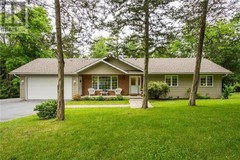
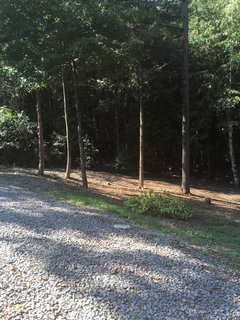
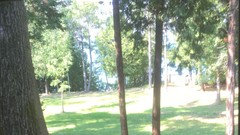
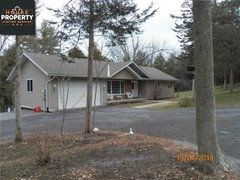
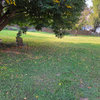
    Thank you Ken. Here is a pic of the front, side and back areas I’m considering. There are currently some foundation plants around the house but very sparse. I can add better pics in a week. I think I must have not phrased correctly as I’m just so excited to have a blank canvas (sort of) to start with.
  • 7 years ago

    That house doesn't need foundation plantings, there is no exposed foundation to conceal. (I wouldn't have furniture right in front of the picture window either). Colored foliage plants are too horticultural to have mixed with natural vegetation, these should instead be placed near the house. Think in terms of zones of naturalism starting at the house and then extending out from it, in rings. With the least wild looking plants immediately around the house and the most naturalistic appearing the farthest out on the property. So for example double flowers right at the house, single flowers among the trees and semi-double kinds between, when talking about that particular aspect of garden plants.

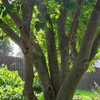
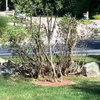
    The scattered, slender stemmed retained trees shown here need evergreen shrubs to form a transition between their bare trunks and the soil. However some of them are so spindly that there will be a limit on how attractive of a scene can be produced with them still being present and visible.

  • 7 years ago

    "That house doesn't need foundation plantings, there is no exposed foundation to conceal. (I wouldn't have furniture right in front of the picture window either). "

    Very arbitrary and personal assessments. Foundation plantings have long since morphed away from 'hiding or concealing' an exposed foundation. Instead they are used primary to ground the house to the landscape, soften the geometry of the structure and help it to blend with the setting. And they are often used to break up vast, boring expanses of siding which is not overly appealing to look at.

  • 7 years ago
    Thank you both for replying.
    The idea of naturalizing and thinking in rings outward from the property is very interesting and helpful, I will try to employ that!
    In terms of foundation planting I find the current state just too plain and no design impact happening with texture, height, contrast etc. Also I find it sparse, no point of view.
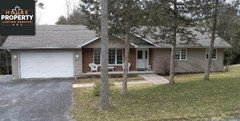
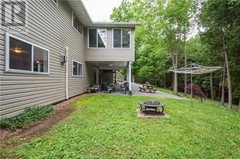
    In my current garden, I like a multitude of closely spaced perennials and my back drop is woodland, so lots of shade. For this property, the design possibilities are spinning my thoughts all over. Having said that, I’d like to make it cohesive and relaxing to look at which is why I’m considering more shrubs and groupings of impact plants. I’ll add a few more photos if that helps anyone help me cull ideas down from the clouds! These were taken in April.
  • 7 years ago
    Another one of the back
  • 7 years ago

    consider removing the large shrub to the right of the door ...


    also.. increase the depth of the bed on the same side.. it looks very shallow ... so that anything planted there.. is actually going to be ON the house ...


    also.. do you know whats on that corner?? ... it looks under the eave .. which mean it will always be growing out to the light ...


    also.. i find the grass in the rectangle formed by the walkway... mostly useless ... and i would put in a garden there .... it will bring great relaxation when sitting on your porch ... [of which.. based on the small pad.. i dont where else you would put the chairs.. presuming you enjoy sitting out there..] ...


    keep in mind.. foundation plantings are planted to hide the foundation... NOT ON THE FOUNDATION .. and when properly done.. the shrubs or plants.. can grow in typical form.. without infringing on the house itself ... as well as get in the way of gutter cleaning.. etc ...


    take the common names of your plants.. use a search engine to find the latin names... and then look to the images page.. to try to understand how your plants will grow .. in the years to come ... the real trick is trying to place them.. in your scape.. with plenty of room to grow ... rather than planting them for the size they are today ... with no concept of the future ...


    good luck


    ken


  • 7 years ago
    last modified: 7 years ago

    Yes: the practicalities of building maintenance is one of the important reasons not to box in structures that do not have inherently plain features like exposed foundations with foundation plantings. If a visibly appealing house is set in an attractively landscaped situation it does not need to have its base all planted up. If you ever plan to wash windows, do work on the siding or empty the gutters of this one keep in mind that beds full of plants coming right up to it are going to be in the way (don't ask how I know this!).

    I've also had a realtor tell me that my shrubs were "hiding the house" and a threat to my wood siding. (It's of a generally similar style to the one shown here, and like it not a 400 year old stone cottage). Another - a family member - told me one time my back yard was "over-planted". And an issue of the bulletin of the main local arboretum here actually included a piece from a garden writer warning not to plant your yard up too much because then the property would become hard to sell! So if you are planning to unload this new place some time you might want to keep in mind such viewpoints, which are prevalent.

    B Maggic-Ontario Z6 thanked Embothrium
  • 7 years ago

    I have found it useful to organize my property by considering similar trees as groves, and anchoring them in a unified ground cover and or shrub layer. I suggest using ropes or flexible hoses to create "islands" or groves and see if the resulting paths among them makes sense from a functional standpoint. You can preserve the open park-like view if you add only low ground covers or make it a more complex, 3-d landscape with layered plantings. But first you need to organize it spatially. This is one way to start, by thinking of how you MOVE through it. Then test your idea by imagining how you will SEE through it. View it from each window inside (not just at the window, but seated at the dining table or lying in bed). View it driving by at 30 mph, and as a slow approach and entering the drive. In the yard, look up and see how the canopy interacts with the sky. Find what is most exciting/moving/peaceful about your little piece of earth and you will know what to preserve/reveal/highlight. It's not always so obvious. For me, it turned out to be the soaring bare trunks of locust trees and their gothic twisting branches against in the sky. So I limbed them up and resisted the urge to add competing vertical distractions, and the suggestions of many people to consider them "weed trees." In another area I am now struggling with, there are too many trees (spruces, dogwoods, maples and arborvitae) that were planted too close together. I know I have to make choices - what to prune and what to remove altogether so that another tree (or void!) can prevail.

    I'm now rambling, but I can give you this advice. Get advice from an arborist about all of your trees because they represent the biggest investment in time. What are they, and what is their potential?