Software
Houzz Logo Print
stuartlawrence

Prevent Root Rot?

Hey guys, I was wondering if there's something you can inject into either the soil or the tree weekly or monthly that can prevent phytophthora root rot from attacking the susceptible tree's.


Thanks

Comments (22)

  • 7 years ago

    Nope...all you can do is keep your trees in the best condition possible. Understand their cultural requirements and provide them. Drainage is key. The pathogen is in the soil...

  • 7 years ago
    Also insuring adequate air flow can be added to the helpful list...
  • 7 years ago

    I'm glad Stuart asked this, because I'd been wondering the same thing. I have a beautiful little Tsuga mertensiana I grew from seed, but I've read that they're highly susceptible to Phytophthora here in the east. I'm not sure what I'll do once it gets too big for a pot.

  • 7 years ago

    Plant on mound. Add dirt as needed to account for both erosion and tree growth. Good drainage and good airflow. If I dont plant my conifers this way, they die.

  • 7 years ago

    Thank you Brandon for a very clear explanation!

  • 7 years ago

    I lost a few plants to what I arm chair diagnosed as phyotpthora root rot, and was told to plant on mounds/berms to compensate for my wettish soil with high a clay content. Like Pete_powell I am believer in the mound technique now. All my mound planted conifers have been thriving for years now.

  • 7 years ago

    What if your soil is mostly sand. Would it still be necessary to plant on a mound?

  • 7 years ago
    last modified: 7 years ago

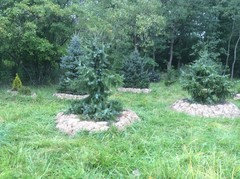
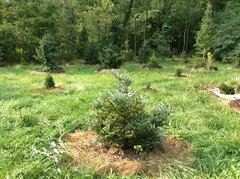
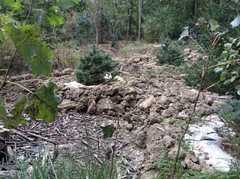
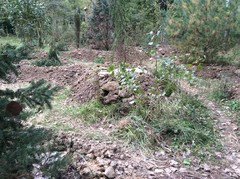
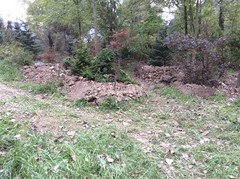
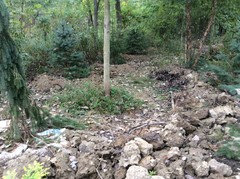
    Dirt to build up my mounds and plant some more conifers this fall. I am finally building after 6+ years of owning this property. The first year I planted (spring 2013), I noticed that every conifer that died from those first spring 2013 plantings was low to the original ground surface, despite the fact I planted them on a mound (too small). I make much bigger mounds now and rarely lose conifers. The ones that are not doing so well now are the ones planted in full shade that should never have been planted where they were. When leeches live in your “soil”, mounds are a must. Ive also got a vernal pool that lasts until Aug/Sept. The Horstmanns Silberlocke looks much better now, the picture was from right after I removed the cardboard from around it. All but the most reddish/brownish tips are green again.

  • 7 years ago

    How do you determine what the size of the berm/mound should be?

  • 7 years ago
    last modified: 7 years ago

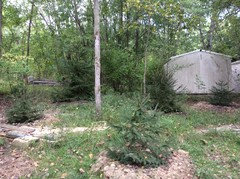
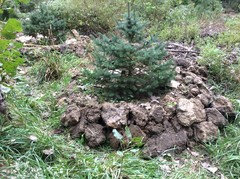
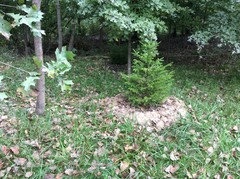
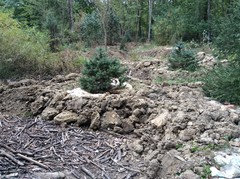
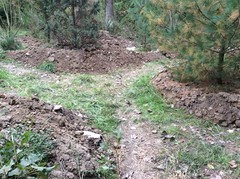
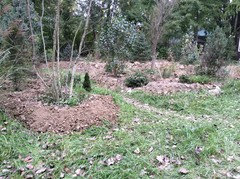
    It depends where I plant as some places are wetter than others. It is not unusual for the “bottom of the pot/rootball” to be planted at or noticeably higher than original ground level. Sometimes I rough up/loosen ground, set tree on top then surround with dirt, most often though I build a mound first then put bottom of pot/rootball on top of mound then surround everything with an even bigger mound. I am constantly adding dirt to my mounds as they settle and erode and as the tree grows. Some of my mounds are probably higher/larger than they need to be. On these I try to give them a yearly dose of hollytone since I use clay mostly for my mounds. I was also making sure the large mound trees got water during dry spells. This year my water wasnt even hooked up. Im confident I could plant in the (late) fall, never water (even during planting as soil on all 2 acres is plenty wet in late fall) and never lose a tree due to lack of water. In the pic, the “boardwalk” (which eventually will be covered with mulch) is there so I can get to my backyard during the winter/spring months without wearing rubber boots. Ill try to snap a pic this winter/spring where you see 5 P. Abies islands and the boardwalk. This is towards the edge of my vernal pool when it gets around its largest size. It is my “shady P. Abies grove”. It is doing better than I thought it would.

  • 7 years ago
    last modified: 7 years ago

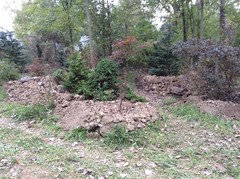
    The upper center/left is the deepest/ last part of vernal pool to dry up in Aug/Sept. The larger P. Abies is the left P. Abies in above pic.(pic looks in opposite direction as above pic). Note P. Strobus and P. Pungens mounds in vernal pool area (a few others as well).

  • 7 years ago
    last modified: 7 years ago

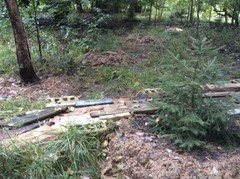
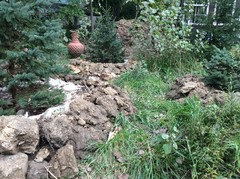
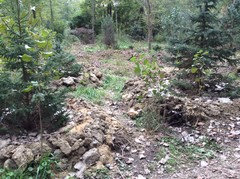
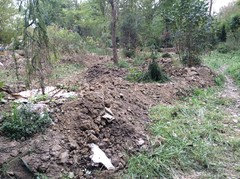
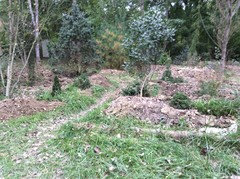
    Moved some dirt today. By next May these will be nice and smooth. Another area that fills up good with water.

    smaller mounds (theres another p. abies behind)

    etc.

  • 7 years ago
    last modified: 7 years ago

    I'm pretty sure one doesn't actually have to be 'licensed' to apply commercial products in one's own yard. You definitely do to apply them to someone else's. Labels might say "to be applied by professional only", but that's just CYA legalese. This is discounting "we must protect idiots from themselves at all costs" states, like NY & MA.

    But no matter anyhow. Using any fungicide, to deal with Phytophthora root rot in ornamental horticulture, is a bad idea in the long run. Do it on a large enough scale, and you are just begging for a resistant strain to emerge. Most rules have exceptions though. I kept rhododendrons like 'Trewithen Orange' alive through the beastly summers of 2010,2011 and 2012 with Fosetyl-Al (then sold as consumer "Aliette" but no more) but only on an experimental basis to 'prove' once and for all it is really the roots that are killed by our conditions - by root rot specifically - and that plants weren't innately killed by high air temperatures. And of course it worked, although they never thrived especially in those 3 years. They would have died without. No doubt. I had negative controls that did. (likewise...the huge Himalayan cinnabarina rhodies I saw at Australia's National Rhododendron Collection in Olinda must sometimes see temps in the 90s...as they do more regularly in Sonoma County, CA. But in climates with cool nights and scant-to-moderate summer rainfall, "soupy soil of death" never occurs!) I am now tediously attempting to graft these types rhodies, to tolerant rootstocks. It will take years to confirm the outcome but my grafted elepidotes are doing superbly; varieties that would have been wiped out by this summer's jungle-like conditions are thriving! This is something the US nursery industry should do for certain rhododendron cultivars and species, but they are just too lazy and greedy to do it. (including, ironically, a certain "non profit" that loves to tell people on the phone that Rhododendron rex will grow in Arkansas LMAO. One MUST give the ACS and conifer wholesalers credit for being far more progressive and innovative in this area...by offering firs on Abies firma, for example. JC Raulston proposed such grafting back in the 80s - he probably wasn't the first - so it's an idea that is taking time to catch on here. All rhododendrons produced by the world's largest wholesaler, in Germany, are grafted.)

    Another sort of exception, is innoculating soils with 'natural' fungicides like actinovate, or the stuff that comes built-in to the certain real versions of Promix. ("biofungicide" - a different microorganism than actinovate) I am now trying these out. I've already used the promix for years, with my rooted rhodie cuttings, and I have a hunch it is helping. But I only bought actinovate because Kathy Van Veen told me in her experience it definitely stopped root rot of lepidote rhodies in her humid greenhouses...and if anyone should be qualified to vouch for it, it was she. (RIP Kathy)

  • 7 years ago

    BTW mound planting does help. I wasn't disagreeing with that, just addressing other approaches.

  • 7 years ago

    David there are all kinds of chemicals that you have to be a professional to buy, at least in CA.

  • 7 years ago
    last modified: 7 years ago

    Well, again, California is one of the most special and precious of states LOL.

    Federally, there are indeed "Restricted Use" pesticides/herbicides, but even very powerful fungicides are seldom classed that way. I came very close to buying a fungicide that is not mefenoxam (sp ?), or phosphonate based like Aliette, Fosetyl, but a 3rd and totally different chemical class. Labeled for phytophthora of course. As a backup in case resistance developed to the other 2. (or the biofungicides) It was $200 for a pint! The website definitely didn't indicate any restrictions...in fact from my brief reading about RU herbicides, it seems to me they are not sold through normal web retailing channels.

    Then I just said, no, stop the madness! I know that grafting and addressing cultural factors (mound planting) is the best long term approach. So that's what I did. I still use "chemical" fungicides in certain cases. And I do think they can 'rescue' a plant by keeping the parts that are still alive, alive, while cultural issues are corrected. For example I have replanted a couple rhodies that had severe dieback, and they never 'needed' treatment again, but I am almost sure the Fosetyl-Al kept the dieback from completely finishing the plant off. But again, that's technically not how they are supposed to be used and I know that.

  • 7 years ago

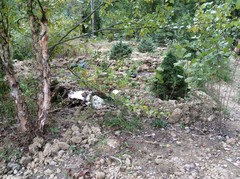
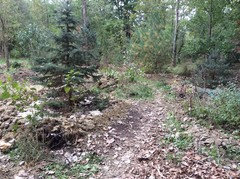
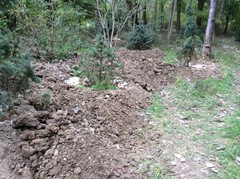
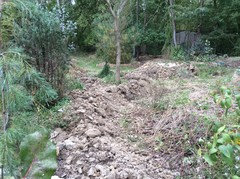
    It has been dry the past two weeks and I have been having fun merging mounds.

  • 7 years ago
    last modified: 7 years ago

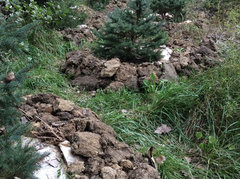
    This is about half the dirt I moved and by next spring it will barely be noticeable.

  • 7 years ago
    last modified: 7 years ago

    Looks good pete!

    An excavator and angle dozer would go a long way to making a pond and island paradise. :-)

  • 7 years ago
    last modified: 7 years ago

    Thanks Bill! This is my immediate backyard. I will have a pond that will be fed by a stream that runs down my front yard. I dug one about 10 years ago, see pics of member “pizza” at end. About 5 years ago some were looking about 14”. Need to visit again.

    https://www.ohiogamefishing.com/threads/koi-ponds.88232/page-2

    There are a couple areas in my immediate backyard where I could put liner down between my tree mounds and get 2-3’ depth ponds. Ive thought about it and may also do this eventually, but my number one goal is to get water away from my house and that direction is down my sloping front yard.

  • 6 years ago
    last modified: 6 years ago
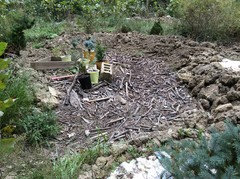
    I wonder if a 15G rootball could be dusted in sulfur to prevent phytopthera root rot. I finally removed the Spartan Juniper that turned brown after a summer of hellish heat, remained surprisingly green and happy looking and very shortly thereafter turned totally brown. Probably non adaptable to Central Texas anyway, but when I removed it today, the roots were less than 8 inch diameter. Came right out of the ground. The nearby cherry laurels planted a year later turned brown as well. Guess it has the same thing. I need to plant in this area, no real alternative. I have built up behind railroad ties. My mountain laurels, and Pomegranites are doing great in that same area! I want to replace the Spartan fussypants with a Leyland Cypress...but not sure how susceptible they are. Hence the question about dusting with sulfur or other preventative.

    Houzz is one of the best forums for these obscure things....Oh, btw...I am on fine granite gravel type soil basically, with clay bottom no doubt.