Software
Houzz Logo Print
lindalana

Drainage problem in pots

As I am moving potted hostas in the ground seeing some drainage problems. Pots are commercially predrilled. Does anyone have experience dealing with this?

Comments (18)

  • 7 years ago

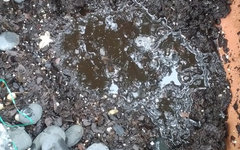
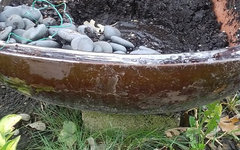
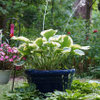
    this is rather wide bowl shaped with flat bottom pot. Middle has draining hole. I have noticed that my mini hostas did not thrive in it although they were ok. Now I know why.

  • 7 years ago

    two ways to solve a drainage issue ...


    1 --- if plastic.. drill more holes ....


    2--- use different media ...


    the upside... you got them out of there before winter... so we wont be guessing why they died over the winter.. eh???


    ken

    lindalana 5b Chicago thanked ken_adrian Adrian MI cold Z5
  • 7 years ago

    3 ---- do both ... lol ....


    btw.. you are probably in a catch 22 with the shallow pot.. that will dry too fast ... if there is too much drainage .. go figure on that ....


    ken

    lindalana 5b Chicago thanked ken_adrian Adrian MI cold Z5
  • 7 years ago

    I use spin out bags in my garden. The bags are water and air permeable. So what I have learned is this: putting a hosta into decent amended soil in a spin out bag is great. BUT if you then plant the bag in, for example, clay unamended soil, where do you think the excess rain water will go? So perhaps the soil under the pot is not allowing for drainage. You can amend the soil there; do what Babka suggests or add something like pea gravel under the pot (not in the pot).

    lindalana 5b Chicago thanked newhostalady Z6 ON, Canada
  • 7 years ago

    Pot is heavy ceramic so adding more drainage holes is problematic. I do have ceramic drill but wall is thick. What am thinking has to do with physics of water table. As in perched water table which would be higher for flat bowl shape than for tall pot. But hostas look better in flat bowl specially minies. It was my fairy garden bowl.

    It sits on a cement brick and middle of the pot where drainage hole is actually slightly elevated.

  • 7 years ago

    Come to think of it, I have had some hanging pots that have refused to drain. I had to take a bamboo skewer and shove it up the drain hole and then have all this thick black stuff come out followed by muddy water. The organic goodies in the soil have all broken down and they plug the hole. How long has that "media" been in that pot?

    I really like the look of a shallow container.

    -Babka

    lindalana 5b Chicago thanked Babka NorCal 9b
  • 7 years ago

    If the brick is under the hole it is not helping. I use 2-3 bricks, or pot feet, so that air is under the hole.

    lindalana 5b Chicago thanked beverlymnz4
  • 7 years ago

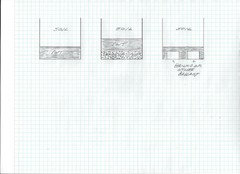
    I thought your ceramic planter was in the ground, but now I see from the picture you had placed it on a cement slab. So if your media is good, then how about adding a wick to wick away some of the PWT? OR Since your drainage hole is elevated in the pot, you might consider a ballast. Here is a photo from Tapla showing perched water table using ballast (see third one):

    lindalana 5b Chicago thanked newhostalady Z6 ON, Canada
  • 7 years ago

    So being an un-meticulous gardener, I often have empty ceramic pots sitting around, and I observed how little it takes to plug up the drain hole, to the point where it will easily hold rain water for days, and even weeks. When potting a plant, I always amend the drain hole with broken pieces of clay pots, rocks, and broken pieces of walnut shells that the squirrels provide. I carefully arrange things to make sure there are multiple channels for the water to escape, before throwing a scoop of potting soil (sometimes mixed with pebbles for even more drainage) over top of it all.

    As for drilling more holes in clay/ceramic pots, a diamond drill, which you can find at Lowe's or Home Depot, does a quick and slick job. I think I paid about $20 for a 1/2" bit. You'll want to keep it wet when drilling, I just squirt a bit of water from a water bottle periodically.

    lindalana 5b Chicago thanked StevePA6a
  • 7 years ago

    Except that when drilling more holes, it depends on the quality of the ceramic pot. I have lost a few when they suddenly shattered from the vibrations. Play with the media mix before you mess with drill bits, unless you have endless supplies of ceramic pots.


    Or have you thought of putting each mini in a pot of its own then filling in the spaces with bark that gets covered by the spreading hostas?


    Don't worry, we will figure this out or give you many ways to mess with it. Wicking is interesting.....


    -Babka

    lindalana 5b Chicago thanked Babka NorCal 9b
  • 7 years ago

    Update- tried to put landscape fabric for wicking material, tried just putting stick for lowering PWT, effect was about the same, drainage improves but soil still soggy. It was mixture of Promix and fine pine bark applied this year.

    Attempted to put pot on 2 bricks as opposed to 1 , again seems to be smidge better.

    Added more bark to mix...

    I need to look what might be considered a ballast and how does this work. Picture does look about what I want to achieve.

    Am thinking I will have no choice but to drill couple of more holes and then implement everything else I learned.

    It does raise questions about structural integrity of the pot...

  • 7 years ago
    last modified: 7 years ago

    Would orchid mix or cactus mix provide better drainage? Is there some way to add "something" to the bottom of the pot on the inside so that it slopes toward the drain hole like a shower stall? Layers of duct tape?????????? Scratching head. Plaster of Paris? Hypertufa? Cement?

    How deep is that pot? Also wondering if the problem is that there is too much room in the pot for those little minis and since their roots don't fill 3/4 of the pot, the soil says too wet between waterings. The top where the plants are is fine, but the lower part stays wet.

    -Babka

    lindalana 5b Chicago thanked Babka NorCal 9b
  • 7 years ago

    Here are some of my thoughts. I don't think you can use landscape fabric as a wicking material. Best wicking material is 100% rayon.

    You mention you used Promix and fine pine bark. What is the percentage of each? I believe you used pine bark fines, not fine pine bark.

    I believe a ballast just uses up space. I think since your drainage hole is actually higher than the lowest part of the container, you could just fill up that part with flat large rocks and maybe pea gravel? That would eliminate how much water can actually remain there. Along with a wick, that might do the trick?

    I would try some more things before drilling holes. Different media, like Ken mentioned? Maybe gritty mix? One never knows if the pot will crack when drilled, and it certainly looks like a nice container.

    lindalana 5b Chicago thanked newhostalady Z6 ON, Canada
  • 7 years ago

    I'm getting the impression none of you are familiar with the diamond drill bits I was referring to in my post above. It's NOT the nonfunctional spear-shaped carbide junk. Here's a photo of my 1/2" bit. It drills a very clean, chip-free hole in pots. No need to worry about pot integrity. Takes no more than a minute to drill a hole in a typical pot, 2-3 min. for a thick bottom. Well worth the investment.

    lindalana 5b Chicago thanked StevePA6a
  • 7 years ago

    Steve- We have used diamond drill bits and mostly they work, but not always. They do get dull and you don't know when that time will crack a pot or a tile. No "fur shur" guarantees with them, so if you really like the pot and it is not replaceable, think twice. No problem with most of my terra cotta pots. One store that sold the pots to us had us buy the pot then they would drill the hole with their extra fancy drill at our risk. Same with the tile guy who drilled our porcelain tiles. So I would suggest drilling as a last thing to try on a ceramic pot that your really, really like.

    -Babka

    lindalana 5b Chicago thanked Babka NorCal 9b
  • 7 years ago

    OK Babka, I stand corrected. I haven't had any trouble with it after quite a few holes. Using water to dissipate the heat and slurry is important, for those who might not know.

  • 7 years ago

    If you want to raise the level of the inside to slope more towards the drainage hole, how about using caulk?