Software
Houzz Logo Print
saadia_humza

Large Basement Flooring

7 years ago

Hello
we had flood in our 900 SQF carpeted basement due to sump pump malfunctioning.
We have removed the carpet and are thinking of putting up poreclain tiles. The basement has a guest bedroom and large recreational/ family room.
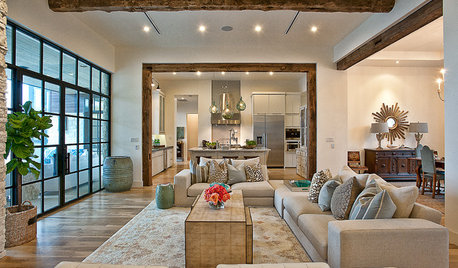
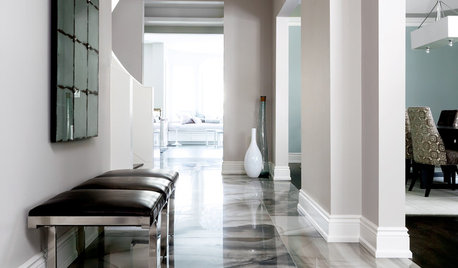
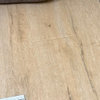
I have attached the picture of our current wall color, we are looking into either wood look or Calcutta marble like tile.
We are not planning to change the wall color due to insufficient finds. We want something g that currently works with our wall color and in future also works with most paint colors.
There is a crack in the concrete floor at one place, what should be done about it before placing the tiles?
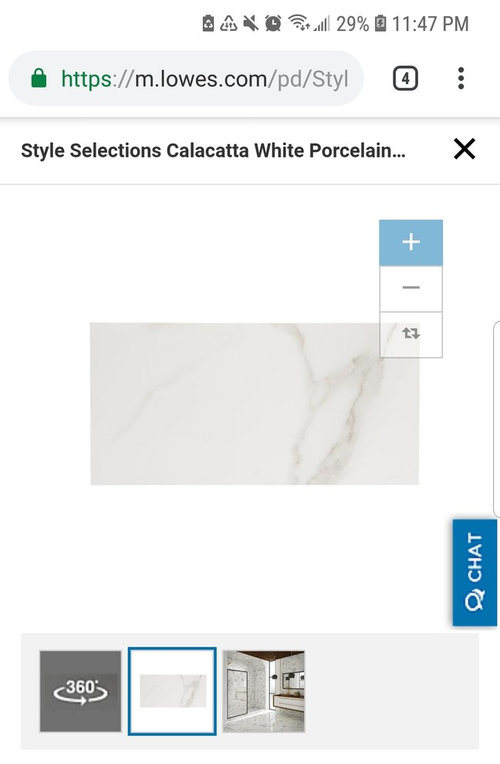
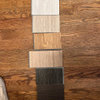
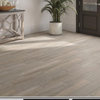
I have added the marble like tile that we liked, in wood look tiles we are confused which shade will go with our walls and will provide us with ease in future too.
We dont want some expensive tiles as we have a large basement to cover.
Anything important that we need to know before putting up the tile flooring? The concrete floor underneath is quite leveled.
thanks a lot.

Comments (11)

  • 7 years ago
    last modified: 7 years ago

    Setting tile on concrete is generally a safe bet. However, a crack indicates movement that may eventually cause the tile above it to crack. You should fill the crack as soon as possible. Do a search for "filling cracks in concrete" for more information. Most advice says to chisel out the area on each side of the crack so you have 1/4" minimum width and depth. Brush the crack with a wire brush then vacuum up the dust and debris. Fill the crack with a concrete sealant using a caulk gun. Use a scraper to remove excess caulk. HERE is a link to one such site.

    Porcelain tile is the most water resistant of tiles. The quality clay and high firing temperature give porcelain tile a 0.5% water absorption rate. Ceramic tile is the next best type to use having only a slightly higher water absorption. The weak point of these tiles is the grout between them. It's not a significant weakness.

    It's good to know that your basement floor is especially level. Many people are favoring the extra large tiles—16" and greater length and width. Extra care must be taken to prevent LIPPAGE which can happen with any size of tile due to uneven mortar beds as well as variations in tile thickness, and (sadly) just sloppy workmanship. With larger tile lippage is often due to slight valleys and hills in the subfloor that are mostly invisible to the eye. The greater area of large tiles means one side or end could be level with a previous course but unlevel with the next course due to the hill/valley beneath the two. The tile setter must check for lippage as tile is laid. In fact, a tile setter should check a floor for these hills and valleys BEFORE beginning the job.

  • 7 years ago

    When purchasing tile, it isn't the MATERIAL cost ($3/sf tile is common) it is the INSTALLATION cost. That cute $3/sf tile will turn into a $13 - $15/sf project. Which does NOT include subfloor preparation.


    And I will guarantee you there is WORK to be done to that slab. A crack will require repair before throwing down a tile. And if it was covered in carpet, you will have some grinding and some patching to do before anything is done. I would add $2-$5/sf onto the cost of the $13 - $15/sf install. Which means you *COULD be looking at a (worst case scenario) project of $20/sf.


    If you do not have enough funds for new paint, I suspect you do not have enough to work with tile in a basement.


    Patricia's suggestion of dricore ($2/sf) + good laminate ($3/sf) + labour ($4/sf) = $9/sf is MUCH cheaper than tile. And you will still have money left over to paint.


    Please find out your MAXIMUM budget and then work BACKWARDS. I would estimate $2-$3/sf for subfloor preparation for a floating floor. I would then estimate $2/sf for labour to install a floating floor (laminate, vinyl, cork, etc). If you want a subfloor system like Patricia suggests, you will need $2/sf for the system and $2/sf for the labour to install. That's how a came up with $9/sf for a NON-PERMANENT floor. The EXPENSIVE version (with the subfloor system) = $8100. If you go with floating over concrete (no subfloor system) you are down to $6-$7/sf = $5400 - $6300.


    If you have $18K for the tile, then go for it. If you need to keep the project BELOW $10K, then you will want to look at a non-permanent floor. If you need to keep it WELL below $10K, then you will work with floating floor only (no subfloor system).


    And remember, carpet does NOT need the $2-$3/sf subfloor preparation (assuming the crack in the concrete is not serious). Carpet is sold per square YARD = 9 square feet. A $20/sy carpet is really only $2.22/sf. The underpad is also sold per square yard which is often 1/2 the price of the carpet. Installation costs are SUPER cheap ($1 - $2/sf). You can get some REALLY GOOD carpet, installed for less than $5K. And it can be done in a day.


    But first things first: your total budget will need to be assessed. Tile might be WELL outside your budget to begin with.

  • 7 years ago

    Nice vinyl is great for a basement application. Much more forgiving to install.

  • 7 years ago
    Thanks to all for your detailed replies.
    actually due to previous flooding we want to go for some permanent flooring option.
    I am saying g we dont have sufficient funds for wall paint is that we are trying to put whaye era we have into tile project.
    we got an estimate of $5400.
    our basement is not much used specially in winters so tiles being cold would not be a problem. is subfloor necessary for some other reasons too?
    what abt LVP is it water resistant?
  • 7 years ago

    Vinyl tiles are a type of plastic, so water cannot damage them. The underlayment is suggested because, if you have moisture wicking up through the cement, that moisture will be trapped under the vinyl (it does not "breathe") -- so the underlayment allows for ventilation and evaporation. Many high quality vinyl planks are labeled "waterproof". Another nice thing about vinyl planks is, if one gets damaged, it can be removed and replaced with out tearing up adjacent tiles.

  • 7 years ago
    last modified: 7 years ago

    There are a variety of Luxury Vinyl Planks and Luxury Vinyl Tile types. Some of these snap together and are the type raee referred to. Others are glued down with a mastic and still others are self-stick. Those using any type of glue are not suitable for areas that flood. The reason for such variation in product with the same name is that LVP/LVT refers to the size, shape, and visual texture. HERE is one article on Luxury Vinyl Flooring, and HERE is another, and HERE is a final. I urge you to read up on every type of flooring you consider before making a decision.

  • 7 years ago
    last modified: 7 years ago

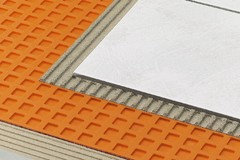
    If you're using ceramic tile, an uncoupling membrane is an absolute necessity.

    Uncoupling membrane under tiles on a concrete floor.

  • PRO
    7 years ago

    If you have flooding often you better deal with the reason for that before doing anything else. Paint is cheap so really the 130bucks to buy the paint will not impact the budget much and I am pretty sure you can do the work.

  • 7 years ago

    I would paint the walls. 2 gallons of paint cost $70. It's worth it. Have you looked into LVT? Might be a good option.

  • 7 years ago

    Patricia, we are interested in vinyl planks for our basement also. What brand did you use, we are looking for recommendations! Thanks in advance.

Sponsored
High Point Cabinets
Average rating: 5 out of 5 stars21 Reviews
Columbus' Experienced Custom Cabinet Builder | 4x Best of Houzz Winner