Software
Houzz Logo Print
minpin1

LVP on stairs?

19 days ago

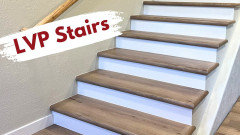
With a 1950's bungalow basement needing a new floor - waterproof LVP is the best option for us. To keep things looking consistent we will use the same material in the breezeway that is 5 steps above the basement. Would you use LVP on the stairs (including nosing) or custom match wood treads and paint the risers the same as the wall? I'm thinking the wood treads is safer and a probably a better look.

Comments (12)

  • 19 days ago

    Thanks Paul! Glad you got back fast. I'm just having a quote done and I had a sixth sense about this. Yes, the look of LVP on stairs... just reads cheap. I only have few treads so the cost of solid wood plank is really worth it. Super!

  • 18 days ago
    last modified: 18 days ago

    You also need to make certain that whatever you use the rise and the run remain withing coide for safety. The rise for EVERY strp needs to be identical, that includes the bottom step. Adding flooring to treads can often be more trouble than it is worth.

    D Bee thanked millworkman
  • 18 days ago

    Excellent point! We will definitely be contracting a licensed installer who knows. I agree, code is very important!

  • 18 days ago

    Follow up question --- do we get the stairs dealt with before the LVP goes in or after? If we are considering rise and those fine details, I'm thinking 'after'.

  • 18 days ago

    " do we get the stairs dealt with before the LVP goes in or after? If we are considering rise and those fine details, I'm thinking 'after'. "


    All before hand. "After" may mean the horse is out of the barn and you will need to change directions or worse rip out and start over.......................

    D Bee thanked millworkman
  • PRO
    18 days ago
    last modified: 17 days ago

    I do not agree if done well with the custom nosing from the LVP company all matching floors and stairs is a very nice look . I did it in my 1956 MCM ranch and loved it. This is how it will look you can for sure do the riser also in LVP


  • 18 days ago
    last modified: 18 days ago

    Just to be clear... safety matters, and it's the reason I did this carefully. When I installed wood planks on my rental stairs, I corrected the riser heights as best I could. The bottom step was dramatically off from the rest, so I cheated it with a slight ramp up from the main floor to even out that first rise.

    One thing 20 years and fifteen-ish renovations have taught me: nobody is ever going to measure your stairs except you... unless you're building new construction. So do your best to get the heights consistent, for your own safety, because you're the one who has to live with them.

    Case in point: during the restoration of my current fire-damaged house, an inspector walking up the stairs told me my handrail was too low and not to code. I had one word for him - 'pre-existing' - and that was the end of it.

    And plastic nosing on stairs? Just say no!

    D Bee thanked Paul F.
  • 18 days ago

    Thanks Paul. Ya, the LVP on the floor is one thing but the lego like installation of LVP on stairs just isn't for us. A solid plank riser and a solid plank tread is what we are looking into now.

  • PRO
    14 days ago

    "The rise for EVERY step needs to be identical, that includes the bottom step."


    The largest riser in a flight cannot exceed the smallest by more than 3/8 inch. IRC R311.7.5.1

    D Bee thanked Joseph Corlett, LLC
  • 14 hours ago
    last modified: 14 hours ago

    About to start a partial basement remodel (also a 1956 ranch!), we are going Strictly Middle Class to the extent possible. Its a nice, bone dry walkout basement with a couple of big windows in the main living area, I’m constantly going in and out of the door into the garden and backyard. Its also used as a rec room/family room when we want to flop down and chill without worrying about messing up the furniture (I’m talkin to you white slipcovered livingroom sofa…) We also have one room that is (okay, WAS…demo’ed!) a workout room. The basement gets a lot of action, its a hardworking space. Anyway, I turned my nose up at LVP for flooring, but know that it’s the practical, sensible option for below grade and our lifestyle. When I reluctantly started looking at samples, I was very pleasantly surprised by how far LVP products have come in the last 5+ years. This includes stair tread options. There are several types of LVP treads, you can indeed make a cheap choice if you don’t get guidance on selecting the right kind, but don’t write it off without some research. Real wood is indeed fabulous, but anyone with a basement is one appliance or pipe failure away from a new floor unless it’s nearly waterproof. PS - @Patricia Colwell Consulting the treads look great. Mitred edges?

  • 14 hours ago

    One other observation for having lived with this LVP in my rentals for a while. Somehow, I thought they would be hard to scratch, but just me moving some boxes and light furniture (without felt pads) around put some fairly substantial scratches that there’s really no way to fix. Totally my fault and touched up with pens and wax that are made for wood. Still haven’t rented my units out and not looking forward to seeing the floors after tenants move out.