Software
Houzz Logo Print
wysmama

Whole home generator

8 years ago
We are in the process of building our home. We had our electrical walk through and just got pricing back.
We were quoted $6,380 for a 400 Amp total home gas generator prewire with concrete pad and gas line. So, that doesn’t include the generator.
Is this a fair price? I know nothing about this kind of thing.
Is there a better way to go? We are in hurricane prone Florida and would like to have power.

Comments (40)

  • 8 years ago
    Do you have natural gas? We just put in a whole home generator. Cost was roughly $15k (natural gas). We are in south Florida.
  • 8 years ago
    Yes we have natural gas.
  • 8 years ago

    I'm going to suggest you may want to check out solar and a lithium powerwall as an option. You can do the battery diy.

    This is in the development stage. So you'll have to follow and do added research for the other parts.

    A lesser cost alternative is to use a Honda portable generator with the jetting changed for natural gas. EU3000i will handle many things the times you need it.


  • 8 years ago

    Hold up! You will spend a fortune in fuel and if a storm is headed your way or after a storm what about fuel delivery ? Check LP gas it’s much more efficient than natural gas, bury a 1000 gallon tank and done. Diesel is also great. We are going LP.

  • 8 years ago

    I suspect he has 'natural gas', i.e. fuel provided by his local utility company, therefore no need for 'delivery' - it is piped into his home under pressure, thus no need for a buried LP tank and 'delivery' and he is not using gasoline/engine fuel.


  • 8 years ago

    He says he has natural gas!

  • 8 years ago

    I just got three quotes for a smaller system (200A) and they ran between $12 and 16K including the generator. so sounds like you're in the right ballpark. (Everything is expensive here!)

    We already have solar, but a big enough battery pack to last a week would run about $100K using the PowerWall units. Pretty much a non-starter even at half that price. It's not uncommon for our solar array to be buried in a snowdrift and out of production for weeks at a time in the winter.

    Please don't feed a generator into your house wiring without the appropriate switching setup. Backfeeding the grid can be life threatening for the lineman trying to get you back on line.

  • 8 years ago

    rwiegand, how much energy were you storing in the PowerWall for a week usage? I'm thinking about the same thing, but don't think I need that much energy. I don't have solar yet and was thinking about getting both. Or, get a generator which would run off my existing 420 pound propane tank.

  • PRO
    8 years ago

    I had a whole house generator put in about 6 years ago. It powers both HVAC systems, and just about everything - one upstairs bedroom doesn't have lights (it's rarely used - no big deal), and my electric clothes dryer couldn't fit on the panel - again no big deal as I do laundry once weekly and have clothes lines in my basement if a power outage ran longer. When I replace my clothes dryer I'll get gas so it will then no longer be a problem.

    My house is about 2700 sq ft - two floors. I think I paid about $7000 for my natural gas generator. That was for the generator, concrete pad, and all the wiring that was involved, including a separate electrical panel for it in the garage (opposite end of a long house).

    I'm SO glad I have this! I go away for a month each summer so no worries about the power going out and everything in two refrigerators being an unholy mess etc. There was a time when we regularly had a 5-7 day power outage every year - one year we had TWO 10-day outages. Of course, since I got my generator, the longest my power has been out is 2 days... Ha!

  • 8 years ago

    I don't have the breakout costs for mine, but the 80KVA generator probably ran just under $10,000 for the generator, installation (not counting the propane tank itself), and automatic transfer switch. 80KVA will comfortably run a 400A Service (idiot engineers it's way oversized for the actual load).


  • 8 years ago

    We average up to 50 kWh/day during high use seasons (mid-winter and mid-summer, so with the original 6.5 kW PowerWalls that would have required about 7.5 units per day of outage at $3K each. (I can't, for the life of me, figure out where it's all going-- an ongoing frustration!)

    The newer units are half that price, and some power management could certainly reduce that demand. But power does go out around here for 3-10 days at a time-- I don't care at all about outages that only last a few hours, I wouldn't get a backup system for those; it's the serious outages I want a backup for, especially the ones that happen while we're traveling in the winter.

    A whole house generator sucks a lot of gas (the ~10 kVA ones we were looking at are the equivalent of 400K Btu for gas supply, requiring a 1" feed direct from the meter), you may want to calculate your running time on that propane tank.

    FWIW, the "average" home in the US uses ~11,000 kWh of electricity per year, or about 30 kWh/day.

  • 8 years ago

    Ron-- did you mean 8 kVA? 80 would be huge.

  • PRO
    8 years ago

    Well...is it time to suggest that "whole house" backup power may not really be needed?


    Have you considered backup power for the truly critical circuits? This doesn't mean every circuit in the house by any means...

  • 8 years ago

    Yes, definitely looked at that. A lot more electrical work (very expensive in MA) to separate the circuits into a new load center, and for better or worse the difference in price between say an 8 and 13.5 kVA generator is only about $1000. It turned out in my case to be about a wash between the two approaches.

  • 8 years ago
    last modified: 8 years ago

    I really only need backup power for the heating system, a 24kW boiler and associated circuitry. It's a 4 element boiler and I could probably get away with using only 2.

  • PRO
    8 years ago

    In my area, natural gas is less expensive than electricity. I was worried about what my gas bill would look like during a week long outage, and was assured that it would be pretty even to that of my electric bill for that same time frame - possibly less.

    A whole house generator requires a separate panel from your main panel. There is an automatic switch that kicks in when the power goes out.

    Your generator will also come on automatically once a week and run for 5 minutes. This is essential for your generator's reliability. Those with portable generators are told to do this and rarely do, and then discover their generator is not working in a power outage!

    My son had an almost whole house generator in CT. It powered about 75% of their huge, 6400 sq ft house. No natural gas in the area, so it ran off their propane tank. When Hurricane Sandy hit, they nearly ran out of propane and none was being delivered. They got their power back on when they had about 8-10 hours of propane left. He said if he had had it to do over again, he would have had a propane tank just for the generator and a way to switch tanks if needed. Can't imagine what that would have cost!

  • 8 years ago

    I made the determination that it would be cheaper to check into the Ritz Carlton for a few days than go through the process. If I was in Florida or the Northeast, getting one would be a no brainer.

  • PRO
    8 years ago

    Choosing critical house circuits for backup, allows use of a much less expensive portable generator. The challenge with these, as pointed out upthread, is that they must be started and run monthly to keep them dependable.


    Regardless of type of generator, automatic or manual switch gear is mandatory.

  • 8 years ago
    Mine also has a “priority list” which starts with a/c and refrigeration, down to TVs and lights, etc.. It is really only for a hurricane. We don’t lose power here for any other reason and we’re west enough we’d never need to evacuate so it makes sense we could host all of our families and mothers who are nearby but by themselves.
  • 8 years ago
    Thanks all. We will go ahead and do the wiring with the automatic transfer switch. Glad to know it was a reasonable price
  • PRO
    8 years ago

    I don't think you will regret your decision, wysmama. Yes, a portable generator is a far less costly alternative - it's what DD and her family have, but it's only a good choice if someone is capable of pulling it out of the garage into the driveway (often in driving wind/rain/freezing rain), and getting it started, and then has the means to keep going for gasoline to keep it running. At my age, it would not have been a good option, lower cost or not.

  • 8 years ago
    We have a 15,000 watt portable dual fuel (gas and propane) portable generator. It was only 3k. We already had a 500 gallon buried propane tank. It will run my a/c, fridge, lights, etc. The Generac auto transfer generator quote was 12k. We have to roll it out 3 ft, plug it in (electrician did all the wiring), and turn a key.
  • 8 years ago

    Ron-- did you mean 8 kVA? 80 would be huge.

    It is huge. The thing is about eight feet long, there feet wide, and five feet tall with two massive exhaust stacks on it. There's a V8 engine inside. At least I know when the mains are down because I can hear the generator run.

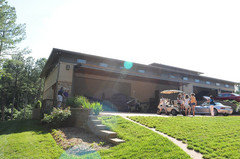
    I don't have a good picture of just the generator, but if you look on the left side of the hangar you can see the end of ti sitting there beyond the steps.


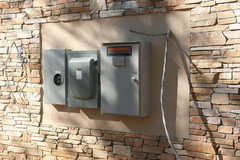
    Here's a picture of the ATS (and the service disconnect for the main power)..."


  • 8 years ago

    I wish I had access to natural gas as the OP has. We looked into getting a whole house generator (in FL) but we have no access to natural gas. The line is about 1 mile away from my house. So, it didn't seem to make sense to get a generator with a fuel supply that needs refilling. The generator would have brought only a relatively brief respite until the fuel ran out.

  • PRO
    8 years ago

    Are you allowed to have a propane tank, L Sullivan? My son did this for their house in CT - no natural gas. It ran on propane just like it would have run on natural gas.

    I agree about a generator that needs refilling. It's fine for those who are young and have a big SUV (in case they need to drive over downed trees to get to the gas station), but that was not for me. I wanted it automatic and fueled by something that would not "run out".

  • 8 years ago

    My generator will run for days and not put a dent in my 1000 gal propane tank.

    I made sure it was topped off before the Florence hit.


  • 8 years ago
    last modified: 8 years ago

    Anglo: Yes I could have a propane tank, but what happens when the tank runs out? Deliveries are probably not being made. That's why I wanted a fuel that had continuous delivery, such as natural gas. I don't think I want a 1000 gal propane tank for the emergency times and have it sit on my property all year round.

  • 8 years ago

    I don't have a generator, and for backup power prefer PV. (I have the battery, and use it for outages, but no PV yet. Someday!)

    However, I've worked in places that had backup generators. According to the folks who maintained them, natural gas made for the least hassle and best reliability. I don't recall them ever failing to start when they were needed, despite one of them being over 30 years old.

    In a serious natural disaster, gasoline and Diesel fuel will be hard to get for sure. I suspect that would also be true of LP. In a really bad situation, your natural gas service might be cut off too, but in that case you probably have much larger concerns than keeping your air conditioner and freezer running.

    Speaking of such things, to each his own, but I can't imagine air conditioning as a first or even high priority, as someone said above. If I had to use backup power based on on-site fuel storage, and didn't know how long the outage would last, I wouldn't waste a drop of fuel running an air conditioner. If it means a better chance that I can pump water when I need it for as long as I need it, I'm OK with sweating for a few days or even weeks. But as I said, to each his own.

  • 8 years ago
    We have natural gas via a city line so we wouldn’t have to worry about fuel shortages. As far as a/c being a high priority, heck yeah it is. South Florida in the summer without a/c? You cook!!! I’ve been through it many times. That’s one of the prime reasons we got this sucker lol. I knock on wood as I write this, but the likelihood where I live to have to worry about running water issues is very slim. We’re in a pretty populated area.
  • 8 years ago
    P.S. Not that I have to justify myself but we have 2 elderly mothers to worry about. I don’t know how much you know about hurricanes but last year in our very area after Irma quite a few elderly people died due to the excessive heat. So it’s a real problem. ;)
  • 8 years ago
    After being in Florida during Irma and not having power in the high heat - A/C became a priority for us.
  • 8 years ago
    Thanks for all the feedback. Being without AC makes me super cranky. Maybe not as high a priority as food and shelter, but definitely up there for me! Lol. Perhaps I am a bit of a baby.

    I figure if we are getting a generator, might as well get one that can also power the AC and all the creature comforts.
  • PRO
    8 years ago

    AC is a VERY high priority for me! I'm old and I have respiratory problems and heat and humidity make them worse. Summer in KY is HOT and HUMID - perhaps not as bad as S Florida, but it's bad enough. I'd give up my refrigerator before I'd give up my AC!

  • 8 years ago

    Interesting. I guess things have changed. And as I said, to each his own. Priorities and situations differ. Sorry, I didn't mean to dismiss anybody's needs. I was speaking only for myself.

    I may have missed it, but I don't recall hearing about people dying in heat waves until just the last few decades. I don't know how much of that change (if it is a change) is us, how much is our buildings, and how much is actual higher temperatures.

    When I was a kid in the 1960s, nobody we knew had air conditioning at home. Certainly we didn't. We had a fan in our attic window. (It still works, BTW. They don't make 'em like that any more.)

    The nicer houses were on large lots, shaded by big old deciduous trees. In the summer, the owners opened the windows.

    Larger restaurants were being built with air conditioning. Older, smaller ones downtown were still mostly cooled with stand fans or ceiling fans.

    Some added air conditioners, often installed over the door. The condensation ran across the sidewalk and dripped on their patrons. :) They pasted signs on the door saying "Come on in, it's KOOL inside." (Co-op advertising!)

    I think a big change since then is that buildings of all kinds, residential and commercial, used to be designed for proper ventilation, to handle the summer heat without air conditioning. Architects don't seem to bother any more. Now they just specify BTU/hr or tons of cooling.

    And maybe the summers really are hotter.

    Another factor may be that we're so accustomed to being cooled almost everywhere we go that our bodies have lost some of their ability to adjust physically to hotter summer temperatures. I think mine has.

    If I lived in a tropical area, or had an old or infirm person living here (that might be me someday), then I suppose that maybe I'd consider air conditioning essential too.

    But I don't think I'd have a backup generator with on-site fuel storage. A big LPG tank in the back yard would make me nervous. A gasoline or Diesel fuel tank, buried or not, might leak. The fuel could go stale from non-use. In a lengthy outage, it might run out with no way to get refills.

    So I'd go for battery backup PV, maybe with a natural gas generator in case of long periods with no sun.

  • PRO
    8 years ago
    last modified: 8 years ago

    I was born in 1943 and I remember summer nights when it was SO hot and sticky that sleep was problematic. We moved to KS and had a house with a huge attic fan. We’d run it at night, then close up the house in the AM in hope of keeping the cool inside as long as possible. We ate all our meals on our screened porch until it got so hot we had to retreat to the finished basement. Sometimes, we’d all sleep down there when the temp was brutal. When I was moved to the 2nd floor, my parents got me a window AC as the attic fan had become a big problem with my allergies.

    Then we moved to St Louis and I learned how hot it could be with high humidity. We quickly bought window units for the bedrooms and one for the kitchen. The house had been built in 1914 and had thick walls, high ceilings and terrazzo floors on the first floor. That helped a bit, but I still remember the summer of 1966 when it was over 100, 5 days in a row http://preservationresearch.com/severe-weather/the-heat-wave-of-july-1966/ and many people died. My father remembered similar times in the 1930’s when hundreds of people slept in Forest Park to try to escape the horrible heat. https://www.stltoday.com/news/archives/a-look-back-relentless-withering-heat-wave-of-killed-in/article_3821b7be-14c4-5fef-b0c9-bc383d50aafd.html

    So no, we have not all turned into sissies, it’s not hotter, and AC now saves the lives of many people.

  • 8 years ago
    David- I did not find your post offensive or unkind at all. I do think we have become more accustomed to being in AC and unable to tolerate the heat. I remember playing outside all summer without worry about the heat. Now the kids say it’s too hot to play outside.
  • 8 years ago
    You’re right about that David, keeping a huge tank onsite to run a/c is a little much and probably much more costly, in that case I would leave town (we have done that in the past when my kids were little). But with elderly mothers who can’t travel things do change. I am lucky to have access to natural gas which made the generator much, much easier to hook up. We lost our power for a few days last year during Irma and my MIL and mother staying with us and moaning and complaining the entire time was enough for me to call the generator company the very next week to start the process! ;) Sooooooooo worth the cost to me. By the way just for information purposes, because of the run on generators after last year’s storms it took 10 months to get the generator in and installed! 10 months from the time I signed the contract! Happened with my hurricane shutters too, everything was back ordered. I wonder how the tariffs will affect any of this after the new year...
  • PRO
    8 years ago

    It took DS about that long to get his generator, but boy, was he glad he did! They were without power for more than 10 days when Hurricane Sandy struck. Yes, it was propane powered (they already had a tank as DS preferred to cook with gas). I was lucky that my handyman and his HVAC brother were able to buy a truck load of these from another part of the country - otherwise, I would have had to wait for many, many months, as well.

  • 7 years ago

    I still haven't done anything yet, but in response to the comments about what is an essential need, mine is for winter heat for my northern NY house. I originally built the house with the expectation that I would have PV and/or a backup generator. Because I use propane for the kitchen cook stove, I had a propane tank installed and picked a large one. Because I wanted to have the ability to run a generator, I put the tank next to where the meter panel is, which is about 200 feet away from the house, with all utilities running underground from there to the house.


    A few years ago, I had a total freeze up of my Long Island house (due to failure of my NG-fired boiler) and I was out of town. All the radiators split. Fortunately, it was still below freezing when I got back, so there was no water damage and I was able to monitor the thawing and take care of the leaking water. It took 10 minutes to fix the boiler, but 3 months for the plumbers to replace the radiators!


    Sorry for the long text, but maybe it is of interest to some of you.