Software
Houzz Logo Print
kitasei

Can lilacs grow next to oak trees?

7 years ago

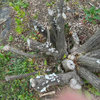
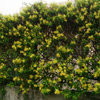
As I was raking up all the last-to-fall oak leaves this week, it occurred to me that it may not be such a good thing that the oak leaves blanket the nearby border of lilacs. Should I remove the leaves and/or apply lime to compensate? My soil is already very acidic. I've never been impressed with the blooms on the lilacs.

Comments (12)

  • 7 years ago

    I haven’t noticed in my very acid yard that the soil pH interferes with blooming, and lilacs are the NH state flower, so I doubt that acidity is an issue. (And as floral said, leaves and pine needles don’t make the soil more acid, regardless.). If they don’t get enough sun, that could be a problem, or since they tend to be quite long-lived, they may have used many of the soil nutrients they need, so I might try an application of a fertilizer formulated for blooming shrubs such as rose food and then give it a year or two to see if that helps.

    kitasei thanked NHBabs z4b-5a NH
  • 7 years ago

    I am surprised to learn that oak leaves and pine needles aren’t the acidifying soil amendments I have long thought! I will stop bothering to cover my blueberry bushes with them in hopes of nudging them to produce. My focus for this year will be improving individual plants, something I’ve fallen short on. Im rereading Beth Chattos grest book, the green tapestry, whose Mantra is selecting plant for place. But I feel I do owe it to a plant to do some things to optimize its situation. I will study the light and try fertilizing.

  • 7 years ago
    last modified: 7 years ago

    Actually, pine needles, shredded leaves, and even wood shavings are great for blueberries, not for acidity, but because they have shallow roots and so the mulch reduces weeds and keeps moisture more even, leading to better fruit production. I worked one fall in my younger years for a small commercial grower in the edge of a suburban area, and we drove around gathering leaves and white pine needles from yards with owner permission to mulch the berry plants as well as spreading other organic mulches.

  • 7 years ago

    the reason there is little or no impact is that pH is an exponential function ...


    to slightly move it.. one way or another.. you would need decades and tons of material ...


    in a centurys old forest ... you might find an impact on soil pH ....


    but in your yard .... as noted above.. you are not really going to ever experience any change or impact ...


    i am trying to simplify the concept ... not give a science or math discourse.. so if i missed by a bit ... oh well ..


    lack of flowering.. under large old trees ... would make me suspect lack of total all day sun ... of lack of water due to the trees .. especially the bad ones .. but i would even question the water variable.. with established older clumps of lilac .... they are no where near a foo foo plant that needs to be coddled ... so that would be bring me back to the need for full sun ...


    ken


    ps: if you want to change pH ... it can be done with soil amendments like sulphur


    https://duckduckgo.com/?q=change+pH+sulphur&t=ffcm&ia=web


    and note it takes pounds of it per 100 sq ft ....


    or other such things ... i think i am digressing.. so i will stop here ....

    kitasei thanked ken_adrian Adrian MI cold Z5
  • 7 years ago
    last modified: 7 years ago

    Back a few decades, when I farmed a very sandy soil with low ph, 4.3 if I recall correctly, After soil tests, the recommended amount of ground Limestone, to raise the ph to grow alfalfa (5.5 or 6.0?), was 3 tons to the acre. Not that it was the ideal amount to get 6.0 but adding more wouldn't change things to any appreciable extent on soil this acidy.

    You had to add the lime 6 months ahead of time (Autumn) so it would be working by spring. And it only lasted 2 seasons or so, before it had to be renewed again.

    I say this just for an example of how difficult it is to change soil ph for any length of time.

  • 7 years ago

    Well now I have to ask all of you if you bother to lime your lawns or rose beds. Is it all a waste of time and money? I've been lamely (not gamely) trying to do it after receiving the results of my soil test and recommendations from the County Extension office. And how is it that ashes have to be sprinkled so lightly lest they ruin the soil (presumably by changing the pH so drastically - but maybe no?) I know we are veering away from the original lilac question, but I would like to understand more about this soil pH question...

  • 7 years ago

    The soil is an enormous buffer to overcome to cause ph to change in an way.

  • 7 years ago

    " but I would like to understand more about this soil pH question..."

    For an extremely interesting and no doubt informative discussion, try posting your question on the Soil, Compost and Mulch forum. There are some very active and knowledgable participants there who thrive on talking about all this dirt stuff :-)

  • 7 years ago

    I spread the entire contents of my wood stove for the winter (10-12 gallons?) on my large (maybe 20’x55’?) veggie garden every year since we have such acid soil and it seems to keep the soil pH high enough to grow veggies well. The farmer who plants the field next door often gets a few 18 wheelers of ash from a local wood-fired power plant for the same reason. Because it is an exponential function, I don’t worry much about putting on too much.

  • 7 years ago

    Grass is different than the garden in that you can till the ashes into the garden so it gets disbursed. If you get ashes too thick on your lawn and you don't rake it in, it can turn into a hard, cement like substance that will smother the grass and/or burn it due to it's alkalinity.

  • 7 years ago

    Quercus species have allelopathic properties which may affect certain plants. I urge the original poster to research his/her particular species of oak to determine if there is a high, moderate, or low potential of allelopathic issues via root exudates, branch run-off, or leaf/acorn breakdown.

    Then research whether or not lilacs are on the sensitive list or not. Just a few years ago, ignorance about allelopathic chemicals in many of our woody plants and grasses was the norm. But information from the research universities is pretty mainstream these days.

Sponsored
High Point Cabinets
Average rating: 5 out of 5 stars21 Reviews
Columbus' Experienced Custom Cabinet Builder | 4x Best of Houzz Winner