Software
Houzz Logo Print
mkiv808

Light strips all over floors

7 years ago
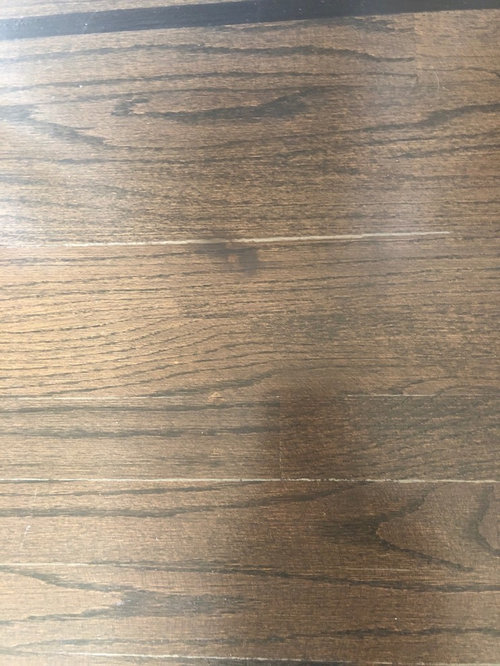
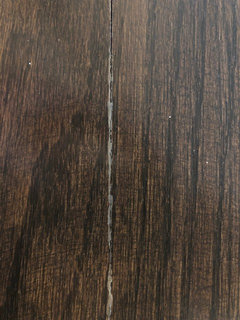
I had my floors finished this summer and they were fine, but as it’s gotten drier there’s light bands in many of the seams. It looks to me that the poly separated but I’m wondering if I need to redo poly or stain too.

Comments (53)

  • 7 years ago
    This is not veneer, it’s regular old fashioned hardwood. I had it refinished not installed
  • 7 years ago

    Yep. White line syndrome (WLS). It is either the REAL WLS (WLS#1) or it is the imitation WLS (WLS#2).


    To be clear, WLS#1 is SUPER RARE. This happens when wood shrinks SOOOOO quickly that the edges PULL APART so aggressively that the polyurethane is STREEEEEEEEEETCHED to the point of breaking. The STRETCH is white. Like when you take a beige rubber band and stretch it to the point of ALMOST breaking - it is SUPER WHITE. And then it breaks.


    Here we have the same thing. The polyurethane is stretched to the breaking point...turning it white. This is what millworkman and I are seeing in the photos above.


    You can STOP this from happening by increasing your indoor humidity - as quickly as possible. You want to hover around 45%. If the humidity was HIGHER than that at the time the floors were installed, you may have a HELL of a time keeping this floor happy.


    In essence, you want your floors to STAY at the SAME humidity levels that they experienced when installed. If it was 55% indoors that day, that's what you are shooting for: 55%


    If you do NOT have a whole home humidifier, you will want to get one for Christmas. If you don't, you will certainly need a full sand/refinish at a later date...once the floors have calmed down.


    https://www.woodfloorbusiness.com/sanding-finishing/what-is-really-causing-white-line-syndrome.html


    The link above is my FAVOURITE link for white line syndrome and the differences between WLS#1 and WLS#2. Only a professional can tell the difference between the two.

  • PRO
    7 years ago

    White line syndrome is tricky. There are many causes. White lines in the joints, along the lengths. The cause can be trapped stain in the joints that did not dry, causing adhesion issues in this area only. Or The polyurethane is too thick and stiff, not breaking as the joints pull away from each other.


    You will need to bring the humidity level back to when the floor was installed. See if, that corrects the problem. Also, you will need to do a adhesion test, to make sure no peeling or flaking will occur on the face of the floor board. Use a knife and score lines at 1/4" spacing in a cross-hatch. Stick regular blue tape on it and pull to see if, any finish pulls off. If, the finish stays in tack. Then, your issue is only in the joints.


    As long as there is no surface adhesion issue. To fix the white lines in the joints. You will need to score all the white lines, buff and recoat.


    What brand stain and finish? How many coats was applied?

  • 7 years ago
    Minwax stain, 2 coats

    3 coats oil poly, not sure brand
  • 7 years ago

    Well I learn something new every day. Seems I made a big assumption (or misread, actually) about veneer. So now I know what WLS is.

  • PRO
    7 years ago

    With 2 coats of "Minwax stain", the dry time is over a week. Check the adhesion on the surface to make sure you do not have a complete failure. It may just be in the joints and not on the surface. You might have lucked out with oil poly. If, it was a water base poly, it would be a guaranteed failure.

  • 7 years ago

    As G&S Floors points out, the TWO coats of Minwax could be a massive problem. Most stain experts will ONLY do one coat. The reason: adhesion failure of the finish. The first coat of stain soaks into the wood. The second coat of stain can (and will) sit on top thus PREVENTING the coating/finish/poly from "grabbing" the wood. This all adds up to adhesion failure.


    The polyurethane needs to "grab" wood. If there is a second coat of stain, there is no wood to grab - only stain. Eventually the finish fails. And it can start off looking like White Line Syndrome.


    I highly recommend the "tape test". It will give you a very good idea as to where your finish stands. Hopefully this is only seen on the edges and you can get away with a quick fix. If not, you are looking at a full sand/refinish.


    Either way, you will need to contact your floor finisher to inform them of the problems. Traditionally refinishers offer a 1 year warranty on their work. Check your contract just to be sure.

  • 7 years ago
    I went back to my texts with finisher, I was wrong.

    1 coat stain, 3 coats oil poly
  • PRO
    7 years ago

    Are you seeing white lines in the end joints?

  • 7 years ago
    End joints, a little here and there. Much more pronounced on sides.

    I got humidity up to 35% with a humidifier and opening windows/using less heat. Outside humidity is high right now. And the white lines are much less pronounced! Wild.

    Will see what it looks like if i can get it back to the 50-60% humidity we had when finished in August.

    But this begs the question... it WILL get dry again if we get a cold spell (I’m in tri-state area), so what next?
  • 7 years ago
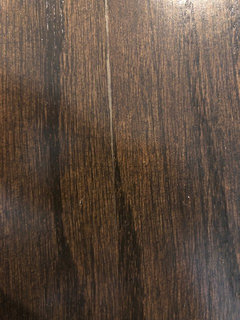
    Just took a very close look and what it looks like happened is the poly stretched at the seams. It’s brittle in spots in the seams. I can put my fingernail through it and it’s “flaky” for lack of a better word. It does not appear to be stain related. Here’s an extremely close photo.
  • 7 years ago
    Here’s another spot where you can see it starting to come apart on one side, and on the other side that there’s no seam visible
  • PRO
    7 years ago

    If, it is not an adhesion issue. It's a case of having too much polyurethane. The polyurethane film is too stiff and not breaking with the contraction. The easy fix is to get the RH back to normal range. The long fix is to score every white line , buff and re-coat.


    If, you score (cut through the polyurethane) and re-coat. The floor boards will only have 1 layer @ .001 mil film to break as it contracts. You would then not need to micro manage the RH level in your home. You are currently between .0035-.005 film thickness, for three coats of oil base poly.

  • 7 years ago

    I'm worried about the 'creep' of the white areas moving out of the seams and onto the surface of the plank. That's an indication of White Line Syndrome #2 (the adhesion failure). This creeping or flaking onto the surface of the plank is the indicator that we have adhesion issues and not the stretching of the polyurethane (White Line Syndrome #1).


    Reducing the stress on the poly (by increasing the humidity to 45% or higher) will allow you a longer time with the current finish, but it will eventually fail. A whole home humidifier is required to end the wild ride your wood floors are going through.


    I know that portable humidifiers are good enough to get the moisture levels to around 35%, but they have a hard time driving the humidity any higher. The portable units are an emergency fix. The problem needs a permanent solution = whole home humidifier.

  • 7 years ago
    Stain or poly adhesion? I guess I’m confused on that. I would think a solution would be to screen and redo poly?
  • 7 years ago

    @RK...it doesn't matter which one is failing. Both have the same issue = adhesion failure of the finish. A screen and coat = light buffing of the current finish, followed by a SINGLE coat of polyurethane. This works ONLY with WLS#1 - the one that is EXTREMELY rare. It does not work with WLS#2 - which is far more common and, I believe, is in the early stages of showing itself on your floor.


    A full sand and refinish means taking off everything that was done (including the stain) and starting over. This is guaranteed to work with ANY issue. Either WLS would benefit from this approach. Again, WLS#1 is SOOOO rare, that most Flooring Inspectors will see it once or twice in their CAREER of inspecting floors (20 years). Whereas WLS#2 will be seen multiple times PER YEAR.


    A buff and coat is great for a 7-10 year old finish that is dull and scratched but still perfectly serviceable. The buff and coat rejuvenates the old finish and offers another 10 years of handsome looking flooring before the full sand and refinish is required.


    A buff and coat relies on the original finish to be FULLY ADHERED to the wood. If the original finish is failing, then a buff and coat is simply sending good money after bad.


    Just by looking at your close up photo, I can see some of the white "creeping" towards the centre of the plank. This is most likely the beginning of WLS#2 (adhesion failure). Traditionally WLS#1 (the stretching of the poly) is ONLY seen in straight lines. It rarely flakes or creeps towards the centre of the planks. It stays straight as straight can be. Why? Because the adhesion to the wood is perfectly fine. It is simply being stretched across the seams.


    Personally I would wait a little longer before making a decision. Right now you are at the very beginning of the issue. In a few months (probably before spring brings higher humidity) you will be sure of what you have.


    If you do not wish to involve a wood flooring inspector (ie. pay for it) then waiting is the easiest option. In time, the polyurethane will SHOW you what is happening.


    Please contact your wood flooring professional and bring them back to view the floors. If they have a 1 year warranty on their work, you will need to ensure they are aware of these issues BEFORE the 1 year mark has past.

  • PRO
    7 years ago

    A adhesion test would confirm things.

  • 7 years ago
    So I’d like to do an adhesion test. Does this leave marks and need to be done in an inconspicuous area? Also, when we refer to adhesion, is it the poly to the stain? Because now that I think of it, I did have an issue where some painters had a paint barrier taped to the floor with just simple blue tape, and it took up some poly in a few spots.
  • 7 years ago
    Also I got humidity up above 50% for 12 hours so far. White marks are better but definitely still there.
  • PRO
    7 years ago

    The adhesion test will tell you which layer it failed at. Most common is between stain and poly. Although, contaminants can interfere between the film coats.


    If, it pulls clean all the way down to the stain. Then that's where your problem is. The good thing is the finish can get peeled off and floor can be recoated. Or you can have everything re-sanded.


  • 7 years ago
    I would pay for a floor inspection, especially if it gets them to fix their work or refund me.

    What’s the best way to find a good flooring inspector?
  • 7 years ago

    You can find the nearest NWFA Certified Wood Flooring Inspector by visiting their website:


    www.nwfa.org and click on "Certified Professionals"


    Pop in your postal code/Zip and you will find come up with a list of professionals. Reach out to a few to find out schedules and costs. Remember: travel costs will play a role in the final total.

  • 7 years ago
    Perfect, thanks!
  • PRO
    7 years ago

    Chris Zizzo of C&R is an inspector out of Massachusetts. He also, helps out with Nwfa. He might travel to yOur area.

  • 7 years ago

    Take into account the outdoor temps when deciding what level to get your indoor humidity to. If it's 20 F outside, it's recommended to be at no more than 35-40% humidity inside otherwise you will start to get condensation problems. Where we are it's -10 F and we can't go above 20-25%.

  • 7 years ago
    I didn’t contact Chris, but had another quote that was prohibitively expensive. It would be a good chunk of the cost to redo this floor. The adhesion test described above with a knife sounds like something that would not be inconspicuous? Is that meant to be done in an area like under a rug where you won’t see the scoring?
  • PRO
    7 years ago

    Yes, under a rug or in a closet. In the vicinity of the problem area.

  • 7 years ago
    Ok, will do test soon.

    I realized I didn’t add an important detail originally.

    Back in early Nov I had a pretty bad leak. I ran 2 dehumidifiers pretty aggressively to dry out the floor and sub floor where it happened. One on main floor (about 15’ from problem area) and one in basement below where the leak was.

    Wondering if that could’ve influenced getting the rarer WLS? Since the humidity probably changed fairly quickly and then stayed low for a bit.
  • 7 years ago

    Yep...That's a BIG omission when it comes to fast shrinkage and WLS. It also explains why a REFINISHED floor (ahem...already existing in the space and therefore should be acclimated already) would have WLS after a refinish.


    And it would mean your refinisher won't offer anything other than a look of sympathy when offering a quote. A leak is not part of the material/workmanship warranty.


    It explains almost everything. The only thing left to do is to decide whether or not you wish to pay for a redo....because the warranty won't cover any issue brought about by site-based conditions.

  • 7 years ago
    Well to be clear, the leak didn’t affect the area that’s problematic at all. It’s at least 15-20’ away. The area affected by the leak is actually fine now after the boards dried out. It was contained to a small area.
  • 7 years ago

    To me, a small leak is about the size of a glass of water (2 cups at most). A medium leak is up to a few gallons. A large leak is about 1/2 a bath tub worth and up. And the amount of time the "pretty bad leak" of water sits in the space (thus giving it time to migrate 15 feet) is also a determining factor. To me, "quick" is inside of a few minutes from the start of the leak (5-10 minutes). If it was found an hour or so later (or even later), then that water had plenty of time to move 15-20 feet.


    To me, a small leak is about the size of a glass of water (2 cups at most). A medium leak is upto a few gallons. A large leak is about 1/2 a bath tub worth and up. And the amount of time the "pretty bad leak" sits in the space (thus giving it time to migrate 15 feet) is also a determining factor.


    Even a small amount of water (a gallon or so), that is allowed to sit for 30 minutes on a floor, can and will migrate a good 20 feet without much issue.


    I do believe an adhesion test is a great option but the leak most likely removes any/all responsibility of the refinisher to stand behind a warranty.


    Please do the adhesion test...and let us know how it goes.

  • 7 years ago
    The leak really has nothing to do with this. The small amount of water escaped down into the basement and that path of water flow never made it anywhere near this issue. The only factor might have been the dehumidifier making the air drier faster. But to add insult to injury, white lines are now appearing on other floors of the house.
  • 7 years ago
    Is this the right process to test?
  • 7 years ago
    Me again. Quick question on adhesion test which I plan to do this weekend. I’m a little nervous. Do I need to use a box cutter or will a sharp kitchen knife do? How deep should the cuts be? Finally, that video suggests stronger tape, like a shipping tape. Or is blue tape enough?
  • 7 years ago

    It's best to use a stronger tape (like packing tape). Blue tape *can be used but it must be left in place for many hours/overnight to get the same type of 'lift'.

  • 7 years ago
    Also, the lines have developed all over the house. Not just the living room area. Incredibly frustrating.
  • 7 years ago

    Have you contacted your refinisher?

  • 7 years ago
    Yes. He will be visiting soon. I want to do the adhesion test first.
  • 7 years ago
    OK. This was awkward to do, but I went too light at first. Nothing came up. Then went fairly deep with a sharp knife and quickly ripped off shipping tape. A little poly came up. See attached
  • 7 years ago
    A close up
  • 7 years ago

    Yep. Adhesion problems.

  • PRO
    7 years ago

    What are those large white spots in the first photo?

  • 7 years ago
    That’s the tape
  • PRO
    7 years ago

    The adhesion failure goes all the way to the stain. They can probably wire brush the finish off and then re-coat.


    If, the cause isn't a drying issue, then it would be a compatibility issue. Usually with the sealer, if, it was used.


  • 7 years ago
    G&S, that would be a pretty great outcome instead of refinishing totally. I will see what the floor guy says. I suppose if after doing that the problem resurfaces, it’s total sanding time? As far as I know, it’s one coat of Minwax followed by 3 coats of oil satin poly.
  • 7 years ago
    Also, I have a strong suspicion it was a drying issue. It was when we had record humidity last August.
  • 7 years ago
    Update: original refinisher came and is going to completely redo everything, no questions asked. As soon as he looked at it he said they didn’t let it dry enough.
  • 7 years ago

    Excellent outcome! The oil based polyurethanes can take an AGE to dry! When humidity is high (and the home is uncontrolled in that way) high summer humidity can double the time it takes for each coat to be "ready" for the next.


    Hopefully a spring time application will be a better fit.

  • 7 years ago
    Yes I’m going to try and get it done in May/June.
Sponsored
J.Holderby - Renovations
Average rating: 5 out of 5 stars4 Reviews
Franklin County's Leading General Contractors - 2X Best of Houzz!