Software
Houzz Logo Print
dacocoa

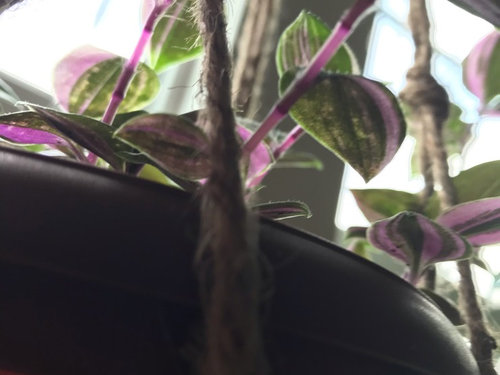
Tradescantia fluminensis sick

7 years ago

So I’m unsure what is happening to my tradescantias. It affects my regular fluminensis and my quadricolor. it stars with what I can only see through the light of the leaf, then eventually those weird spots turn brown or yellow. There are no spider mites, the soil is regular miracle grow potting soil with added perlite to assist with drainage. I let it dry out somewhat between watering. At first I thought maybe they were getting to much light from my grow lights, then I thought it was over fertilized as they were fertilized just after rooting about four months ago. But i have moved

the, from the grow light and into indirect light from my window and haven’t fertilized in moths and they still have these spots appear. I’m not sure what it could be.


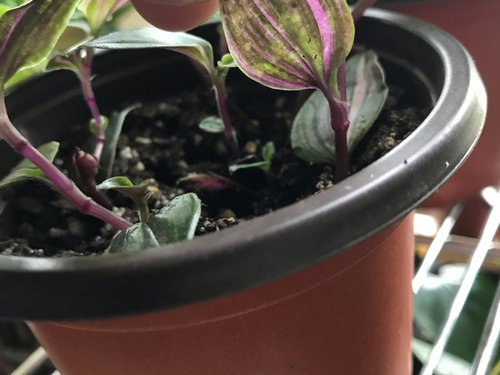
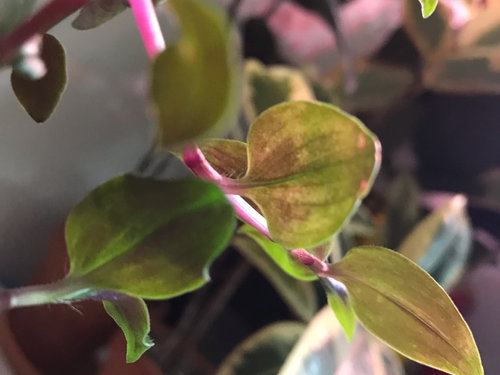
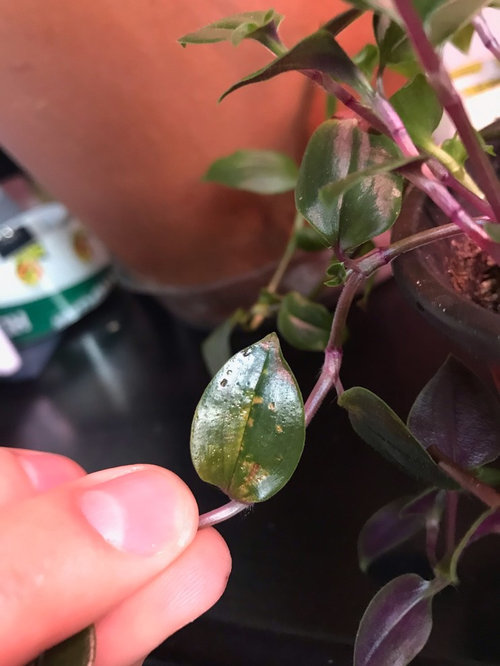
Comments (3)

  • 7 years ago

    It's Oedema, a physiological disorder that can affect
    all plants. It occurs when the plant takes up more water than it can
    rid itself of via the process of transpiration. The word itself means
    'swelling', which is usually the first symptom, and comes in the form
    of pale blisters or water-filled bumps on foliage. Under a variety of
    circumstances/cultural conditions, a plant's internal water pressure
    (turgidity) can become so high that some leaf cells rupture and leak
    their contents into inter-cellular spaces in leaf tissue, creating
    wet or weepy areas. Symptoms vary by plant, but as the malady
    progresses, areas of the leaf turn yellow, brown, brown with reddish
    overtones or even black, with older damage appearing as corky/ scaly/
    ridged patches, or wart/gall-like bumpy growth. Symptoms are seen
    more frequently in plants that are fleshy, are usually more
    pronounced on the underside of leaves, and older/lower leaves are
    more likely to be affected than younger/upper leaves.

    Oedema is most common in houseplants during the
    winter/early spring months, is driven primarily by excessive water
    retention in the soil, and can be intensified via several additional
    cultural influences. Cool temperatures, high humidity levels, low
    light conditions, or partial defoliation can individually or
    collectively act to intensify the problem, as can anything else that
    slows transpiration. Nutritional deficiencies of Ca and Mg are also
    known contributors to the malady.

    Some things that can help you prevent oedema:

    * Increase light levels and temperature

    * Monitor water needs carefully – avoid
    over-watering. I'd heartily recommend a soil with drainage so sharp
    (fast) that when you to water to beyond the saturation point you
    needn't worry about prolonged periods of soil saturation wrecking
    root health/function. Your soil choice should be a key that unlocks
    the solutions to many potential problems.

    * Avoid misting or getting water on foliage. It
    slows transpiration and increases turgidity.

    * Water as soon as you get up in the AM. When
    stomata close in preparation for the dark cycle, turgidity builds. If
    you water early in the day, it gives the plant an opportunity to
    remove (for its own needs) some of the excess water in the soil.

    * Put a fan in the room or otherwise increase air flow/circulation.

    * Avoid over-crowding your plants.

    Al

  • 7 years ago

    Thank you so much! I was getting concerned becuse I just had no idea how to stop it without knowing what it was. I started thinking it was fungus but there’s nothing on the leaves themselves.

  • 7 years ago

    You're welcome. Good luck with all your growing endeavors!

    Al

0
Sponsored
River Mill Construction
Average rating: 5 out of 5 stars2 Reviews
Delaware County's Customer Focused General Contractor