Software
Houzz Logo Print
jc_7a_middletn

Hydrangeas with roses

7 years ago
last modified: 7 years ago

I have a foundation planting bed that is part shade.

I'd like to put a couple of hydrangeas in there, but have never tried to grow them.


I know that I'd prefer ones that are more likely to trend blue rather than pink. I would consider limelight ones as well. Just really not interested in pink.

Are there any recommendations for zone 7a?

Amended clay soil, afternoon sunlight with shade the rest of the day. Maybe 6 hours sun max I would guess.

Prefer something with extended period of bloom. As low maintenance as possible is good. I don't mind deadheading or mixing in some acidic amendments to keep them blue.


Any thoughts on vendors as well? Hydrangeas plus seems to have the largest selection.

Comments (42)

  • 7 years ago
    last modified: 7 years ago

    Are you aware that hydrangea blooms will change colors somewhat as time progresses? Assuming your soil gives blue blooms, they may start blue, add shades of pink, some more greens and finally turn brown. The blooms themselves will stay "on" the shrub thru 1-2 quarter of next year.

    What kind of soil do you have? Acidic or alkaline? The shade of blue will be dependent on having acidic soil. You get pinks if the soil is alkaline. While you can acidify alkaline soils to turn pink blooms a shade of blue, changing pinks to blues may not be low maintenance for some.

    You can mix them with roses if the location gives morning sun with some shade in the afternoon during the summertime.Paniculatas may actually work better if it is too sunny for mopheads. But they do not bloom blue... only shades of white or lime & these turn a shade of pink, which you say you are not interested in.

    jc_7a_MiddleTN thanked luis_pr
  • 7 years ago

    Thanks to both of you.

    I certainly don't mind nurturing young plants, but I consider it high maintenance to baby along a plant that isn't in ideal conditions, leading to its slow death, only to start the process over again.

    I definitely want to avoid that.

    On top of the incorrect sun proportions, my soil is alkaline.

    Mopheads are out.


    So I should be looking for something in the paniculata family? I'm sure there are plenty I could choose from that would work just fine. Do these varieties need more acidic soil for any reason?


    Are there any recommended vendors?

    There are so many online nurseries that have good websites and terrible reviews.

  • 7 years ago

    All hydrangeas tend to prefer soils on the acidic side of the equation - most plants do!! But depending on how alkaline your soil is, they may just do fine. And what the alkaline soil may not provide, you can supplement with more frequent fertilization.

    jc_7a_MiddleTN thanked gardengal48 (PNW Z8/9)
  • 7 years ago
    last modified: 7 years ago

    You could amend the soil every spring and after that, again when they show signs of iron chlorosis. For example, for me, I amend in the Spring and at the end of summer or start of fall.

    Try to find paniculatas locally first at your plant nurseries, Lowes, HD, etc. Hydrangea plus is very good.

    jc_7a_MiddleTN thanked luis_pr
  • 7 years ago

    Gardengal, I have seen a couple homes in the neighborhood with very large and healthy bushes so I’m thinking the soil is acceptable as a starting point.

    Will play it by ear and beg Houzz regulars for advice as they grow!

  • 7 years ago

    Thanks Luis!

    Amending soil twice a year is not what I’d consider high maintenance so I’m pleased to that suggestion.

  • 7 years ago

    If you don't want to risk pink blooms, why not go for a Hydrangea arborescens cultivar such as Annabelle? They start lime-green and then turn white... no blue or pink. And they can deal with part shade conditions.

  • 7 years ago

    Afternoon sun for the arborescens types will be just as damaging for those as it is for macs. Paniculatas are the most sun and heat tolerant species and I believe would work best under these conditions.

  • 7 years ago

    Oops, of course! Somehow I read that backwards... :)

  • 7 years ago

    Thanks for the advice everyone- just so I'm clear:

    Paniculatas will tolerate sun best? Or do they need some sun?

  • 7 years ago

    Of any of the hydrangea species, paniculatas can tolerate full sun and high heat best. But they do not require it :-) The morning shade-afternoon sun situation you decribe will suit them perfectly well.

    jc_7a_MiddleTN thanked gardengal48 (PNW Z8/9)
  • 7 years ago
    last modified: 7 years ago

    Look at White Diamond, Limelight, and Little Lime. Limelight can get to 8’ or 9’ in all directions, while the other two are smaller, so only use Limelight if you have space for that large a plant. White Diamond stays white almost until frost for me and has lacier flowers, while the two Limes have more green tones along with the white and more tannish-pink at season’s end. The panicles on the Limes are much more dense than those of WD.

    In late September WD is just starting to develop a hint of pink after about 3 months of white flowers. It is still a small plant and these are terrible photos. of it.


    Early October, light pink.


    jc_7a_MiddleTN thanked NHBabs z4b-5a NH
  • 7 years ago

    Thank you, Babs!

    You have been very helpful to me ever since I joined houzz.

    My clematis ended up looking exactly how I wanted thanks to you.

    It looks like I have space for 1 Limelight, but the other 3 will have to be Little Limes.


    Luckily, I have seen these in Home Depot every spring so they should be easy to find.

  • 7 years ago

    You are welcome. It sounds like we are drawn to some of the same plants!

    jc_7a_MiddleTN thanked NHBabs z4b-5a NH
  • 7 years ago

    I wish it was time to plant already. I have all my plans now, just twiddling my thumbs until no threat of frost.

  • 7 years ago

    Why are you waiting until summer? Hardy plants can take a bit of frost, and planting early allows them to settle in a bit before the summer heat starts. Dormant bareroots go in late winter. Around here, the garden centers start getting in leafed out shrubs and perennials about a month before it is safe to put out the tomato plants.

  • 7 years ago

    I killed 4 shrubs last year planting too early and now I’m gun shy.

  • 7 years ago

    I tend to doubt that planting too early was the cause. Planting late spring or midsummer takes a fair amount of care and perhaps temporary shade. Were the plants leafed out? Late summer into fall is often best since the days are shorter, temperatures are cooling, and the ground is warm for good root growth

  • 7 years ago

    Yes they were young arborvitae and had 2 freeze and thaw cycles right after I planted them.

  • 7 years ago
    last modified: 7 years ago

    Aha. Conifers. A different proposition from planting deciduous hardies like hydrangeas and roses.

  • 7 years ago

    Arborvitae are native to zone 3 so I seriously doubt too early planting was the issue. And zone 7's typically do not experience any kind of a serious freeze/thaw cycle - the soil never freezes to any significant degree. So I'd have to assume something else caused their demise.

    Woody plants - trees and shrubs - that are fully hardy for your zone are generally unaffected by frosts or freezes. That is more of an issue when dealing with leafed out perennials or very cold sensitive plants like annuals and tropicals.

    jc_7a_MiddleTN thanked gardengal48 (PNW Z8/9)
  • 7 years ago

    Yes, I was surprised they died back so much.

    But I can't think of anything other than the freezing wind that might have done it.


    I don't have a green thumb, but I'm not a complete newbie to plant/yard care.


    Also, I do not plan to plant in summer. Not what I intended to portray. The local stores won't have Hydrangea for another few weeks.

  • 7 years ago

    IMHO, the entire 'freeze-thaw' business is entirely overwrought. If it had any validity as a problem with plants, Philadelphia would be a desert. It can be a problem with planting evergreens if the soil freezes solid throughout the entire rootball, and the plant essentially dies of drought. However, for even a small plant planted in the ground, that would mean the ground is frozen solid down at least a foot for many days. What is much more likely is that the plants were planted dry, and the potting soil was never rewet.

  • 7 years ago
    last modified: 7 years ago

    My hunch would be desiccating cold winds combining with insufficient watering. Not the cold per se but dehydration. It happens even in my climate if the conditions conspire. It wouldn't be an issue with bare branched shrubs.

  • 7 years ago
    last modified: 7 years ago

    Jc_7a There is a great nursery in Arlington, TN 38002, called Oy Vey Nursery. Wolfgang, the owner is very nice and is well acquainted with growing hydrangeas. I am not sure if he is close to you or not, but he was very helpful with email and sent me some beautiful plants - all the way to Washington state. Here is the link to the nursery - check it out. I also think he is a member of GardenWeb. When ever possible I try to buy from small family owned nurseries and buying locally is always a good idea. https://www.gardensoyvey.com/

    jc_7a_MiddleTN thanked ophoenix
  • 7 years ago

    Lowe's and Home Depot are starting to put out some arborvitae and holly, but still no Hydrangeas.


    I'm getting impatient, ha.

  • 7 years ago

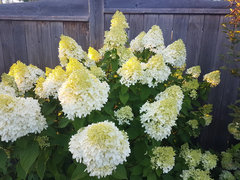
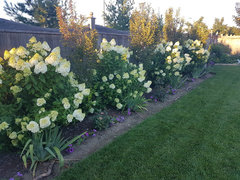
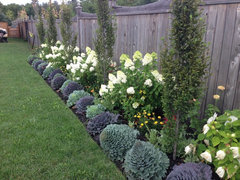
    I love my limelights. They are great here. They handle full sun all day long. Low maintenance & add a lot of structure to the garden. I have 4 on a fence line & 2 in my front porch garden bed as the background with a couple of smaller evergreens. Roses are planted in front of these. The only thing I do for them is prune them back a bit when the snow melts. Mostly removing last years flowers. They are really easy care. Obviously little limes are better for smaller areas. I prefer them to the Annabelle types. Which I also have. The Annabelles bloom a lot earlier and in the heat the flowers turn brown & I end up cutting them off by end of July. The limelights bloom later and are showy for me August into Semptember. I'm a few zones colder than you though. They grow really quickly too. One pic is from last year & one pic is from the year before.

    jc_7a_MiddleTN thanked HalloBlondie (zone5a) Ontario, Canada
  • 7 years ago

    Are yours the standard limelights, not little limes?

  • 7 years ago

    Those have got to be Little Limes. Limelight will easily grow to 6-8' tall (covering the top of that fence) and as wide, even if hard pruned.

  • 7 years ago

    Or they are still young enough to have not reached full size.

  • 7 years ago
    They are regular limelights. As mentioned in my post I included pictures of them first full season planted & the second year planted to show the fast growth of them. That fence is 7 feet tall. I used them here to eventually hide the plain fence & reach higher. These were just regular sized nursery pots (maybe 4-5 gallon size). I'm waiting for them to get bigger. These were planted late summer of 2016. At this rate I think in 2 more seasons they will be their full size. I do not have little limes. I've reserved that spacing size to grow shrub roses instead. Our winters do not allow most roses to grow bigger than 4 feet. I've read and seen that the little limes are just as great & easy.
    jc_7a_MiddleTN thanked HalloBlondie (zone5a) Ontario, Canada
  • 7 years ago

    That definitely confirms I only have room for 1 regular sized limelight.

    Thanks!

  • 7 years ago

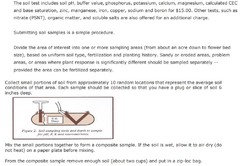
    Does this look like the soil test I need to have done?


  • 7 years ago

    Does everything else in your garden grow well? If so, there is likely not much else you need to do :-)

    As part of my typical client consultations and the soil classes I offer, I do suggest a basic soil test if you have never had one done. Not a requirement but a useful piece of information to have on hand. Most professional soil testing labs will offer similar services - soil pH, basic nutrient levels, % of OM, etc.

    I find this is less necessary in established gardens that are doing well.......much more helpful in new build situations or if starting a first time veggie garden. And of course, if your existing plantings are struggling, a soil test can be very helpful determining what to do once things like drainage, drought or heat/cold damage are eliminated.

    FWIW, I find that routine mulching with a decently organic mulch - like leaf mold, compost or composted manures - virtually eliminates the need for supplemental fertilization except in very rare circumstances.

    jc_7a_MiddleTN thanked gardengal48 (PNW Z8/9)
  • 7 years ago

    Thanks, gg!

    I just moved in 6 weeks ago so I'm not sure is anything grows well!


    I'm leaning towards "no", but I can't be sure if it had anything to do with the soil. Seems to me the previous owners just didn't try and that there is a lot of shade.

  • 7 years ago
    last modified: 7 years ago

    LOL!! jc, it's going to be a bit tricky with only 6 weeks under your belt in a new-to-you garden at the tail end of winter to know if things are doing well :-) Or even what you have growing to begin with!

    A lot of sources will suggest that you leave the garden as-is for at least one full growing season to identify and evaluate what you have before making any wholesale changes. And there are usually always a few hidden surprises that won't even make themselves known until later in the year!

    Of course you can always do some editing and basic maintenance.....get rid of anything that is obviously dead or dying, weed and clean up/cut back as necessary. Having a lot of shade is not an issue - you just need to select new plants from a huge assortment that are more shade tolerant. But that is best after you evaluate how much shade is present and at what time of year and what time of day....it does change!

    This doesn't mean you should ignore the soil. As mentioned, a soil test can be quite helpful. But there are soil issues you can confirm yourself without the need for a professional soil test...drainage, soil texture analysis (percentages of sand, silt and clay), how rooty the soil may be (if the shade is coming from large trees), etc. And even if you wait to do any significant relandscaping (whch I strongly suggest) applying a good, rich mulch will help the soil and help the plants. And make everything look tidy and well cared for.

    jc_7a_MiddleTN thanked gardengal48 (PNW Z8/9)
  • 7 years ago
    last modified: 7 years ago

    As GG 48 mentioned, I would likely wait for this season and buy plants and plant in September once you know what is there. Spend this summer planning, evaluating soil and light levels, cutting neat edges and perhaps enlarging beds in the process, adding compost, weeding and mulching. Take lots of before photos and to help you track how light changes across the seasons. You may want to move inappropriately placed plants to more suitable locations. Just having things looking tidy and well cared for will be an improvement and fixing issues like weed problems before starting planting will not be something you regret. For color, buy a few very large pots and plant them up with something colorful. My current home had nothing but a couple of holding beds away from the building for the first three(!) years because the house needed extensive work (foundation, roof, paint, etc.) that precluded planting anything within about 15 feet of the house. It about killed me to have such limited plantings, and DH had to keep reining me back by reminding me that reroofing would squash everything, but in the long run I have no regrets. Another lesson in patience from my garden.

    jc_7a_MiddleTN thanked NHBabs z4b-5a NH
  • 7 years ago
    last modified: 7 years ago

    Patience is a virtue for a reason! Still working on mine.

    I can't wait! Basically, I know I'm going "at risk" this year and am OK with it just because I like to work in the yard.

    I'm working the foundation plantings and very far edges of the front/side yard this year. Because I mostly know what I will have there. I won't be attempting anything there where failure would cause a larger problem.

    The backyard and other side yard will be a big undertaking because even though I know they are part shade, I don't know how much until the trees leaf out. That will wait until 2020 or 2021.

    Just based on the winter rains the last few weeks, I am concerned that the soil is compacted and has drainage issues. Somewhere down the road I will try to amend on a large scale, but right now I'm only thinking about the front foundation beds.

    gg, I have already found some surprises! I mowed over the ratty looking liriope border and found what I thought* were water logged and decomposing bright orange nerf darts underneath.

    My wife saw them yesterday and swears they are some sort of plant.

    I'm going to take pictures after work today!

    Babs, I like the idea of pots because I know that would work for at least 1 year, without affecting the look I'm after very much.

  • 7 years ago

    jc, Were there weeds when you first saw the house? Were there weeds when you moved in? Remember, weeds are plants! Healthy weeds are a good sign of good soil. Don't till the soil or weeds for at least one month or so in the spring and see what appears. If you are not sure what the new growth is - contact a local nursery or even Master Gardeners, group and see if you can get an expert to visit your garden. It is important for the new growth to be large enough to be identified. You may have some treasures and don't want to pull and toss them out. Good luck!

  • 7 years ago

    ophoenix I never thought that maybe there would be something I liked that was dormant.

    I was able to identify the larger evergreens and deciduous shrubs I knew I did not want, so I removed them.

    You all are correct that I don’t know what else may be hiding that’s much smaller at the moment.

  • 7 years ago

    Yes to waiting and seeing! BUT.. beware that aggressive plants will not sleep. They will rampage quietly and strangle your garden, your house, and then you. In my case it was wisteria, ivy, euonymus, akebia, sweet autumn clematis, etc etc etc. Don't waste a second identifying every living thing on your property.

    Another mistake I made had to do with hydrangeas. We suddenly needed to rip out a dozen Nikko blue macrophyllias from the south side of the house in order to replace a french drain in mid-summer. In haste I dragged them to the west-facing side and made an instant border under hemlocks. They survived, but have created a high maintenance problem that needs a new solution. In summer heat waves I water, but I haven't yet been able to successfully protect the buds from spring freezes. I suspect that if they were back in that south facing position the temperature swings wouldn't be as severe. So I now have two options. Move them (not easy to site 12 loud blue shrubs) or add shade to their current location. A small tree?

    One of the best things about gardening is looking back at those early mistakes - all of the plants you killed! - and knowing how much better you are now. I think that was year five...

    jc_7a_MiddleTN thanked kitasei
Sponsored
Peabody Landscape Group
Average rating: 3.5 out of 5 stars8 Reviews
Franklin County's Reliable Landscape Design & Contracting