Software
Houzz Logo Print
gibsonsteve1

Mulch preferences?

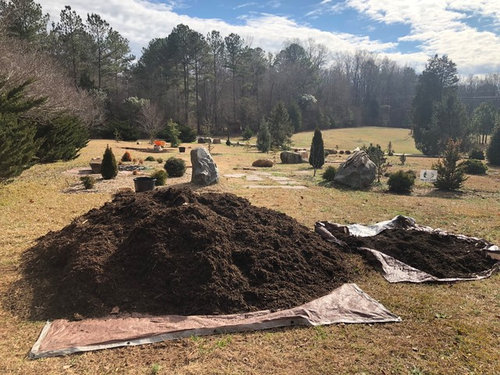
Tackling this mountain of double hammered for this seasons plantings I began to wonder what everyone else likes to mulch their large conifer collections with, and why.


Conifer Garden · More Info


Conifer Garden · More Info

it barely made it through this years additions. I also began to want a bobcat or at least a dingo. Haha.


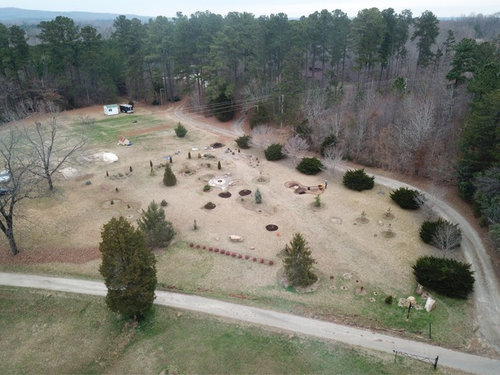
Does anyone have a garden garden hack for covering large gardens/beds, without spending a fortune. I have a connection to an arborist’s fresh mulch, but is that a safe move? With so many little guys like this:


Conifer Garden · More Info


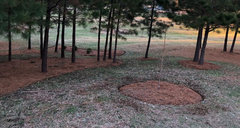
I‘m guilty of babying their 10-year spread mulch rings. Am I being anal, or is the fresh hodgepodge of mulched trees safe?

Comments (19)

  • 7 years ago
    last modified: 7 years ago

    Perfectly safe. And actually arborist's or wood chip mulch is the preferred mulch type for any woody plants!

    In a study done covering 15 different types of common mulch products, arborist's wood chips were one of the best performers in terms of moisture retention, temperature moderation, weed control, and sustainability. In many urban areas, arborist wood chips are available for free, representing one of the most economically practical choices as well.

  • 7 years ago

    I guess my concern with the chips from an arborist is the introduction of a pathogen from a diseased tree removal. Or the introduction of an insect pest that caused tree decline and eventual removal.

    I agree on the economics, and the benefits of a woody mulch. The greater amount of biological activity in my beds when I use hardwood mulch vs needles or pine bark is incredible.


  • 7 years ago

    The concerns for spreading both diseases and insect pests via these sorts of mulches has been pretty well established to be a non-issue.

  • 7 years ago

    Think of it this way. Your conifer garden is already surrounded by and exposed to all the pathogens and insects of the forest ecosystem that both 'double ground' (WNC z6), mulch and arborist's woodchips will be coming from.

  • 7 years ago

    It makes sense, and not mad about saving a buck.

  • 7 years ago

    Here's a table of mulches and their effects.

    Stephen Gibson (NC 7B) thanked Brandon Johnson Zone 5b
  • 7 years ago

    Brandon thanks for that awesome table, it has definitely been saved!

    Sarah, that is my other thought. My property is across from an arborists and he has piles of chips everywhere. He said I could have any of it I like. I’m just wanting to do a little due diligence before I get a dump truck full.

    I definitely like a uniform look but I might just take the approach of his coarse chips, and then top dress with needles. I did this on the specimens and bed around a little Pinus taeda grove.


    I’m enjoying the clean look, but I know the graying of needles is inevitable.

  • 7 years ago
    last modified: 7 years ago

    If you buy play area chips from a commercial bark and soil outlet these are clean and uniform, do not contain foliage, litter or weeds.

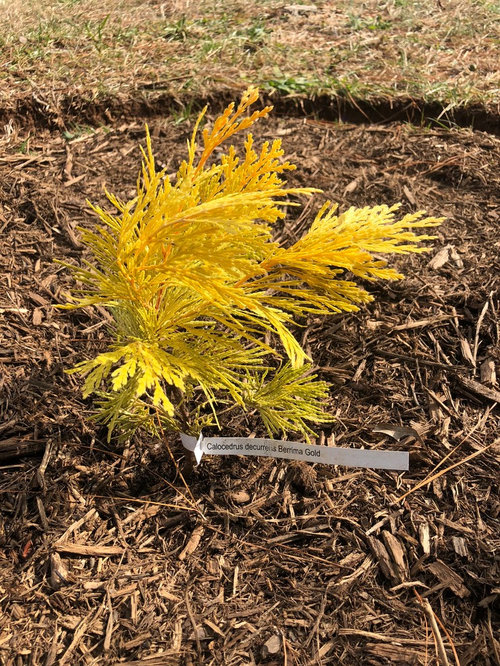
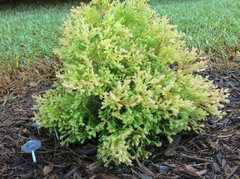
    'Berrima Gold' can scorch in full sun.

  • 7 years ago
    last modified: 7 years ago

    Which is why it is in partial sun. Only gets 6 hours give or take, and strongly filtered through a wall of tall pines after 1pm. I‘m a stickler about light requirements for me and my clients, but thanks for the warning.

  • 7 years ago
    last modified: 7 years ago

    An uninterrupted stretch of 6 hours of NC summer sun might be enough to produce damage to this one. Also there can actually be a problem with reflection from wood products burning the foliage of susceptible plants during hot periods. This used to happen to rhododendrons in a collection near me, when there were widely spaced, youngish specimens in tree bark mulched areas - the undersides of their leaves would actually scorch. While the upper surfaces of the same leaves were unaffected. So the gardener rigged up individual shade cloth enclosures to guard against this each year.

    And this is the dullest metropolitan area in the Lower 48, seldom with anything like the piercing sun I've experienced in Florida.

  • 7 years ago

    So far Cox and Ruter’s book:

    Landscaping with Conifers and Ginkgo for the Southeast, has been so incredibly spot on with my collection additions and what I’ve included in designs/installs for clients.

    They don’t recommend this guy south of 7b and say you have to walk a line between too much and not enough sun. In the photo above with the Pinus taeda grove; I’m using it as a natural western screen for yellow/variegated conifers.

    This Berrima Gold is tucked beside an older portion of the grove and will be shaded nicely the entire afternoon (when temps reach their peaks here, and the sun becomes relentless). But it’s all theoretical until this summer.

  • 7 years ago

    I'm in CA where this damn thing is native and all I do is kill them. Don't believe the literature, try it yourself! :-)


  • 7 years ago
    last modified: 7 years ago

    I typically start with bark mulch the first few years. It’s not free but it is one of the cheapest mulches available.

    It typically has a higher organic content to improve the soil and get your planting going.

    With that said it doesn’t last all that long.

    Personally I don’t like the wood chips that are free either as it usually has a higher wood content that grays out....a look I don’t care for that. Perhaps ok for beds that aren’t as visible from the house.

    I was up to 70 yards of mulch at my llast place so its tough in the begInning until things fill out.


    My new approach is for anything new is to gets a nice base of bark mulch. Then I top dress with a thinner layer every other year with brown mulch for beds around the house or ones I can see. Beds further out will continue to get the bark mulch.

  • 7 years ago

    "It typically has a higher organic content to improve the soil and get your planting going."

    Can you explain this statement? How does bark mulch have a higher organic content than wood chips?

  • 7 years ago

    In the sense at the speed that it breaks down and available at a faster rate.

  • 7 years ago

    I am not sure that is a valid assumption :-) Wood chips tend to decompose or break down at a faster rate than does bark.....one of the reasons it is bark that is called for in potting mixes rather than interior or heart wood. It holds up longer. Wood or arborist chips still have a lot of green material incorporated (N) and will start decomposing almost immediately as they are chipped. It is not unusual to see a big pile of arborist chips steaming as soon as they are delivered. They are already starting to rot.

    Do a side-by-side test to see, using the same thickness of bark as the chips and both mulches receiving the same sunlight and water. I can pretty much guarantee the chips will start to break down first.

  • 7 years ago

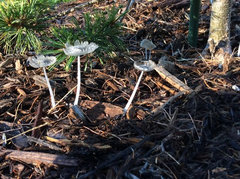
    Something interesting I've observed over the past few springs is the amount of fungal life that my beds have when I mulch them with the double or triple ground hardwood. Ie:


    From spring till mid summer, if hardwood was used, the decomposers are out in full force. I am definitely of the mind that fungal activity means my soil food web is chock full of organic matter.


    The beds with the chips shrink pretty fast. I might try the chip/bark test. I would be curious to also see how active the decomposers are when comparing the pine bark fines vs the hardwood chips.

  • 7 years ago

    I have been using double hammer hardwood mulch for the past 14 years in my beds. Where I live, the adjacent county runs an operation that produces compost and various mulches. Price is less than the landscape supply places but quality isn’t quite as good. A new layer of mulch usually lasts roughly two seasons before it needs to be refreshed. The process never ends.