Software
Houzz Logo Print
petuniafish

Do I need to add a humidifier?

7 years ago

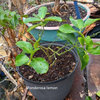
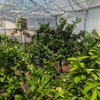
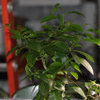
I have about 20 citrus trees and 20 plumeria growing indoors in a basement year round under T5HO lights. The temp is constant 82* day hours, 70* night. But suddenly I can't get the humidity past 30%. This is winter but it's very wet all winter where I live- Oregon. Outdoor humidity from 60-100% usually. When I first moved the plants to the basement 3 years ago I needed a dehumidifier to bring the humidity to down 45%. But it's dried out in there obviously and haven't used the dehumidifier for months.


Do I need a humidifier? The humidity is so low I'm expecting spider mites at any time.

Comments (16)

  • 7 years ago

    No you do not

  • 7 years ago

    Can you offer an explanation of why not?

  • 7 years ago

    citrus trees grow really nice in dry overheated deserts.

  • 7 years ago

    30% is low for extended periods especially if your plants are not accustomed but using a humidifier in a basement is not a good idea. I also have a fear of mites so I started using humidifiers this winter but not down there.

    If it's been that low for an extended period and you didn't get any leaf drop then the plants will be fine so start misting daily to avoid mites. Do you have windows close to your plant area if so open them briefly and get that number up.

  • 7 years ago
    last modified: 7 years ago

    Many are under the impression that mites hate humidity. Not true. I’ve had them in my very humid greenhouse , growing room and all the local nurseries. I’ve even had them in Puerto Rico on many plants.

    What does control them is good plant maintenance and a clean growing area.

    You can also use fans that blow towards your trees and cooler temps.

    Like Steve said citrus grow wonderfully in dry regions

    Mike

  • 7 years ago

    It certainly is true that mites prefer lower humidity. Saying they do not is just a blatant lie. That does not mean that you can not get them in high humidity conditions. There are many other factors that have to do with it. Humidity is just one.

  • 7 years ago
    last modified: 7 years ago

    Very much appreciate all the advice but not convinced yet.

    In answer to Steve about the desert, I lived in a SoCal desert grapefruit grove for 45 years. And yes the humidity is low in the day but at night it rises considerably usually to 45-50%. Mine stays at 30% daytime 33-34% night.

    Dnedd, I have been misting them 3-4 times a day, and the general area as well. It does nothing to help with the humidity. Mites hate moisture on leaves so guess it helps there some- but the moisture on the leaves in this low humidity has dried in 10 min. Have no windows to open.

    Mike have two big fans blowing 24/7, and my growing area is immaculate. I clean any fallen leaves and spills a few times a day.

    I know a basement is not a good place for a humidifier but still wonder if running it 30 min every 6-12 hours on a timer would hurt, and throw more moisture into the air than I can from a spray bottle. Spraying on with bottle 3-4x day doesn't help a whit. Going to replace the hygrometer before anything to be sure those numbers are right. Any more thoughts?

  • 7 years ago
    last modified: 7 years ago

    Thanks Tropic :) Just to add that I've mostly been misting several times a day in an attempt to raise humidity levels in any way, but the little moisture obviously does no good. Yes the place I have them in is a 15x15 area enclosed, and they take up the whole space. I can run a humidifier all day long if it ultimately requires that, but sense it may only need 30 min a few times a day. If I get one I'll test and see what keeps it closest to a 45% type range.

    I lived in Corona CA which is right next to Riverside and was a Sunkist orange and lemon capital for many many years. It's VERY hot and dry April-Nov, but night time and winter brought a lot more humidity. Orange County which is just over the hill used to be covered in citrus and when I was growing up and the humidity back then was higher. It's warmer and dryer since climate change. I agree that citrus do well in dry climates but they are happier with more humid weather. At least that's what my ranch foreman used to say and he grew up in Florida.

    Like to bring my growing area up to about 45-50%. May buy a humidifier ($30) on Amazon and try it for different periods of time and see what it does. No great loss if it doesn't work out.

  • 7 years ago

    Evaporative humidifiers probably will work to get it up to that level. We have one in our bedroom and that is about how much (45%) it can do. Warm mist can do higher but you may have to refill more frequently. I do not like ultrasonics - they leave a fine dust/residue on everything in the room.

    BTW, check out humidity in Corona, CA: https://weather-and-climate.com/average-monthly-Humidity-perc,corona-california-us,United-States-of-America

  • 7 years ago
    last modified: 7 years ago

    Ken, who said they 'do not prefer lower humidity'?

    You are right, even in higher humidity conditions one can get mites, severe cases of them in fact.

    What attracts or made my trees more susceptible in my conditions was a lack of air movement, stuffy air, a lack of preventitive measures and weak trees from water strees, a lack of good sunlight, or too much fertilizer in the cold months which causes weak growth....Many factors contribute as stated above.

    A humidifier is not needed but can be very helpful for the health of humans, pets and plants

    MIke

  • 7 years ago

    Tropic. Humidity in Corona- goodness it comes close to here on the Oregon coast! Thanks.


    Thanks for the info on the evaporative humidifier. I think I'm going to get one. My trees are all very healthy, knock on wood. Going to give it a whirl as it can't hurt in the short run.

  • 7 years ago

    It will also improve your air circulation. Make sure the air is blowing in the general direction of the plant and not directly at one particular plant.

    I try to point out that what we think is the humidity level is often not the correct one. Coastal areas can be humid except that the constant wind makes us feel it is dry. Corona, CA as I gather has a problem with availability of water - probably that has something to do with our senses telling us that it is a dry place. Which it is - ground is dry but not so much the air.

    Nancy thanked tropicofcancer (6b SW-PA)
  • 7 years ago

    It will work since the area is enclosed. Matter of fact a hot humidifier might work too well. A cold mist model might get you the balance you are looking for. I run both types in different plant spots throughout my house but not in my enclosed citrus room.

    It still seems like a bad deal to add humidity in an enclosed basement room even for a brief period. I might be the wrong person because I struggle with basement moisture and have done lots to control it. Do you run a dehumidifier during summer months down there? If the room is well insulated and totally enclosed when you run a humidifier the plants will enjoy it but your walls and floor might not.

  • 7 years ago
    last modified: 7 years ago

    I will also let you know that I too use a humidfier, the cool mist kind. I love it! My orchids do too. I never get sick or catch a cold when I do.

    The best advice I could give if you if you should decide to go that route is to invest in a good Hygrometer . This way you can always prevent mold issues and regulate how much you put into the air or take away..I could easily raise the moisture in a heated very warm room above 80% humidity. BUt I will either crack open a window or lower the amount on the humidifier to be put out on a lower setting. Or use more fans.

  • 7 years ago

    After the 2016 - 2017 first overwintering of a couple citrus in my basement and the eventual presence of spider mites by the end of winter, I decided to run a small evaporative humidifier in my basement during the winter of 2017 - 2018. I had it sortof centered in the middle of the cluster of trees. I also had a large oscillating pedestal fan running down there too, generally 24/7, but I would cut it off for a day or two each week and would also change its position so that it could hit different spots of the growing area with a varying intensity (it was generally kept about 6 - 8 ft from the trees and other plants down there, so they weren't blasted). That seemed to have kept the spider mites away all winter (but then I had an aphid issue then).

    Since I have full central air (heat and AC), I closed off the vents
    in the basement near the plants for this season in order to reduce the hot air issue, but this past year (2018) had been so excessively rainy here that I have yet to turn the humidifier or the fan on down there during the entire 2018 - 2019 winter (so far). I have humidifiers on the 1st floor that I have currently running (including a "whole house" one positioned near a central air intake) but have also not run one on the 2nd floor (my bedroom has been fine but the other bedroom with the trees has tended to be drier so I have been experimenting with daily misting).

    So I am sortof in an anecdotal limbo which illustrates all the variables involved and how changing conditions might impact how you control the room environment.

    Would agree with Mike about a hygrometer (I have temp/humidity probes all over the house and outside) although I know Nancy has one too. I aim to have the various areas in the 40% - 50% range, where the 40s are fine for me. As a note, in winter during cold/dry snaps without the humidifiers, my house has actually gotten down to as low as 11% for humidity, so I have had to be vigilant in keeping the humidity up to at least the 30%s, if anything for the furniture and to guard against static electricity. Alternately in the summer, a dehumidifier is definitely needed although fortunately my central air unit actually dehumidifies (there is a tube going from it to the stationary tub in the basement where the water drains) and it generally keeps the house in the 40% - 50% range (with the air off during "cooler" but humid or rainy days, it can get as high as the 60% - 80% range).