Software
Houzz Logo Print
hzdeleted_19696785

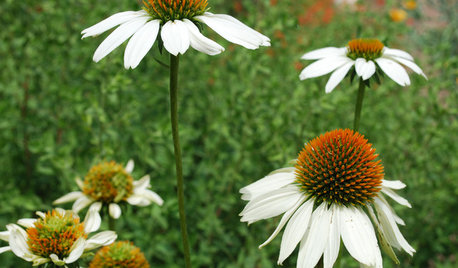
Lawn replaced by flowering plants.

7 years ago

Oct issue of Fine Gardening mag.

Very Interesting for those of us who

dont want so much grass.


Comments (10)

  • 7 years ago

    Babs did you read the article?

  • 7 years ago

    May be you could post a link to the article here?

  • 7 years ago
    last modified: 7 years ago

    Josephine, I read several articles on the FG website that covered the topic, but have no way of knowing if they are the same one you read as you didn’t link yours, and the website didn’t tell me when they were originally published. It is also something I have spent a fair amount of time researching over the last 25 or 30 years and have tried in more than one spot on my own large property, an old farm that is mostly reverted to woodland, though it has something like 50 acres not wooded. So I speak from my own hands-on experience here in central NH.

  • 7 years ago

    Here is the plant list associated with that article:A Waterwise Garden That Works. You can also connect to the digital format as well (if you subscribe to that) from that link.

    I will say that based on my experience as a designer and a familiarity with most of the plants used, that while this sort of lawn-less garden might be more drought tolerant, it will most definitely require much greater maintenance to look good and remain weed free. And a great many of the perennials used will disappear in winter and not reappear until well after early spring weeds have populated the area!!

  • 7 years ago

    That is a perennial garden, and it is going to require perennial garden amounts of care.

    Also, remember that the blue fescue that is used as an ornamental grass is no more or less drought tolerant than the green fescue that goes in lawns. The dirty little lawn secret is that lawns can be quite drought tolerant, in the greater scheme of things, if that is one of your goals.

  • 7 years ago

    "Also, remember that the blue fescue that is used as an ornamental grass is no more or less drought tolerant than the green fescue that goes in lawns."

    Actually it is quite a bt more drought tolerant - different species, different growing requirements :-) But the blue fescue will not be very happy in a hot, humid summer environment and tends not to be overly longed lived.

  • 7 years ago

    The link gardengal posted is indeed a perennial garden as mad_gallica points out. I have a few books on the subject of converting lawn to something else that includes flowering plants, but more of a woodland, shrubland, or meadow than a perennial garden. Usually the site prep is a year or 2 of spraying and/or covering, or involves replacing the the top 2" of soil with clean fill to remove the weed seed bank, then planting live plants, plugs en masse, and/or seeding. The main plants are some combination of warm season grasses at least 3ft tall, trees, and shrubs. The perennials break up the monotony of grass or trees. Maintenance is strategically timed mowing at certain times and heights, or applications of selective herbicides.

    NHbabs do you keep any of your not-wooded land in meadow?

  • 7 years ago

    Thanks for the link GG48. It’s a beautiful garden.

    He is in CO where I think this type of planting may work a bit better than the average lawn grass does, again keeping in mind that it needs the knowledge and willingness to do weeding, deadheading, dividing, etc. that any garden needs to at least some degree. Around here, many of his plants would have fungal diseases from humidity or not be fully hardy, and many of my weeds are woody, something that is less of an issue west of the Mississippi. When I use alternatives to mown grass, my choices are often different, ranging from local sedges to field grass mowed only often enough to discourage sapling trees to groundcover ferns, though I do have large areas of shrubs and mixed perennials. In this part of the world, a mown lawn doesn’t require a lot of external inputs unless one wants it to be golf course quality.

    My brother, who lives in the CO foothills and is not even remotely interested in gardening, has a meadow of herbaceous plants, but it is rough enough that I doubt it would fly in a suburban development.

    I am not trying to be discouraging to anyone who wants to try this, but I likely wouldn’t kill the whole front yard to start with unless one has quite a bit of gardening experience.

    -Start by enlarging beds and adding plants.

    -Figure out how much time and energy you have to devote to garden care.

    -Research what plants will do well in the conditions of light, moisture, soil pH, etc that occur in a particular part of your little piece of the world.

    -Or alternatively, hire expertise and assistance in the form of a garden designer and/or coach and an expert maintenance worker.

  • 7 years ago
    last modified: 7 years ago

    Skip, I didn’t see your post when I last wrote, so perhaps we cross-posted. Some of our not-wooded land is alfalfa, planted by our local dairy farmer. The rest is whatever herbaceous or low woody plants want to grow there given that it all gets mowed once or twice a year to keep the trees and shrubs from establishing. So some of it is rough field, largely grass with some forbs, only mowed after the ground nesting birds have fledged. Some is low bush blueberrIes mixed with lichens, wintergreen, and native sedges. Some is almost entirely Carex pensylvanica. We have sandy loam soil since this is an area that was at the bottom of a post glacial lake not so long ago, so there isn’t much organic matter to encourage a more traditional meadow with a wider range of forbs.