Software
Houzz Logo Print
leubafr

Cymbidium Orchid Care

7 years ago

I live in Southern Miss. What is good for Cymbidium Orchids

Comments (3)

  • 7 years ago

    Some notes written for the southern Hemisphere. You need to find similar written for the part of the USA where you live and note that the seasons here do not line up with yours i.e. June is winter here, Summer there.


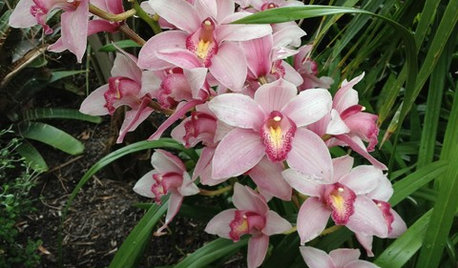
    These notes cover Hybrid Cymbidiums ( Standard, Intermediate and Miniature). Cymbidiums are the most commonly grown orchids grown in the Sydney area. To grow them successfully they require three important factors, fertilizer (food) water and light.


    LIGHT

    Cymbidiums should be grown under 50% shadecloth or under the shade of a tree that provides broken or filtered light. If you notice that the foliage of your plants have a tinge of yellow that is a indication that your plants are receiving the correct amount of sunlight. This combined with your watering and fertilizing program should give you flowers in the winter months. However, if the foliage is a bright green that is an indication that the plant is receiving too much shade and should receive more light. The more sunlight hours your plant receives the greater the flowering prospects.

    FERTILISER

    Use Aquasol as recommended by the maker and apply from spring through to mid winter. Or, if you are able to procure Campbells Orchid Fertilizer use the Blue Powder (high in Nitrogen) from about August through to the middle of December. The high Nitrogen content of the fertilizer promotes plant growth. On ceasing to apply the blue powder then switch to Campbells Yellow Powder (high in Potassium). The high Potassium content initiates and promotes flower formation and growth. It is essential that the maker’s recommendations be followed. Ensure regular fertilizing, about every week. Before fertilizing your plants give them a thorough watering and about one-hour later apply you fertilizer.

    WATERING

    This is the most difficult aspect of orchid growing. It is dependent on many factors – growing media and prevailing weather conditions. Generally the plants should have a slight element of moisture but not wet all the year round. It will be a general rule that in the winter months watering should be done about once a week and as the weather starts to warm up through Spring and into Summer the frequency of watering should be increased to a maximum of daily watering in the height of summer.

    Water early in the day so that your plants will be dry by nightfall. If the weather is overcast, refrain from watering.


    BENCHING

    Plants should never be allowed to sit on the ground as the drain hole of the pot will soon get clogged up and retain excess amounts of water which will lead to root and rot. Place your plants on a brick, or on a bench.


    POTTING MIXES

    Buy a good quality potting mixture from a reputable orchid nursery or garden centre. The mixture should be open and allow water to drain through freely. Generally a potting mixture should last two years.


    POT SIZE

    Chose a pot size appropriate to the size of your Cymbidium. It is important that the roots just fit into the pot. If the pot is too large, the mixture will not dry out between watering, the roots will remain constantly wet and the plant will be lost.

    REPOTTING

    This should be undertaken in September/October, after flowering when the new growth commences. When dividing the plant it is recommended that about four green bulbs form each new division. Should smaller divisions be used you will setback the growth program and not have flowers in the next season. Cut off all dead roots and try to save as many live roots as possible, though new roots will develop and replace those that have died. Don’t bury the bulbs of the division in the compost, but ensure that the bulbs are firmly placed in the compost. A shaky plant will not develop roots and growth. Do not water your new division for a few days. Keep the plant out of direct sun and mist the foliage. You may apply some Nutricote (3-4 month) to the top of the pot. A dessert spoon of this is adequate.


    PESTS & DISEASES

    Like most things orchids are prone to pests and diseases.

    VIRUS

    Some plants which have yellow spotting or markings on their foliage may be infected with virus – a common virus is Cymbidium Mosaic Virus (abbreviated as CMV). There is no cure for this virus and could spread through your entire collection. If you have doubts you could consult with any orchid society by taking the plant or infected foliage to them. But this is best done by sealing the leaves or plant in a plastic bag. Viruses are spread through cutting instruments. It is essential that all cutting tools be sterilised by flaming them after each cutting operation.

    PEST CONTROL

    Pests cause damage by sucking the sap from the cells of the plant tissue or by attacking the foliage.

    RED SPIDER MITE

    The under side often leaves become speckled and silvered. Flowers become deformed and spotted. A fine webbing develops when infestations are very heavy. Pale yellow/green minute mites with a prominent dark spot on each side of the body. Mites turn red in winter. They are present all the year round. Warm dry conditions promote infestations.

    MEALY BUG

    Small fluffy sucking insects which often hide in crevices at the base of the foliage on the inside of the developing new growth. They are present all the year round.

    SCALE

    A small soft or hardened sucking insect which clings to under surface of the foliage.

    FUNGUS DISEASE

    Plants have black areas on the leaves


    PEST AND DISEASE CONTROL

    Consult with a garden centre or an orchid society. When using chemicals exercise extreme caution and follow the manufacturer’s instructions.

  • 7 years ago

    Look for a warm tolerant cymbidium. Most will grow in your area but the "standard" types need cool temps to flower. They typically like San Francisco weather, where it's cold at night and warm in the day, people there can grow them outdoors as landscape plants.

    There are new hybrids that are said to be warm growers, You might be able to grow them outside year round in your area.

  • 7 years ago

    The limiting flowering factor for the large flowered Standard Types is Minimum night temperatures over summer on not more than an average of about 20C.


Sponsored
CHC & Family Developments
Average rating: 5 out of 5 stars6 Reviews
Industry Leading General Contractors in Franklin County, Ohio