My builder uses Houzz Pro to plan the timeline and give detailed estimates and daily updates with photos of progress, and provide invoices at pre-agreed key points in the build. This made the whole experience much more efficient and stress-free.
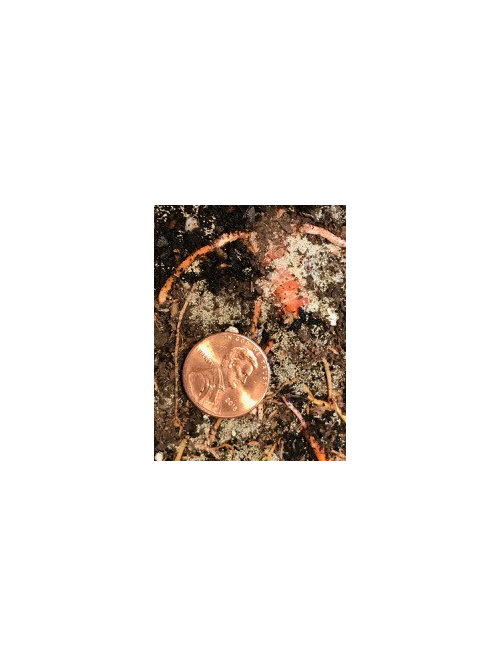
I'm repotting three sansevierias, and one has tiny white specks around the rootball, which almost looks like it was dusted with cornmeal. The other two don't have the specks. All three have been sharing a long rectangular pot, so in very close proximity. I have a jewelers-type magnifier, and do not see any movement. The plant seems completely healthy. Any ideas about what it is?
Man, I hope you're right, cactusmcharris. I'm concerned that it's root aphids, although I don't see any movement, even with a jeweler's loupe. I was just reading about root aphids, but don't see any pics that look like mine. Scared the tar out of me reading how difficult they are to get rid of. I'm almost in tears, thinking, "no more plants for me!"
TT, do you mean root mealy bugs? This is not them. AFAIK, there aren't root aphids, but I'm not an entomologist. Your further comment makes me think of root mealy bugs (which are a bugger to get rid of, that's for sure).
Actually, according to what I read about root aphids, they look like mealy bugs in their larval stage. But, who knows? The internet is wonderful, but the information is often contradictory. Right now my kitchen is a mess with repotting, and I've been sidelined researching and debating whether to toss the sansevieria (and her pals?). I just wish I knew in fact what it is. For now, I bagged the affected plant in a super-size zip lock bag, hoping to see if any crawlers or flyers show up.
TT, it's not the plague, there's no need, but I understand your need to seek reassurance, especially not wanting the questionable culture to spread to the rest of your collection. As I said, I don't know much about bugs, so I didn't know aphids would feed on roots, preferring the plants, bracts and flowers of a number of plants (they feasted on some PIG'd Echeverias in my yard in San Diego).
Reading it on the Internet - yes, skepticism is needed. But don't toss the plants. IIRC, the mold appeared on my plants usually in the spring, when it's been cooler and wetter (the winter rains) and the soil is high in peat / potting soil-type ingredients.
One hundred percent not root mealies. They are part of the hyphae and mycelium of harmless soil borne fungi, which feed on the organic matter (like peat) in the potting medium.
We've seen pictures exactly like this many, many times right here in the forums. At some point, little mushrooms may sprout from the potting mix, just another part of the same fungal body.
A yellow mold-like growth may indicate the presence of a saprophytic soil fungus, a fungus that lives on dead or decaying matter. The fungus will not harm the plant but may indicate unsterile potting medium or an overwatered plant. Scrape it off the soil as it appears.
Thank you both so much! I'm gonna wait until tomorrow morning to check the plant once again for anything moving, and then clean it up and pot into a gritty mix. Hopefully, that will be the end of it!
T TOriginal Author
T TOriginal Author
Related Professionals
Corpus Christi Landscape Architects & Landscape Designers · Oneonta Landscape Architects & Landscape Designers · Champaign Landscape Contractors · Edison Landscape Contractors · Virginia Beach Stone, Pavers & Concrete · Albuquerque Stone, Pavers & Concrete · Seattle Stone, Pavers & Concrete · Middlesboro Landscape Architects & Landscape Designers · Rutland Landscape Architects & Landscape Designers · Las Cruces Landscape Contractors · Longview Architects & Building Designers · Fall River Architects & Building Designers · Santa Barbara Landscape Architects & Landscape Designers · Mobile Interior Designers & Decorators · Mesquite Interior Designers & Decoratorscactusmcharris, interior BC Z4/5
T TOriginal Author
cactusmcharris, interior BC Z4/5
T TOriginal Author
cactusmcharris, interior BC Z4/5
rhizo_1 (North AL) zone 7
cactusmcharris, interior BC Z4/5
T TOriginal Author