Software
Houzz Logo Print
jlkimber

hydrangea as houseplant

7 years ago
I just bought a hydrangea and would like to keep it as a houseplant. Any advice would be appreciated. Thanks.

Comments (25)

  • 7 years ago
    last modified: 7 years ago

    I don't believe it would work well.

    I've heard of growing hydrangeas outdoors in containers but not as a houseplant.

    Which kind is it?

    Perhaps try growing outside in a container.

  • 7 years ago

    It is not going to work at all well, sorry. Should the plant survive long term - doubtful - it will not bloom again indoors.

    Plants that can grow outdoors in temperate climates, like hydrangeas, do not make good houseplants. Indoor conditions are just not at all to their liking - too dry, too uniform temperatures (no ability for dormancy and vernalization) and inadequate sunlight. That they are often sold for this purpose in flower is very misleading as they are intended to be very temporary 'gift plants' - enjoy while still in flower, then toss - rather than a true houseplant (most of which are semitropical or tropical in origin).

    If you can keep it going until it is warm enough to move it outside, that would be best. Hydrangeas can easily be grown in containers to be enjoyed outside during the warmer months and then moved into a protected location for winter. And allowed to go fully dormant, with loss of leaves, etc., until spring and warmer temps stimulates new growth.

  • 7 years ago
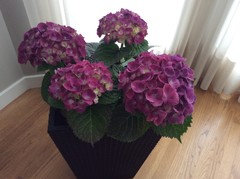
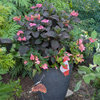
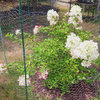
    Thanks for your comments. I have posted a picture of it. I will bring it outside when the weather is warmer. It is so beautiful. The pot it came in does not have drainage holes - do you think I could some how make drainage holes and if so, what should I use? Thanks.
  • 7 years ago

    Are sure no drainage hole? That is absolutely essential if you hope to keep it alive for more than a week or two!!

    If none present (and that would confirm that this was intended as a disposable plant), gently lay the plant on its side and using a hammer and a stout nail, make several in the base of the pot. Assuming it is plastic :-) If not, you may need to repot.

  • 7 years ago
    Yes it is plastic. I checked before I bought it and then again at my home. It is strange. Thanks I will make the holes as you suggested.
  • 7 years ago

    PS - When drilling holes, you do not need to make perfect, round holes.

  • 7 years ago

    I just bought five Hydrangea macrophylla 'Fuji Waterfall' in full bloom from an indoor plant section of my favorite nursery. I plan to plant them outside really soon as they are not by any means indoor plants and cannot live in such conditions for very long. I also noticed the lack of drainage holes in the pots but then realized it is a double pot: inside pot has drainage holes while outside pot has no drainage holes and a small reservoir for water on the bottom. This is the first time I stumbled upon such double pot.

    Anyone has any idea what will happen to these plants while planted outside in April in full bloom and foliage while all my other outdoor Hydrangeas are JUST waking up? I've been hardening them off in a cool garage for last few days but I still expect some shock. Any ideas how to make that transition easier for them?

  • 7 years ago

    Just acclimate them sufficiently and they will be fine. The more shade they are in the longer the flowers will be present and looking decent.....just make sure they receive enough bright light to bloom well in following seasons (which will not be in April, btw :-)).

    IMO. hydrangeas really do not require much attention or thought in our climate.

  • 7 years ago
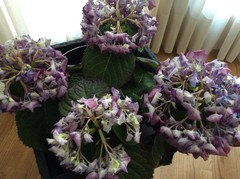
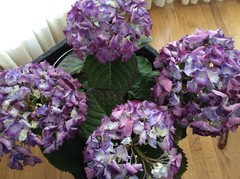
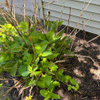
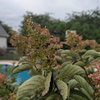
    Look at my hydrangea now. It looks awful - what did I do? Advice would be appreciated. Thanks.
  • 7 years ago

    Jo, how warm is your house? This might simply be a shock after being brought from a cool and humid greenhouse into a warm and dry house. Also, how wet is the soil? If there are no drainage holes the plant might be drowning. Foliage still looks perky so I assume it is not a drought stress.

  • 7 years ago
    I keep my house fairly cool. It is 18 degrees Celsius. The plant is in front of a north facing window so gets light but very little sun. I was watering it small amounts every few days. When I saw it like this this morning I gave it more water.
  • 7 years ago
    last modified: 7 years ago

    deadhead the flowers. That will stop needed energy from going towards dying flowers. The rest of the plant still looks totally viable.

    Also, bring it outside. What zone do you live in? In most zones it would be fine to bring it outside this time of year.

  • 7 years ago
    I am in zone 3 and it is still cool here. It is 9 degrees centigrade now. The plant seems to have perked up. Perhaps I was not watering it enough? Some leaves have curled.
  • 7 years ago

    yeah, it wasn't getting enough water. Once the flowers start looking bad, just deadhead them.

    In a couple of weeks fine to bring it outside.

  • 7 years ago
    Thank you.
  • 7 years ago
    last modified: 7 years ago

    When the blooms have normal conditions, they should go thru a series of color changes that end in brown. For example, blue then greens/pinks then brown. If it is too dry or too windy, the plant will zap the blooms early and go directly from blue to brown. To prevent that, maintain the soil uniformly moist (not wet). Once the blooms do not look fine, aesthetically speaking, you have to choose whether to leave them "on" for winter interest or to deadhead them.

    See the link below (scroll to the bottom of the web page) for info on deadheading:

    https://plantaddicts.com/pruning-hydrangeas/

    Once the chance of cold temps has passed, bring them outside. But feel free to temporarily bring them back inside if Mother Nature decides to dip below freezing in your zone.

    Since this shrub was grown in a greenhouse and its leaves are not used to your cold weather, consider not just putting it outside when temps are simply above freezing but rather waiting when they are warmer still. Perhaps wait until temps are regularly 10C or above.

  • 7 years ago
    Thank you.
  • 7 years ago
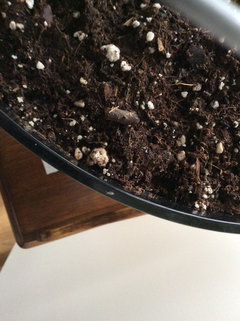
    I have a new issue with my hydrangea. Now there are little flies in the soil and on the plant. What should I do? Thanks.
  • 7 years ago
    last modified: 7 years ago

    You may want to post a picture to id them. There are some black gnats that fly around and become nuisances. They are called fungus gnats as they feed of humid decomposing debris so keeping the top of the soil slightly on the dry side and keeping the top soil clean of plant debris will eventually help. They may have larvae in the soil now so that is why I said "eventually help". They also sell some sticky yellow cards to trap the adults. Do the same to any other potted plants that you may have. At worst, you could also try an insecticide with imidacloprid against the larvae in the soil but the previous steps did it for me.

  • 7 years ago

    Enjoy it while it blooms. Probably die later on (been there, done that more than once). I was successful in my second attempt saving a Shooting Stars florist hydrangea by promptly planting it after it finished blooming. It is about five feet tall now after a few years in the ground but then I am in zone 8. It should be blooming later this month.


    In zone 3, it will be very difficult to get it to bloom again (if it survives winters outdoors). A greenhouse would probably be your best bet or move south?


  • 7 years ago
    This is a picture of the fly. There are many of them. I have Shultz houseplant insect spray - would that be okay to use?
  • 7 years ago

    Yellow sticky tape, drench. IMO. If if was me, I would complete get rid of the potting medium, give the bare rooted plant good rinse and use clean potting indoor medium - IME, promix or any of they similar stuff you find in a Hydro store should be clean potting medium (aka, gnat free)

  • 7 years ago

    Add enough sand/gravel on top of the soil to discourage the gnats from laying eggs into the moist soil - break the cycle. Cut back on watering, bottom water for a while.


    Eventually they do disappear but later on they may be back from another plant that has an egg laying adult or larvae already in the soil.


    They usually do minimal damage but still a pest to gardeners. Seedlings are another matter since feeding maggots can kill young seedlings but sometimes a poison drench is worse for the plant than the gnats. A soapy mix will often bring the larvae to the surface but does it kill them. Nicotine drenches, predatory nematodes, and other "organic" methods can be used too but you may have partial success using these methods.


    http://ipm.ucanr.edu/PMG/PESTNOTES/pn7448.html


  • 7 years ago
    Thank you everyone. I am happy to hear that they do not cause damage to the plant. I will try some of these methods and hope for the best. Thanks again everyone for being so very helpful.