Software
Houzz Logo Print
jennifer_bostwick36

Anyone dealt with Juniper-Hawthorne Rust?

7 years ago
last modified: 7 years ago

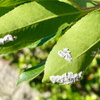
I noticed these bright orange tentacled masses all over a cedar tree in my yard. My research indicates it is Juniper-Hawthorne Rust and typically does not kill the tree. We cannot cut out all the infected branches. I've noticed a few spots on a couple other trees as well. Anyone with experience?


Comments (13)

  • 7 years ago

    Can I prevent its spreading? Will it ever go away? Is it unwise to introduce new junipers in proximity to the infected trees?

  • 7 years ago

    "Can I prevent its spreading?
    Only if you remove every host juniper within its range!! It is completely unharmful to the junipers but can be very damaging to the other host species. And there are multiple ones, depending on the particular pathogen involved. Research 'gymnosporangium rusts' to get an understanding of what alternate host species (always rose family) may be involved.

    Jennifer Bostwick_Central OK 7a thanked gardengal48 (PNW Z8/9)
  • 7 years ago
    last modified: 7 years ago

    Depends a lot on what part of the country you're in. Where I'm at in the cooler upper midwest, we don't see this as often or as severe as warmer more moist areas further east and south.

    There are also associated diseases that affect Quince and service berry.

    Here's a link with more information.

    Controlling it would seem to be more work than it's worth imo.

    Depending upon if you're a Rural location on acreage you might just ignore it. Presence can vary from year to year.

    Jennifer Bostwick_Central OK 7a thanked User
  • 7 years ago
    last modified: 7 years ago

    I'm in Central Oklahoma. Can the entire life cycle be completed on the same tree or will it always be a different species?

  • 7 years ago

    The disease requires two different host species. One will always be a juniper (and different juniper species can be involved) and the alternate host species will always be a member of the Rosaceae or rose family - apple, crabapple, pear, hawthorn, serviceberry, quince, cotoneaster, sorbus, etc.

    Jennifer Bostwick_Central OK 7a thanked gardengal48 (PNW Z8/9)
  • 7 years ago

    i just got rid of the juniper.. because.. eventually.. it started pissin me off ... life too short.. to be angry at your garden .. or any plant within it ...


    welcome to the forums.. its always helpful to include location ... big city name or some such..


    in some places.. if not most.. this really isnt a battle worth fighting.. if in fact.. you could fight it ...


    in my MI ... juniper are nearly an invasive.. lining hundreds of miles of roadways ... meaning.. its so endemic.. you arent going to eradicate it.. in the neighborhood ... so whats it worth fighting it in your yard ....


    you dont mention if your is anything special ... or worthy of the fight ...


    sooo . either enjoy it as a bonus show of ma nature .... or get rid of it ... but dont waste time worrying about it ... nor.. imo.. fighting it ...


    ken


    Jennifer Bostwick_Central OK 7a thanked ken_adrian Adrian MI cold Z5
  • 7 years ago

    It looks like an alien being! I am fascinated and grossed out at the same time. In Oklahoma, Eastern Red Cedars are everywhere and we have several in our yard. I do not like them one bit but they provide green in the winter where there would be none otherwise. We live on an acre in a neighborhood, not rural, not city.

  • 7 years ago

    Sounds like a war not worth fighting. Part of nature.

    Again, some years it appears worse than others, depending on moisture, heat etc and probably a hundred other variables.

    Jennifer Bostwick_Central OK 7a thanked User
  • 7 years ago
    last modified: 7 years ago

    And after reading the list of host plants on the Rose family, I see strawberries listed. I have a beautiful crop of pretty plants with hundreds of blooms waiting to become strawberries not 15 feet from the infected cedar! Are they doomed?

  • 7 years ago

    And red cedars suck up a ridiculous amount of water and act like torches in wild fires. I have an unknown Juniper in my yard. It gets the rust growths on it occasionally. We also had apple trees for many years. Eventually one died, though I don't know what killed it. The second one survived a few more years till the flipping electric company cut it down. My personal experience in Oklahoma is that you only see it in unusually wet weather and if my apples were any example, it isn't necessarily a problem. It has been a wet year. The rust will go dormant(?) when it dries out.

  • 7 years ago
    Thanks guys!
  • 7 years ago

    I have never read any literature that indicated strawberries were an alternate host for these rusts....but I guess it is certainly possible. There are upwards of 100 different genera in the rose family but only a handful are susceptible to the rusts. And any potential infection would be dependent on the specific strain of gymnosporangium rust common in your area.