Software
Houzz Logo Print
anchuz

Early blight on tomatoes... what to do with the soil next?

7 years ago
last modified: 7 years ago
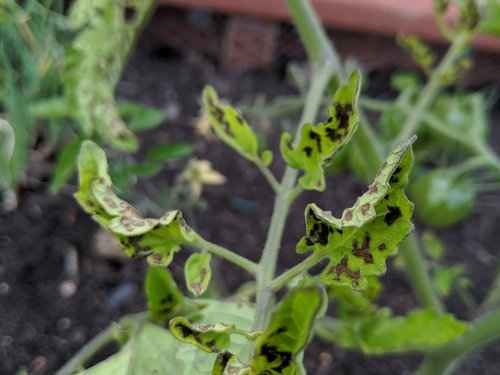
I just noticed that all four of my tomato plants (3 of which had been doing really well, and even had fruit on them) have what looks like Early blight (pics attached.) I am in Bay area of California, zone 9b. It had been warming up here in early May, with a few days in the 70s and 80s, and then we've had a cool week of rainy, 60s weather lately. I'm wondering if that's what did it.

I've been reading up on it, and sounds like I should be tossing these out (bagging or burning, not composting.) In addition, I've been reading that the spores can last a year or two in the soil, so I should be rotating crops and NOT planting tomatoes here for this or the next year at least. What do I do with the soil and this spot now? This is a new, raised bed in full sun amended with compost this past winter -- prime real estate for vegetable gardening in my yard :-( This was my very first planting in this space, so it is especially disheartening.

Hopefully I can still grow something in here...?


Comments (14)

  • 7 years ago

    Is this location new for you. What did you fill the raised beds with, and where did the compost come from.

    I'd guess these plants may still produce some tomatoes. I have had an over fertilized crop of tomatoes outgrow the blight I get. I had dug two inches of manure into my garden and also dug in a couple spade fulls of manure into the oversize planting hole. The plants grew up and arced over a 5 foot high fence and back down to ground level on the other side. The tomato production seemed unchanged. But the plants just outgrew the blight.

    I didn't grow tomatoes in that garden for two years and also grew Caliente 199 Mustard. The third year I got a light case of the blight, so 2 years wasn't long enough.

    But you're growing in raised beds so I'm guessing it's in the soil you filled the raised beds with?

  • 7 years ago

    Thank you for sharing your experience. Yes, this is a new location for me, and these beds were constructed earlier this year. The soil came from the existing yard -- where we've moved to in the past year, so new to us -- and the compost came from a local gardening supply store. Should I just remove the affected leaves (which are MANY!) and see if the plants survive? But I am concerned about letting the fungus survive and spread... Or should I get rid of these plants, and can I plant tomatoes elsewhere in the yard? Can I safely plant something else in this location, if/once I take these plants out? I guess I shouldn't be planting tomatoes the next three years in this location?

  • 7 years ago

    There are a lot of things that can look like blight and not be blight, especially to new or less experienced gardeners. If you are very concerned a local university extension or lab could test the soil or the plants for a moderate fee. This map https://usablight.org/map/ keeps track of current and new outbreaks.

  • 7 years ago
    last modified: 7 years ago

    Are we sure that's early blight? Can't really tell in the pics at least on my phone, but it makes very distinctive bullseye patterns on leaves.

    I frequently get early blight in my garden and it is not a major issue and way overhyped. Even septoria tends to be worse. California 9b is an entirely different climate though (and those leaves look pretty bad... clip them off.)

    @lilyd - As far as I can tell, that site only tracks late blight, which is an entirely different animal

  • 7 years ago

    Peter, you are right - sorry for missing that!

  • 7 years ago

    anchita

    It looks like the previous resident grew tomatoes, or another nightshade, in that soil and had a blight problem.

    It's true that it's very difficult to tell what blight you have. I have taken very detailed closeup pictures of a variety of leafs in various stages of development. I can't tell one from another, so I just call it blight.

    I'd suggest you plant tomatoes in various spots in your yard and watch what happens. Plant the next years crops where you get the best results. Hopefully you'll find two spots without problems. You know you have problems with your yard, so do Not grow tomatoes two years in a row in the same spot. The second good spot, if you have one, should be saved for another year.

    I hope your space is big enough to accomplish the above tests. In the bay area can you plant a second tomato crop for this fall. In the meanwhile it's suggested you remove the bottom leafs from the plant to allow air to flow permitting the plant to dry out. When you water don't wet the plant, apply the water to the ground. My suggestion to over fertilize is not an accepted solution, but from my experience it worked. I used manure, actually it was bulk mushroom compost. Be careful, don't over fertilize. Also from my experience the copper sprays didn't help me. It's a preventative and I get enough rain that it's always washed off, and then I won't use it when the tomatoes develop, so I gave up on that.

  • 7 years ago

    I am in the bay area as well. Blight and fungal issues are very rare here because of our lack of summer rain. The weather this last week has been really weird, but it is done raining and hopefully for good until October.

    Are you in the fog belt? If you are not, I think you can get rid of it by watering from below. Set up drip irrigation.... it is easy to DIY and will make your life easier. After a few weeks of no wetness, the plant should recover. You can also try a fungicide on the leaves without worry of it getting washed off. Not having to worry about rain is great.

  • 7 years ago

    That does not look like early blight to me. I don't know about late blight.

  • 7 years ago
    last modified: 7 years ago

    This could be the year, but i agree that blight is not a common problem here, and it could be something else.

  • 7 years ago

    Yeah, more rain Sunday maybe... this is a weird one. My tomatoes are going to be stunted if it doesn't warm up soon.

  • 7 years ago

    Thank you for all the tips and guidance. It seems to have stopped or at least slowed its progress. I have removed the affected leaves and am watching it to see how it does. It does have drip irrigation already, so no watering on the leaves, but we did have rain and even some hail yesterday :-( It is the weirdest weather for this time of the year.

    I will take the advice and find another couple of spots in the garden for tomatoes next year, so I can rotate the crop. They won't be in raised beds, but with decent enough soil, so should be okay, hopefully.

  • 7 years ago

    That doesn't look like early or late blight. As for early blight, I don't know how things are in CA, but where it's a problem, it's usually endemic and carried on the wind and getting rid of your soil will do nothing to prevent it. Early blight is not late blight. Late blight is the disease that is very dangerous to commercial crops and requires disposing of the plants immediately and carefully.


    That looks like it could be TSWV. Check with your local extension to see whether the thrips that carry it are a problem in your area right now. Is the newest growth looking curled and/or stunted? If so, that's the most likely culprit. I know TSWV is a common problem in CA.

  • 7 years ago

    BTW, if it's a virus, the plant won't recover, and you can't manage/delay disease progress the way you could with something like early blight, septoria, etc. It will continue to grow stunted and produce stingily and the fruit will be malformed. I would get a diagnosis from your extension office before you invest any more time and energy in those plants, especially if you still have time to get replacements if it turns out to be a virus.


    Also, rotating is good if you have the space to do it, but it doesn't do much to prevent foliage fungal diseases. It does help against soilborne wilts, but your plant does not look like it has any of the common soilborne tomato diseases.

Sponsored
More Discussions