Software
Houzz Logo Print
webuser_122704636

Please help save my lawn

7 years ago
Hi guys,


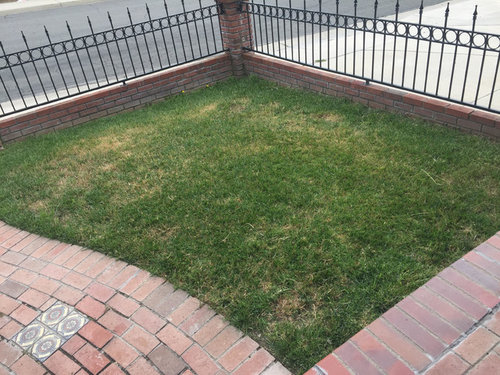
I'm a total newbie and new home owner and I would really, really appreciate your suggestions. My house is in San Dimas, California. It has 2 front lawns of about 200 sq ft each. We moved in on April 1st so it's been 2 full months. Before that the lawn might or might not have been well taken care of, but it was very green and looked strong in the month it took from the first time we saw the house till we moved in.


There is an automatic sprinkler system that has been set for 3am everyday, not sure how many minutes every time. In addition it has rained unusually much for this region in May, and it has been quite gray (also very unusual).


I have a number of questions, please forgive my ignorance, I'm learning as fast as I can considering there is so much to take control of in this house :D My questions:


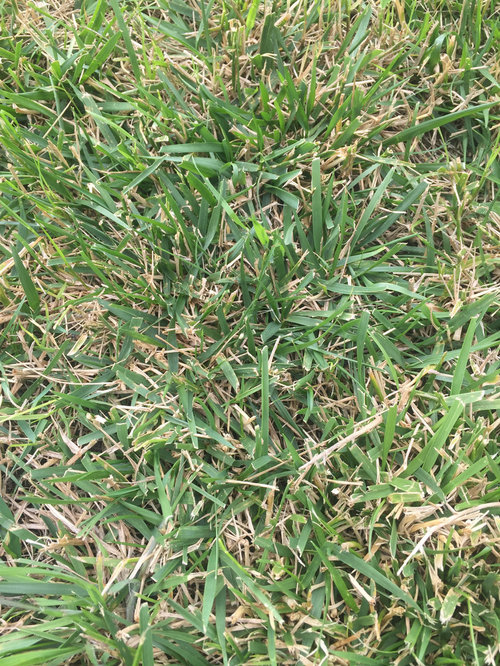
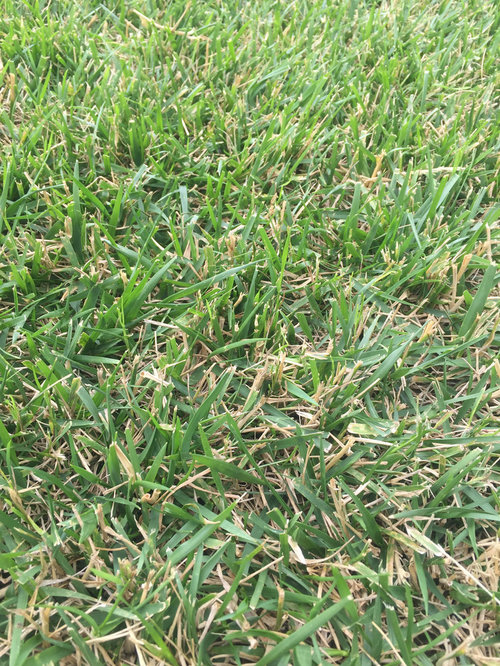
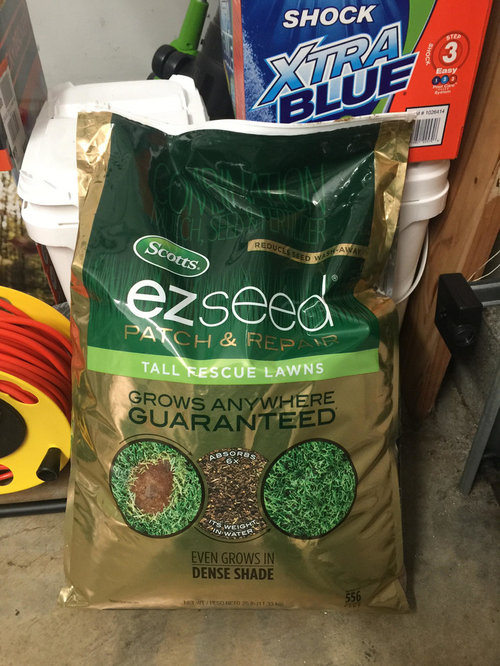
1. Can you guess what kind of grass I have? I don't know what the main type is, I do know there is some centipede grass in the borders of the lawn, but it doesn't seem to be the main type. I also know that the previous owner must have used Scotts EZSeed Patch & Repair Tall Fescue Lawns at least to repatch, there was an almost empty bag next to the lawn. Is the grass type Tall Fescue indeed?


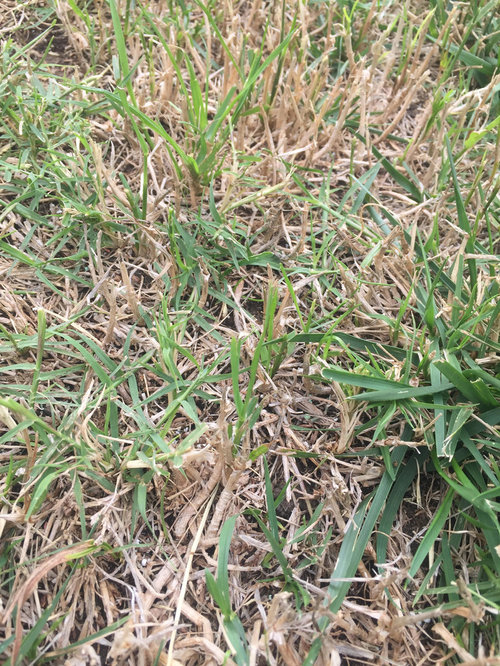
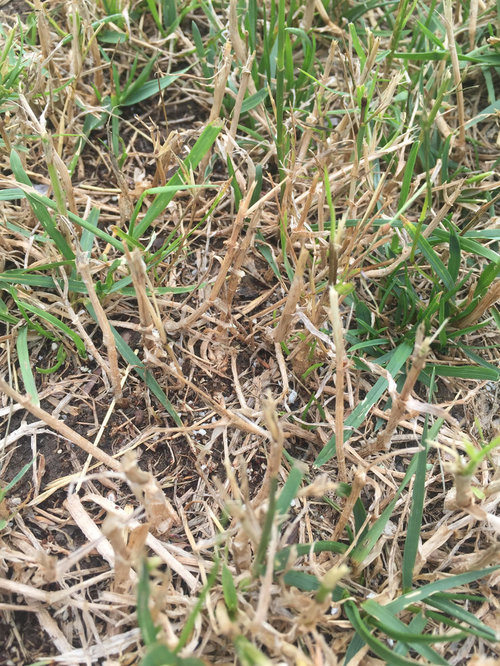
2. Can you guess why the lawn is turning yellow from the pictures? I have measured the PH both with a stick in tool and with a chemistry kit, it seems to be between 7 and 7.5, which seems quite normal given the soil is clay and they did not use a top soil as far as I can see, the grass is in the clay. The chem levels for Nitrogen, Postash and Phosphorus also seem fine, good levels of all of them in the soil, so not even close to depleted.

My very uneducated guess here would be that the lawn is overwatered (temperatures have been below or around 70 this month, not hot at all) and/or it has some kind of fungus infection, but I cannot see any mushrooms. Hope the pictures are good enough so that you can see something there.


3. There might also be a mole in there, or not. When we first moved in, I saw a couple of volcanos in the front lawn, and I proceeded to step on them to close them. They have not reappeared, and I haven't seen other signs of moles in the front lawn. But in the last 2 months I did find 2 drowned moles in the pool, which is in the backyard, far away from the front lawn.


Pls help, any suggestion is welcome, my first goal is to take control of this lawn so it doesn't die and I can get it back to luscious green before the hot California summer kicks in if possible. Pls let me know if you need any additional pictures or data to give a better suggestion.


Best, Hugo


Comments (11)

  • 7 years ago

    I'm not an expert, but that could very well be fungus. If so, fungicide will stop it from spreading.


    Could be moles, or could be grubs; have you checked for grubs?

  • 7 years ago

    Hi Joe, thanks for your answer. I haven't checked for grubs yet, but I'm going to now, thanks. I didn't want to let this go, so as of yesterday I took the following measures to try and recover the lawn:

    1. Turned off automatic sprinkler system. Will be watering manually to control the amount of water depending on the weather.

    2. I'm assuming what I have is Tall Fescue and it's indeed a fungal infection as you mention (maybe brown patch or large patch). Researched yesterday and bough Scotts Disease Ex, which seems to be one of the best for this kind of case. Will be updating on the progress here.


    I know for sure it could still be moles, I'm on to that one shortly. I'm going to research if it could be grubs, I haven't yet. Thanks for the suggestion :D


    Best, Hugo

  • 7 years ago

    This does look like a fescue of some common sort, although I'm not good at grass ID when it comes to specifics. As such, it won't spread and you'll probably have to reseed once you have the issue under control.

    With the severe overwatering your system has been giving it, just stopping that might very well control any fungal issues. Ultimately, you'll be looking to water about once a week, around an inch of water all at once, but you'll have to work up to that. Your lawn right now has short roots from all the heavy watering. Those will take some weeks to grow back in.

    This might be a good opportunity, particularly with a lawn that small, to research what grasses would be good for your locale. It doesn't look like you get much of a winter, and summers are warm and dry (but with a lawn that small, watering isn't an issue). So you're fairly open to grass types.

  • 7 years ago

    Just checked the lawn for grubs, I don't think there's a chance it can be grubs at this time. It's nearly impossible to pull the grass by hand anywhere in the lawn (it should be pretty easy if there were grubs from all the videos I've checked, correct?).

    Actually, I was surprised that the roots seem very strong even where the lawn is yellow, I had no chance of pulling out a bunch of grass at all, not even close.

    So I guess for now I will continue to watch out for overwatering, fungus and moles, unless someone has other suggestions :D


    Best, Hugo

  • 7 years ago

    Grubs can leave strong roots, but it seems unlikely that they're a problem. You can look online for videos on how to check, it involves removing a square foot and looking for the C-shaped grubs in the soil. Less than 10? No problem. 10 or more? Problem. Totally gross number (pardon the pun)? Big problem.

    Your climate indicates you very rarely freeze, and almost never see rain, highs from 70-90. I don't, per se, object to a very small lawn, but you might even want to think of a succulent or cactus (I'd go succulent to avoid the thorns!) and stone garden instead to be more compatible with the local climate.

    Tall fescue's fine for a transition zone lawn if you like it, and on the lower end of the water usage scale. This is the one case where I might recommend lower-end fescues like K-31. They're wider blade, not as attractive, but they don't require much water, aren't susceptible to many diseases or pests, and survive almost anything.

    If you prefer a finer grass, that's fine--it'll just need more water.

    Buffalo grass might do, but I'd need an expert to chime in on that as I'm not sure. If so, it's a prairie grass that requires very little water, roots deeply, and grows slowly.

  • 7 years ago

    Oh, I just caught that. Don't test your own pH, the home kits are useless and you probably got an answer pretty close to 7.

    That was your water pH. :-)

    If you want us (me) to read it, send it to Logan Labs. Warning: my circumstances just changed and as of mid-June, I'm not going to be around nearly as much, however.

  • 7 years ago

    Haha, thanks :D


    Oh, of course, I got all hooked on the videos that showed people just grabbing the grass with their hands and forgot to check the 1 sq ft removal trick. Will be doing that today.


    To be honest before I move on to a more expert garden I want to tame and maintain what I already have (apart from this front yard I also have a bigger backyard I just tilled and solarized and a big side strip with like 7 trees and a lot of vine I'm currently removing). So right now my mind is more on sanitizing, pruning and maintaining than on plating :D I think that's a fitting project for next year haha :D I prefer doing all this work myself because I learn so much and I enjoy it a lot, but it is, after all, a lot of work haha :D


    I do appreciate your advice nonetheless, it will be very handy when I get to that level :D


    Best, Hugo

  • 7 years ago

    Hi guys,


    the lawn seems to be reacting very well to having cut the overwatering and applied fungicide. Only 3 days later and it definitely looks like it's recovering! The grass is growing very fast, today I'll mow it and de-thatch to help it continue in the right path :D I'll keep you updated in the weekend. Thanks so much for all the helpful suggestions!


    Best, Hugo

  • 7 years ago

    Awesome! In a dry environment, cutting the overwatering should cause a fast response.

    Now just keep an eye out for the grass going too dry, because it doesn't have much in the way of root systems...you may need to water every third day for a while to keep it going, then back off to every fourth day, and so on, until it adjusts.

    A good fescue should be able, eventually, to go at least a week without watering. In your fairly moderate climate, except when it's quite hot, ten days to two weeks isn't impossible.

  • 7 years ago

    If you've discovered a "volcano" you must have moles. Try setting a mole trap and see what will get in.

    You can click here to read more about moles and mole traps.