Software
Houzz Logo Print
courtney_davis22

A disaster lawn! Help please!

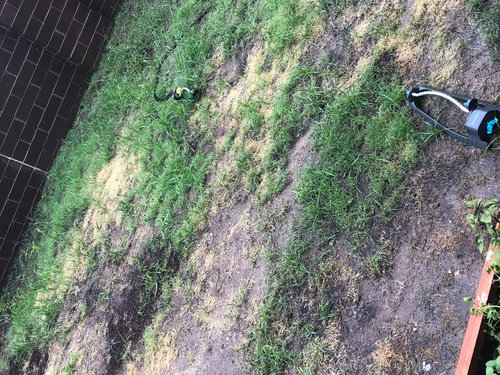
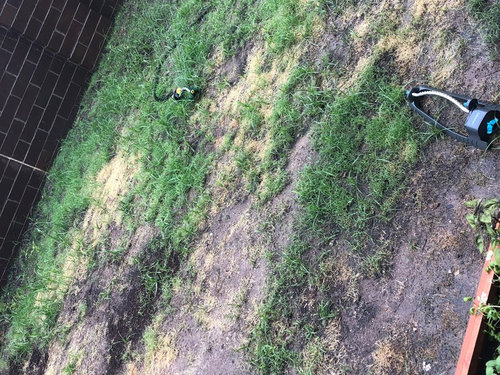
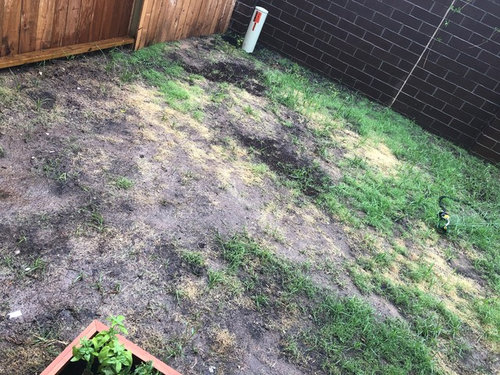
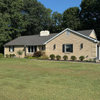
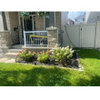
We have a small back yard. When we first moved here it was covered in many types of weeds. I didn't notice any grass at all. We decided that we wanted to have a Bermuda lawn since it gets hot here in Houston, Texas, and we decided to use seeds since it was more affordable. Last month my husband put out fertilizer, and after a few days and hardly any success (there was still many weeds and no grass anywhere in sight) he decided to use a tiller to soften the soil. He then threw out bermuda grass seed. After about 2 weeks, we noticed the yard had some bermuda grass but it was very patchy and many of the weeds had returned and was growing at a faster rate than the grass itself. About 5 days ago, my husband put out more Scott's fertilizer (we hadn't had a chance to mow the grass yet since it was only about 1 inch in the highest places). Today, I stepped out into the yard and I noticed that there is fertilizer burn on the already patchy bermuda, and the ground is very soft and spongy. My foot sinks when I step down. Not to mention, the yard is no longer leveled (many huge lumps and bumps in the yard). I feel that the ground needs to be leveled again but I'm not sure how we should handle this. Should we rake up everything, level the yard and reseed? Or should we not reseed and hope the bermuda grass grows back? Are there any options for us to fix these problems or is this lawn screwed up for good? I've attached pictures of the yard at its current state. Any advice, or tips are appreciated. Thank you.


Comments (5)

  • 7 years ago

    The usual way to seed a lawn is to first remove all competing vegetation, but especially weeds. Tilling can be good to destroy weeds, but it's also helpful for heavy soils. After tilling and seeding, however, you need to use a roller on the soil to firm it and give good soil/seed contact. I am very cautious with fertilizer and would use a balanced garden fertilizer rather than a grass fertilizer. (It was a mistake for your husband to fertilize a second time.) Finally, the area needs to be watered to a depth of 6 inches. Then plan on watering three times a day for up to 10 days for 10 to 15 minutes so the surface and seeds stay moist. Make sure all parts of the seedbed are getting water. Once you see new shoots of grass water once per day for 20 to 25 minutes. Water less but for a longer time as the grass gets established.

    Most grasses should not be mowed less than 2 & 1/2 inches high, which means don't mow until the grass is about 3 & 2/3 inches. In hot summer areas most grasses will do better if they are not mowed less than 3 inches high; it's less stressful. Over watering and over fertilizing lead to thatch. Over watering can lead to disease. Use moderation.

    To correct the application of too much fertilizer you should water more so the fertilizer flushes through the soil. If you had Bermuda to begin with it will likely recover as it tends to have deep and persistent roots.

    Courtney Robinson thanked mindshift
  • 7 years ago

    Speaking as another person from a hot, subtropical climate - if you can shade the area, the grass will grow better and greener, filling in the blank spots you have with less time and effort than continually trying to re-seed. In my area, live oak or southern magnolia is the weapon of choice for larger lots. For a smaller area, you may want a smaller tree that is less maintenance. Cathedral live oak may be a good compromise if that cultivar is available in your area: https://homeguides.sfgate.com/live-oak-tree-varieties-41678.html


    My backyard stays green 12 months out of the year and has many fewer weed issues because the grass is healthy and competes much better with the weeds. The front has improved after I put in another live oak to shade the area. As the oak grows, the little oasis where the grass doesn't get burned during a drought or bronzed by our infrequent winter frost is growing with it.


    I should also mention that I do not use any fertilizer on my lawn. You could level the grade of the property again, but the reason the high/low spots form is from erosion and soil compaction during our storms and from foot traffic. If you can solve the grass issue, leveling becomes a little easier as you can just fill in the low spots with some garden soil, pack it in, and let the grass take back over the area.

    Courtney Robinson thanked kinzyjr {Lakeland, FL - 2023 USDA: 10a, 2012 USD
  • 7 years ago

    You would probably have better success with sod or plugs. Most big box stores ( Home depot) or landscape supply places - have sod available on the weekends. If you decide to plug, some types of bermuda ( such as 'Celebration' ) spread at a rapid rate, and can provide cover in a couple of months, depending how close you space the plugs. You will probably only need 10 rolls of sod.......cut each roll into 8 pieces and plant them evenly around the yard. Fertilize after your finished, and you might want to kill off the existing bermuda before you start. The seeded bermuda will look very weedy next to the hybrid bermuda sod. Spray with 'Round up' a week before you plug.

    Courtney Robinson thanked Tom
  • 7 years ago

    First of all I rotated your image and reposted it.

    To me it makes it easier to understand what I'm seeing if the perspective is understandable.

    I see a hole, to the left of the sprinkler near the picture top and what looks like almost a step going off to the upper left of the hole. So, it looks to me like the lawn needs some serious raking. I have a rake about 30 inches wide that I'd use to get better grades. And then it needs rolled. If you feel your feet sinking it's going to sink as the soil firms up, making holes. You shouldn't have rototilled a lawn, aerating was more appropriate. Aerating would have loosened the soil and kept the same grades and not creating massive disruption.

    I don't know what's appropriate for growing in your hotter growing zone and I don't know bermuda grasses. But if I were doing what you wanted to do in my area I would have:

    1. Killed off the weeds, waited at least a month.

    2. Sowed my seed, which with the grass I use takes 3 weeks to germinate.

    3. Spread a preemergent weed killer, in mid April, to stop crabgrass from germinating.

    That's very difficult to do and takes precise timing. It's way too late for the preemergent and it's probably too hot for sowing grass seed. As I said I don't have experience growing grass where you are. But maybe you can make some sense out of what I do know.

    Courtney Robinson thanked John D Zn6a PIT Pa
  • 7 years ago

    You are at least 3 months late in asking for help. Whenever you seeded bermuda was far too early...because NOW is the time to put out bermuda seed. The soil has to be hot to get good bermuda germination. If you seeded in March or April you jumped the gun by that many months.


    Rototilling should be avoided at all costs for any lawn, but especially for a bermuda lawn. Why? For the very issue you are seeing now with your feet sinking in. This fluffy soil will continue to settle for the next 3 years. All you can do now is try to rearrange the high spots to fill the low spots. Don't add more soil. That causes other headaches. Using a roller might help some, but the soil will continue to settle and become bumpier for years. Why is it worse for bermuda? Because bermuda becomes the most dense when mowed low to the ground. If you have holes and hills in the soil, the mower's wheels will fall into the holes and scalp the grass down to the soil in those spots. A grass that grows best when mowed high, St Augustine for example, doesn't look scalped even when you hit a hole.


    Mixing bermuda sod with seeded bermuda is another issue to avoid. You already seeded it. Some of that will grow and eventually cover everything. Seeing as it's finally hot enough, it should start spreading quickly.


    It is not too late to change to St Augustine. A few pieces of sod will spread to cover just like the bermuda does. St Augustine is less tenacious and less aggressive than bermuda, but it will stomp all over what bermuda you have and choke it out. Contrary to popular opinion, St Augustine does not take more water than bermuda. All lawns take a similar amount of water to look nice. The main difference with bermuda is that it will come back from the dead whereas St Aug can die out from total lack of water over a period of months. Fortunately the Houston area does not have that problem.


    Bermuda can take almost any amount of high nitrogen fertilizer as long as you water it down immediately after application. If you wait until the next day, the morning dew will have dissolved the fertilizer into a very salty brine which can burn the blades. Washing it down with a hose dilutes it to a much less salty brine and washes it down into the soil.


    I could write essays about the misinformation you have received on this thread. In fact I have, over the years, written such essays. Here are the basics of the Bermuda Bible.

    • Water deeply and infrequently. Deeply means 1 inch all at one time. Living in Houston this is already taken care of. Infrequently means no more than once a week in the hottest heat of summer. Again, Houston takes care of all your watering needs. I live in Bandera, TX and have not watered my front lawn (St Augustine) yet this year. We got an inch of rain last night, so I'm good for at least a week and maybe two.
    • Mulch mow at the mower's lowest setting at least once a week and preferably 2-3x per week.
    • Fertilize with a high N, fast release once a month during the growing season. You can, of course, fertilize less often, but the grass will tend to thin out and become more lime green rather than dark green. I always suggest that at least one of these applications be an organic fertilizer. Organic fertilizers keep your soil healthy along with the lawn.
    • Use herbicide in mid April and late September.


    If you changed to St Augustine, the same watering method works. Mow at the highest setting no more than once a week. I try to go 2 weeks. And with St Aug you only fertilize in late May, September, and around Thanksgiving. It's a lot less hassle than bermuda.