Software
Houzz Logo Print
webuser_503011620

Chances my floor tiles contain asbestos??

7 years ago
last modified: 7 years ago
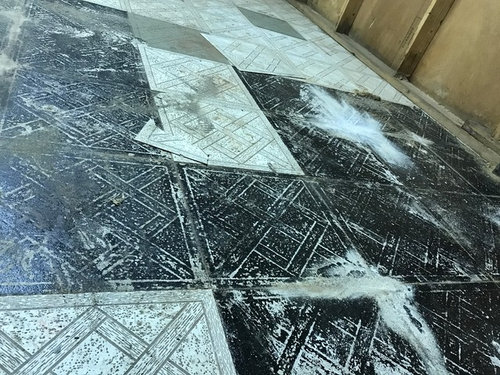


House was built in 1969 and I have no idea when the basement flooring was done. Upon my ownership, the basement was flooded a couple times due to sump pump failure. The floor had water damage and tiles started peeling off. I was planning on remodeling basement so it wasn’t a big deal until I started googling about vinyl tiles and removing adhesive and learned about asbestos issues. My realtor mentioned 12x12 tiles are not asbestos tile but not sure if this is true. The other thing is the black adhesive residue. Does it look like asbestos adhesive?


Assuming the worst case that my floor contains asbestos, can it be encapsulated given the floor condition after water damage? I already removed all the tiles peeling off. But I can’t guarantee the rest of tiles are in good shape and uneven floor level on where the tiles have been removed is another issue. Or can I just cover the floor with laminate wood? Looking for some advice!

Comments (25)

  • 7 years ago

    The traditional asbestos filled tiles were often 9" x 9". The thing that is of concern here would be the 'cut back' adhesive. Even after asbestos was removed from vinyl, it was still found in some cutback adhesives (the black stuff). You are welcome to send off a sample of the tile and a sample of the adhesive to a lab that does this type of testing. It costs roughly $75 - $100 per sample and the results are back to you within a week or so.


    Encapsulation is possible assuming the RIGHT product is used...with the RIGHT technique. Ahhhhh...there's the rub. Finding both at a DIY level.


    Personally I would get the testing done. Depending on how much flooring you have to cover, you might want to know a bit more about this project before making a decision on how to proceed. If the tests come back negative for asbestos, you are well on your way to a long and tedious job of removing/scraping all the black gunk off before you are able to get self leveler down.


    Sean K thanked SJ McCarthy
  • 7 years ago
    last modified: 7 years ago

    The basement size is about 1000 sqft. Thinking about getting test done... but on the other hand, I won’t pay for expensive abatement solution anyway...lol so I guess the answer I am looking for is how I can cover this up. After spending some time on web surfing, floating flooring seems to be the best flooring option on top of the existing flooring. The tricky part is the water damage. Like I said in the posting, I removed all the tiles that were peeling off and the remaining tiles are intact without any movement. I know it’s hard to say without seeing it but is it going to be okay to install laminate floor in this condition? And for the area where tiles have been removed, is there an easy way to level it to the tiled area?

  • 7 years ago

    The floor wont be level with missing tiles, so laminate will not lay nicely over it. Did you throw out the loose tiles? If not, you may be able to reglue them and get the floor a bit more level. Is there a possibility that the sump pump will flood the basement again? Laminate floors will not hold up with any type of moisture, so may not be a good idea for your basement.

    Sean K thanked cat_ky
  • PRO
    7 years ago

    Vinyl-asbestos tiles were produced in 6x6", 9" x 9", 12" x 12", and even 18" x 18" sizes and some also had decorative strips, custom dimensions, etc.

    What you have there it looks like Asphalt asbestos tiles, but to be sure have it checked, find a lab near by and send them a small sample 1"x 1" in a sandwich bag and see what they say.

    Sean K thanked GN Builders L.L.C
  • PRO
    7 years ago

    If the tiles pop loose easily and don't break, they are not hazardous. They can be put in a bag, labeled and disposed of properly. The adhesive is likely to have asbestos. If it's not disturbed, a floating floor could go right over it. If you want to remove it to glue something over the top, wet scraping is the best, followed by cleaning with a HEPA vacuum. If you're going to glue over the adhesive residue, do a test area first.

    Asbestos risk from something small and occasional is rather low.

    Sean K thanked Johnson Flooring Co Inc
  • 7 years ago

    Thanks for all of your input. I measured and they are 12x12 1/16” thickness tiles. With the water damage, some of the tiles popped up and I was simply able to lift the whole piece without cracking it. Is there some sort of chemical/fluid that can loosen/soften the adhesive so I can remove all the tiles without cracking them while keeping wet condition to prevent any airborne dust? I don’t like the idea of putting new floor on water damaged tiles.

  • PRO
    7 years ago

    Water is best. I would hesitate to use a chemical that might turn it into a gloppy mess, soak into the concrete and possibly affect whatever you put over the top.

  • 7 years ago

    There is almost no way to level the floor without removing the black cut back adhesive first. Which means floating a laminate over top of a floor that is uneven (like yours) is very difficult.


    The best option is to pop up the remaining tiles (go ahead and use buckets of warm water to soak the tiles to loosen them) and then scrape up the WET glue (as much as possible) while you are there. So long as you keep the glue wet and scrape it while it is wet, you should be just fine.


    You are aiming for 80%-90% removal before putting down a vapour barrier such as 6mil or 10mil poly sheeting. To get the slab ready for self leveler you need to remove 95% of the glue...which gets VERY difficult without grinding. And it is the grinding of dry cut back adhesive that makes it airborne.


    I suggest a good set of knee pads (one of my tiling friends paid $250 for his) and a whole bunch of scraping blades.

    Sean K thanked SJ McCarthy
  • 7 years ago

    I disagree about the need to remove the adhesive. There are leveling products that bond to cutback adhesive....I used one years ago in a laundry room where there had been flooding on a concrete slab and the tiles came loose. I poured the compound, trowelled it, let it cute, and put new seamless flooring down. Never had a problem afterwards.

    Sean K thanked kudzu9
  • PRO
    7 years ago

    I think y'all are getting off on a tangent. Maybe I'm wrong, but from what I see the only mention of leveling by the OP is in respect to having partial tile coverage with a resultant 1/16" difference.

    Sean K thanked Johnson Flooring Co Inc
  • 7 years ago

    That was my interpretation, too.

    Sean K thanked kudzu9
  • 7 years ago

    Whatever you do, keep a record of exactly what you did and whether you know it's asbestos or is just suspect. Include some pics. And keep that with the 'house file' that goes with the house if you ever move. Future owners, or your future self, will thank you.

  • 7 years ago
    last modified: 7 years ago

    That’s right, the uneven level issue is within 1/16” difference (tile thickness). I am trying to figure out whats more cost effective option - cost of applying leveling products vs. cost of applying mastic remover (assuming no cost for removing tiles other than using my own labor )

  • 7 years ago

    If you leave firmly affixed tiles in place, you can fill in low spots with leveling compound that bonds with that type of adhesive. If you want to remove all the tiles, and float a floor on top, then you don't need to deal with the adhesive. Just remember that tile and adhesive removal could be messier and more labor intensive than you might expect.

  • 7 years ago

    @kudzu9,
    What’s the self leveling product you used? I have the same type of floors, with several tiles missing.

  • 7 years ago

    Been there, done that. If the tiles are deteriorated and flaky, wet them down thoroughly to keep fibers from flying, and pry them up. Keep them wet the whole time. Put them in heavy duty trash bags. See below for disposal.

    You can safely remove and dispose of the cutback left behind (almost none of it goes with the tile) with a product called "Bean-e-doo mastic remover." From what I can tell, it's just industrial soybean oil with a price to match the typical cost of asbestos fearmongering - oops, I mean asbestos abatement. (Sorry.)

    The oil keeps the asbestos particles suspended so they don't get into the air or your lungs.

    You need 2-3 times as much Bean-e-doo as the label promises, and then you need to leave it on 2-3 times as long as the label says. A week isn't too long.

    Spread a pool of Bean-e-doo all over the floor and go do something else for a few days. Once most of the cutback has dissolved, scrape loose any that's not quite liquefied yet, dump kitty litter or floor-dri on it, squeegee the disgusting black gooey mess up, put it in heavy duty garbage bags, and take the bags to your area's designated disposal site for such things (call city hall to find out where).

    Before you try to stick down new flooring, scrub the floor repeatedly with TSP, or something similar but more benign, to get the greasy residue off.

  • 7 years ago

    rpwoodard-

    It's been enough years that I don't remember the brand. However, there are quite a few products out there that will do what you need. Here is one from Ardex, a reliable brand:

    https://www.amazon.com/Ardex-Drying-Cement-Feather-Finish/dp/B004GUAIT8/ref=asc_df_B004GUAIT8/?tag=hyprod-20&linkCode=df0&hvadid=312372485199&hvpos=1o5&hvnetw=g&hvrand=16083517512044401636&hvpone=&hvptwo=&hvqmt=&hvdev=m&hvdvcmdl=&hvlocint=&hvlocphy=9033259&hvtargid=pla-491583610510&psc=1


    You might also take a look at Henry, another reliable brand. They have something called Level Pro 555, which some Home Depot stores carry.

  • 7 years ago

    Thanks for the tip. some said been-doo soaks into the floor which made anything impossible to stick on the floor, even after several rounds of degreasing process. I am thinking to paint the concrete floor in the laundry room after tiles are removed so it’s going to be a problem if paint doesn't stick to the floor.

  • 7 years ago

    Ugh, that wouldn't be so good. It's possible. Bean-e-doo is sloppy, oily stuff.

    If the floor stays too greasy to paint, it probably stays too greasy to cement new floor covering down to, don't you think?. If you have to float a floor over it anyway, why bother removing the old tile?

    I did this in one of my rentals. The tiles were water damaged and I didn't want tenants going OMG ASBESTOS WE'RE GONNA DIE..

    All the flooring people I called went OMG ASBESTOS WE'RE GONNA GET SUED. Funny, that. Well, all except for one, but his quote was kind of like 3 double espressos in one shot. Whoa.

    So I did it myself. I fervently hope to never again.

    I didn't try to paint the floor. It's a basement. Bare concrete is sort of its ultimate destiny, IMO. So I have no idea whether enough of the grease scrubs off to paint or glue to the floor.

    TSP is pretty powerful stuff, though. Hey, how about that purple degreaser that the burger places use to clean car oil spots off their drive-through asphalt?

  • 7 years ago

    I don't know what product they used, but I paid for professional abatement of about 400 sq ft of tile in my basement and the resulting surface was dry, relatively clean-looking concrete (it looked like it was dirt smudged) . The guy told me there were no oil-based products used and it would take concrete paint without any problem, and the paint did adhere very nicely. I painted it with concrete paint from HD. They used some type of liquid cleaner and a water vacuum, but I could not observe directly because everyone had to be in hazmat suits.

    Bruce

  • 7 years ago

    @kudzu9, thanks for the links & the suggestions. I’ll check them out.

    I also don’t want to remove the tiles - I’d rather not deal with the black adhesive.

  • 7 years ago

    rpwoodard-

    That's a good choice. Trying to safely remove all that stuff wouldn't be fun. After a couple of days on your hands and knees you might conclude there are better uses of your time. ;-)

  • 7 years ago

    Most likely you can dispose of any asbestos containing waste at curbside if it's sealed and clearly labeled. At least, that's what federal regs allow for homeowners who do their own work. But check with whoever does your trash service.

  • 7 years ago

    In my area such waste must be contained in special disposal bags, there must be written notice to the local environmental agency, and the bags have to be taken to a hazardous waste site permitted to accept asbestos. Here is the detailed pamphlet my agency puts out on dealing with vinyl asbestos flooring: https://www.pscleanair.org/DocumentCenter/View/371/Properly-Remove-Sheet-Vinyl-Flooring-Asbestos-Backing---Owner-Occupied-Single-Family-Residence-PDF?bidId=