Software
Houzz Logo Print
labbe1980

How to trim this cherry?

7 years ago
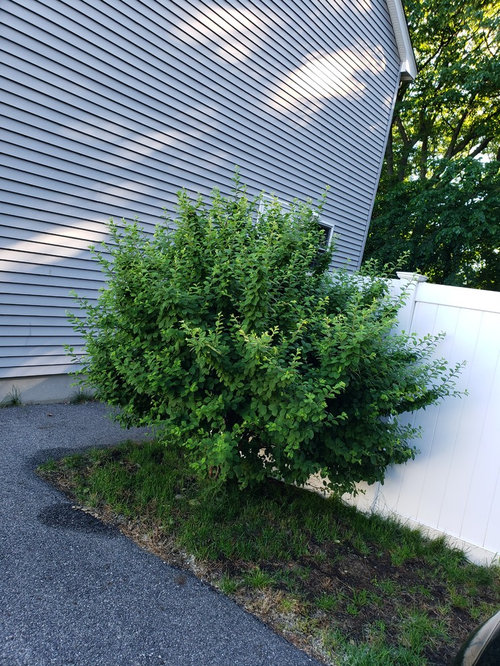
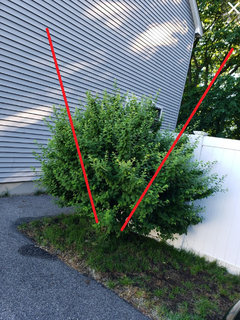
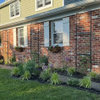
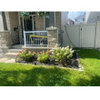
I have a cherry shrub that has more than doubled in size from last year. I'm not sure the best way to prune this but still keep it looking nice because I assume you wouldn't use the same methods you would for a hedge or pine shrub.

Comments (19)

  • 7 years ago

    I assume you wouldn't use the same methods you would for a hedge or pine shrub.


    ===>>>


    welcome to the forums ...


    if by that you mean.. should you shear it.. i agree.. no you should NOT...


    beyond that ... if you define a goal .. a pruning goal.. then figuring out how to prune it.. to achieve that goal .... is easier to define ...


    what is your goal ...


    it might help ... if we had a full ID ... if you give us a better pic of leaves .. etc.. perhaps we could ID it.. which would allow us to use WWW images ..... to find out what the possibilities are ... there are just too many things called cherry.. to just wing it.. imo ...


    ken


  • PRO
    7 years ago

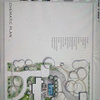
    As much as the plant itself, the job it's doing in the setting is key, insofar as how you'd prune it. More or less, you are creating a form within a space. What form should that be? Let's see the overall space in order to figure it out. You are calling it a "cherry shrub," but in fact, will it not end up being a small tree? If it will, it should get the tree form pruning, not the shrub form pruning.

  • 7 years ago

    We need to identify it. Can you provide a close up of the leaves?

  • 7 years ago

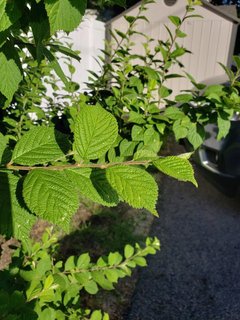
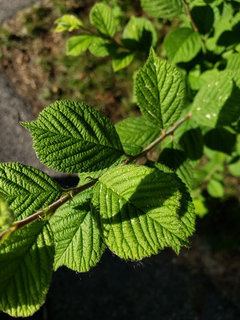
    close up of the leaves. tbh I'm not entirely sure I'd my goal for pruning, outside of potentially making it look a bit neater. dry the width is around 6', wet it spans a bit more, but currently stands about a foot taller than the white 6' fence.

  • 7 years ago

    Right. You need to research pruning Prunus tomentosa. I have no experience of them but since they are grown for their fruit, not for their neat appearance, I agree with yardvaark that you need to decide what you want it to do. Fruit or ornamental?

  • PRO
    7 years ago
    last modified: 7 years ago

    Elaborating a bit ... it would be rare that one in an urban or suburban situation grows fruit as it would be grown and tended in an orchard, on a farm. There, it would be treated for pests and fertilized on a schedule. In typical yards, fruit is often substandard and too unappealing to actually eat. Most of the time, birds get the first helping and worms get the second. I'm not saying how it must be, but how it usually is. More power to anyone who can grow and harvest fruit from their own yard for some homemade treat. Most yards are small enough that any plant must do a landscape job first and if it produces fruit, that is a secondary benefit. While I've never grown this plant, I read that it can become large 10' or 12' tall and wider spreading. I see walks in the immediate vicinity so that tells me it's probably not going to work well in a shrub form, but would probably work out better as a tree form that people can walk below. Being shrubby, it would be best as a multi-trunk tree. That means pruning in a V-shape, in the round, once per year, until the permanent canopy begins (probably not lower than 7' or 8' ht.) You would control the angle of the "V" arbitrarily, according to the surroundings and the tree's effect on them.


  • 7 years ago

    but currently stands about a foot taller than the white 6' fence.


    ===>>>


    working on your goal ... is the above a problem???


    personally.. its not for me ... why do you mention it???


    and it doesnt sound.. like it will be easy.. to keep topping it.. to be lower than the fence ... not many .. if any here.. approve of topping trees ....


    if lower than the fence is important ... removal might be an option ...


    ken

  • 7 years ago

    height was only mentioned to give a relative size of the tree, nothing more.

    so what im getting from all the help and suggestions is to select a goal, for a tree, and then act on said goal in a more V shaped pattern, if that is what's desired.

    thanks for all the suggestions.

  • 7 years ago

    Not a tree - a shrub :-) I can't see what advantage pruning into a V shape would achieve. But then I am not an advocate of manipulating plants into shapes they do not normally display if left to their own devices.

  • 7 years ago

    This plant is seldom grown over here so my understanding that it is grown for fruit came from frequent queries about it on the Fruit and Orchards Forum.


  • 7 years ago

    Of course it can be grown for fruit. And may be a good choice for very northerly climates where sweet cherry trees are more difficult or as a substitute for larger growing tart cherry trees. But the fruit is tiny and can vary in taste from quite tart (most common) to very sweet (less common). It is actually more closely related to plums than cherries.

    IME, this is more of a hedgerow or specimen plant rather than part of an edible landscape :-) Not all cherries make great edibles! And it does require a pollination partner to get fruit. (I grew this shrub for a number of years and just enjoyed the profusion of early spring, slightly fragrant flowers. It never once produced a fruit!)

  • PRO
    7 years ago

    "... typically grown as a multistemmed shrub rather than trained as a tree." What shrub is not multi-stemmed? What would growing in that way mean?

    Driving around the countryside, seeing isolated 80'-tall trees in farm fields, it becomes readily apparent, were it not for the hand of man or the teeth of grazing animals, that these trees would have foliage all the way to the ground ... in exactly the same form as any shrub ... except that they are giant sized. Those that are not altered by man or animals have foliage to the ground if they are surrounded by sunlight.

    If a shrub grows naturally in a dome shape, but because of its large size will occupy a 10' or 12' circle of ground space, is removing its lower branches or wide spreading limbs equivalent to "manipulating it" into a shape it would "not normally display"? As I see it, it's simply the process of making into a tree form, the same as virtually all tree form plants are made. There is nothing sacred about creating a tree form one's self, as opposed to only purchasing it that way.

    A prime goal of pruning is not only to end up with the finished product one wants, but to do it in the most efficient way. If a plant is ultimately going to be a tree form, it is highly inefficient to let it go too far in growing foliage that ultimately must be removed. It is more productive if the foliage generally grows in the direction where a permanent part of the plant will be retained.

    In this case, one option is to keep the plant as a shub. But that doesn't seem like a very good option on account of its size already having reached the walkway on two sides. That would pretty much mean incessant and ongoing pruning. The plant IS multistemmed, which do not make very good single-trunk trees, because it's a lot of extra work keeping sprouting trunks from growing. But it would make a good multi-trunked tree form. That only means removing lower branches which will tend to not regrow once a little time passes and they become in the shade of the future canopy. It does not require cutting the canopy top in any other than its genetically predetermined, natural shape. The end product, as a small multi-trunk tree, keeps clear of the walk and retains its natural form above its canopy bottom ... just like any tree. If the permanent portion of the finished product that exists below the canopy -- the "cage" of trunks -- is going to end up, more or less, in a "V"-shape, why would one trim it in any other shape?

  • 7 years ago
    last modified: 7 years ago

    If the permanent portion of the finished product that exists below the canopy -- the "cage" of trunks -- is going to end up, more or less, in a "V"-shape, why would one trim it in any other shape?

    Because the "stripped" shrubs you keep including in your cartoons where the entire bottom half of the specimen consists only of multiple completely bare slender stems - a "cage" as you are putting it here - with no bark interest are not attractive, look instead as though the site has a severe deer infestation.

    Specimen asked about here could be bare-rooted when leafless and moved to a bigger spot, left to continue developing the branching structure that has already been established.

  • 7 years ago

    Lots of shrubs are not multi-stemmed. And a great many trees - in fact, most - will never have branches that sweep the ground.

    The botanical definition of a tree is a perennial woody plant having one primary, erect perennial stem (trunk) at least 3 inches in diameter at a point 4 1/2 feet above the ground, few to no branches at its lower parts, a definitely formed crown of foliage, and a mature height of at least 13 feet.

    The botanical definition of a shrub is a perennial woody plant with one or more permanent stems that may be erect or may lay close to the ground. Branching can start very low on the plant and it will usually have a height less than 13 feet and stems no more than about three inches in diameter.

    Why it is assumed that any larger growing shrub must be converted into a tree form is beyond me!! Why is it wrong to let the plant assume the growth habit nature intended?

  • 7 years ago
    last modified: 7 years ago

    Looks good now, wouldn't look good with a naked bottom half 7-8 ft.(!) high.

  • PRO
    7 years ago
    last modified: 7 years ago

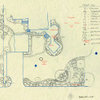
    "... in your cartoons ..." That's exactly correct. They are cartoons. They are not meant to be fine art paintings that evoke the work of the Dutch masters. More than anything else, they are about organization. One must use their own brain power to plug in the details -- bark texture, flowers, plant habit, etc -- of whatever plant they might use in their own yard, in real life. If one is only capable of conjuring up plants that "have a deer problem," I feel for their limited powers of imagination, but short of spending more time on a cartoon than I have, there is, unfortunately, little I can do to help them override this shortcoming. Why don't those kind of people just look at some plant books or go outside and see what real plants look like ...?? It shouldn't be that difficult to imagine such a plant in lieu of whatever I draw.

    Gargengal, in spite of your offering "botanical" definitions, in real life, there is a seamless continuity between trees and shrubs that run every innumerable "shade of grey". It is literally meaningless to present the argument as if it resolves itself depending on what vague, large botanical group a plant falls into. A person still has to figure out how the plant can work for them.

    In spite of there being "lots of examples of shrubs that are not multi-stemmed" (I do not see such things) we are not looking at one here. And while a great many trees may not have branches that sweep the ground, it is by and large NOT a factor of genetics. It is primarily on account of man, animal or lack of light at the lower reaches of the tree.

    Neither do I "assume that any larger growing shrub must be converted into a tree form." I let the surroundings tell me if it makes logical sense, so that there can be peace and cooperation between the humans and the plants. The necessity to walk within 4' of the the plant's center would be a main factor in deciding whether a plant needs to be in the tree or shrub form. When using the yard, I do not like to battle plants. I only do that with pruning tools in hand.

  • 7 years ago

    Well, maybe we should agree to disagree :-) I would counter your argument by saying that trees are trees and shrubs are shrubs and there are not all that many shades of gray between them. These plants are defined and grouped for a reason. And yes, it IS genetics that primarily determines where a tree starts branching. Humans, animals and light or other growing conditions may influence it but do not determine it.

    btw, the vast majority of shrubs originate with a single stem from the root crown but start branching or the trunk splitting so low that they appear to be multistemmed. It is more likely to be just caning or suckering shrubs that have multiple stems emerging from the root crown. And as best as I can tell from the original photo, it does look like the cherry in question is coming from a single woody growth/trunk/stem from the root crown but starts splitting or branching almost immediately.

  • PRO
    7 years ago

    "yes, it IS genetics that primarily determines where a tree starts branching." Initially. We agree on that. But after genetics put those branches there, it is humans, animals and lack of light as the primary causes of removing with them. Otherwise those low branches would remain on the plant into old age.

    "... but start branching or the trunk splitting so low that they appear to be multistemmed." So you are making a technical distinction. That's fine. But in terms of everyday practicality, especially for a novice or one doing routine maintenance, how things appear to be is what will matter.