Software
Houzz Logo Print
tryingtounderstand

Home 30’ from flood plane

7 years ago
last modified: 7 years ago
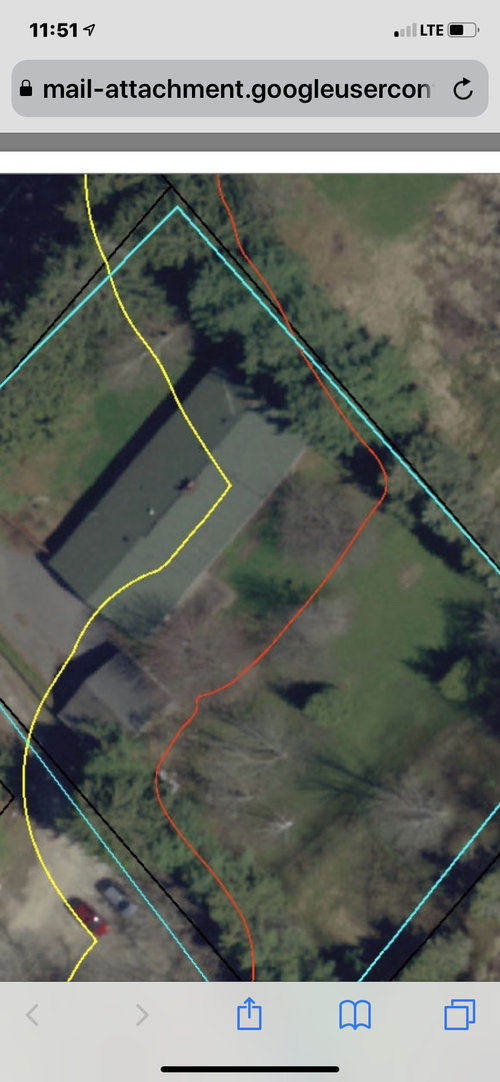
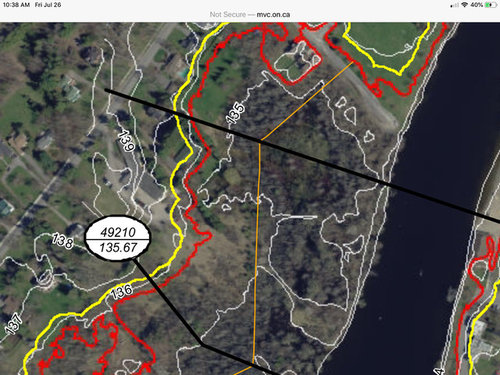
We are thinking of purchasing this home And are wondering the flood risk. The flood map indicates the 100 year flood zone is 30’ back from the house. The river itself, is approxinately 600’ back from the house.

What are the future chances of this home being flooded?

What does the White wavy line mean.

If the flood risk is too high we will not purchase the house. we Would also like to put a swim pond in the backyard.


Comments (26)

  • 7 years ago

    Those wavy white lines are elevation contours. If where those trees are is a seasonal stream, one that only has water in it part of the year flooding can come from there. There is a 100% chance that this house will be flooded some time in the future so if you decide to buy get flood insurance but be away that flood insurance will not cover all of your expenses including living costs while you can not live in your house so save your money.


    tryingtounderstand thanked User
  • 7 years ago

    30’ isn’t that far when you’re talking about flooding, and flood zones can move/be adjusted. What is true today does not necessarily mean it will be true tomorrow, but it doesn’t mean that anything absolutely will change either. This could be a case of your risk level tolerance; do you love the house so much and are in a state that doesn’t typically experience severe weather events so you’re willing to take the chance? Or have enough disposable income that if you were flooded and don’t have insurance you could rebuild on your own? Or have enough that you can afford to add a flood coverage option so you’re covered just in case something happens? The FEMA website has a lot of good resources, check that out and see if you can find some info for this particular house that will help you make your decision.

    tryingtounderstand thanked iamtiramisu
  • PRO
    7 years ago
    last modified: 7 years ago
    Ask your lender if flood insurance is required. Also check with your insurance carrier for information.

    The maximum available flood insurance is for $250,000, with a deductibe.


    No one can say what the odds may be for flooding.

    tryingtounderstand thanked Virgil Carter Fine Art
  • 7 years ago
    last modified: 7 years ago

    If you want the numbers, a 100-year floodplain, by definition, means that there is a 1% chance that area will flood in any given year. You can do the math from there based on how long you intend to live there. Personally, I wouldn't touch it with a 10' pole.

    ETA something you should consider reading; https://www.npr.org/2019/05/08/720737285/when-1-in-100-year-floods-happen-often-what-should-you-call-them

    tryingtounderstand thanked jslazart
  • 7 years ago
    last modified: 7 years ago

    Are you in Canada? You need to find the flood zone maps to see if you need flood insurance. If you need a mortgage, they will make you have flood insurance if it's needed.

    tryingtounderstand thanked Bevthebrit
  • 7 years ago

    A few more questions and things to consider: Where is the 200 year flood line? Does this house have a basement that is below the flood line? How high is the house's main floor in comparison to the elevation of the 100 year flood line? Even if you were 30' from the 100 year flood line, the real determinate of your risk is how high your elevation is above that line.


    A 100 year flood has a 1% chance of happening in any given year. A 200 year flood has a 0.5% chance of happening in any given year. I disagree that there is a 100% chance of your house flooding but in an unusually heavy rain (that 0.5% chance) it could happen.

    tryingtounderstand thanked A Fox
  • PRO
    7 years ago

    The distance to the flood plain (50 yr, 100 yr, 200 yr) is less important than the elevation of the 1st floor relative to flood elevation if the home is on a crawl space and the basement elevation relative to the the flood elevation if the home has a basement foundation. If it's on a slab, well that makes the math easier.

    Check on the cost of flood insurance before committing to a purchase and ask the agent about the potential for rate increases.

    tryingtounderstand thanked Charles Ross Homes
  • 7 years ago

    Based on the elevation lines on the zoomed out map - there's not much change in that 30' from the 100 year flood plain. "100 year" floods here seem to be happening annually. More extreme weather, more crazy rain / many inches at a time followed by drought. I would not be surprised that when they redraw the maps, you'll see that house in the new maps in the not too distant future.

    To me - that's too close for comfort.

    tryingtounderstand thanked just_janni
  • 7 years ago

    Charles Ross is right. The elevation is the big thing. We bought our house, on a lake, and the mortgage company required us to have flood insurance. The property is in a flood plain, even tho the house sits about 200 feet back from the lake and is up on a hill.

    After we bought I researched flood zones and insurance requirements. Had to go thru FEMA to get flood plain maps for our lake and get the paper work to fill out.

    We then had an Elevation Survey done on the house. Turns out the bottom board of our house is 6.2 feet above the flood plain, so we do not need flood insurance!

    It cost me the price of the survey and the cost to file the paper work with FEMA, but I was able to get a LOMA (letter of map amendment) from them. And when I turned in my paper work to the mortgage company and to my home owners insurer I no longer needed the flood insurance and got my $500 back from my insurer! Well worth the time and energy it took. I also filed a copy of the LOMA with the county. It will make selling my house so much easier when the time comes.

    tryingtounderstand thanked kathyg_in_mi
  • 7 years ago
    last modified: 7 years ago

    If you really want to live there, look up the neighbors and see who's lived there longest. Go and talk to them about the river.

    You can get an elevation certificate to see how high the house was built during the option period. It's impossible to determine how high the water can get. There's many factors: hurricanes, sustained heavy rains, upriver dams, upriver reservoirs. Areas south of Houston, Tx had terrible flooding 3 years in a row due to hurricanes and upstream heavy rain. Some of the areas hadn't seen a flood in 50 years, others in a 100.

    During Hurricane Harvey in 2017, we stayed and hunkered down during the storm but had to evacuate for 10 days afterwards because of the Brazos River flooding. We bought that house knowing the area flooded 2 years in a row prior but were comfortable with how high up the foundation was built. Harvey flooding came within 2 feet of the house pad. The elevation height also helped us have a lower flood insurance premium.


    That flood was a perfect storm example. Before the hurricane, we had significant heavy rainfall that soaked our area. Those storms followed the Brazos inward and filled up flood reservoirs. Those waters were released downstream and the hurricane came.

    What are my odds of flooding within a 100-year floodplain?
    A: If your home is in the 100-year floodplain, it has a 26% chance of getting flooded over a 30-year mortgage period, which is about five times higher than the risk for a severe fire! Your risk of flooding will increase if your home is located in a lower-lying area of the 100-year floodplain.

    People outside of the 100-year floodplain are not free of risk. Federally-backed flood insurance is available to people outside of the 100-year flood zone as well.

    http://www.eng.hctx.net/Consultants/Floodplain-Management/Floodplain-FAQs

    tryingtounderstand thanked User
  • 7 years ago

    Just for clarification flood insurance does not only cover flooding from rivers and streams it covers rain can enter a house. Normal home insurance does not cover any water that comes in from the outside. I have friends all over this country and 2-5 inch rains within a couple of hours are becoming common. In 2017 we had a 13+ inch rain that started about midnight and ended around 5am. With rain falling that rapidly it does not have time to run off. It will form a moving lake.

    There is another thing to look at. Do the exit roads have high water signs? If they do you may be safe but if anything would happen where you would need to leave or services such as fire or ambulance need to come they may not be able.

    tryingtounderstand thanked User
  • 7 years ago

    Many of us in Florida live in or near flood plane. We build up, and insure.

    What is the elevation of the home? Exit route in a flooding event?

    tryingtounderstand thanked Oliviag
  • 7 years ago
    last modified: 7 years ago

    Am I reading it properly: 135 elev is a flood, and you are building 136 or 137....

    It is way to risky.

    tryingtounderstand thanked BT
  • 7 years ago

    I definitely wouldn't buy it.

    tryingtounderstand thanked functionthenlook
  • 7 years ago
    last modified: 7 years ago

    Thank you each and everyone of you for sharing valuable information, thoughts and opinions. As we research more and more, look at flood pics of this town, we are leaning away from this purchase.

    ETA @ bevt, yes we are in eastern Ontario. There have been major floods in 2017 & 2019. Folk on high ground 5 hrs ago were flooded this year. Climate change of course will ensure more and more flooding.

  • 7 years ago

    tryingtounderstand

    Thank you each and everyone of you for sharing valuable information, thoughts and opinions. As we research more and more, look at flood pics of this town, we are leaning away from this purchase.


    It's always hard to buy in an unfamiliar area especially when low lying flood plains are involved!


    Great job researching!


    Listen to your gut. Your property is out there waiting for you! Happy house hunting!

    tryingtounderstand thanked User
  • 7 years ago

    Definitely a pass for me

    tryingtounderstand thanked User
  • 7 years ago
    last modified: 7 years ago

    The maximum available flood insurance is for $250,000, with a deductibe.

    Yes, flood insurance is expensive. VERY EXPENSIVE.

    No one can say what the odds may be for flooding.

    Nah, it's easy: If you're in a 100-year flood plane, the odds are that your space will be flooded once in a century. That's a 1/100 or .1 chance that your house will be flooded THIS YEAR. Every year is a separate event, so every year you face that same 1/100 or .1 chance again.

    If you're in a 500-year flood plane, the odds are 1/500 or .002 that you'll be flooded THIS YEAR.

    What no one can say is whether the flood will come this year, next year, for the next three years in a row, or never in your lifetime. People who don't understand probability sometimes say, "Oh, it flooded two years ago, so we should be safe for 98 years!" No, no, each year is a separate event. Each year the odds start again.

    Does this house have a basement that is below the flood line?

    Oh, that's a good question. Even though I live in the land of no basements, I know that floods + basements are B.A.D.

    If you really want to live there, look up the neighbors and see who's lived there longest. Go and talk to them about the river.

    Excellent advice.

    That flood was a perfect storm example. Before the hurricane, we
    had significant heavy rainfall that soaked our area. Those storms
    followed the Brazos inward and filled up flood reservoirs. Those waters
    were released downstream and the hurricane came.

    Yes, I can relate -- when the weather causes significant damage, it's usually the result of multiple things happening together -- it's never so simple as "lots of rain":

    - When Hurricane Hugo came through (so many years ago), it hurt us so much because we'd had heavy rainfall the week before ... the ground was already saturated. So when the hurricane rainfall came, it couldn't be absorbed. That's why so many big trees fell so easily ... their roots were kinda "loosened up" and the wind was able to take them.

    - On my farm Hurricane Michael took one of our signature oak trees, which we estimate are at least 300 years old. Same story: Rain in the weeks before the storm, the ground was already fully saturated, so the additional rain + wind could easily topple something very sturdy. We had to change the name from Twin Oaks Farm to Lonesome Oak Farm. (Note: my farm is the highest spot in the whole county, and this happened to us anyway. We are four hours from the coast.)

    - When Hurricane Michael whipped through Wilmington last fall /caused such damage, the residents were able to "get out of town" immediately after /if they could get around fallen limbs ... but 2-3 days later, all the rain seeped down from the higher elevations, and the rivers rose up over the roads. The city was cut off for more than a week.

    Something else to consider:

    You're focused on whether super-bad weather will bring a flood to your house. That's definitely important!

    But you also need to consider that a fairly common 1-2 day rain will bring you standing water at the back end of your lot -- not a full-fledged flood, but just water that drains away over the course of a week or so. This will affect the things you can plant, whether you can fence the whole yard, whether you can have a patio or a volleyball court or whatever might suit you.

    Final thought:

    My youngest daughter, a college senior, is living in an apartment in a flood plane (not a 100 or 500 year plan -- a flat-out flood plane). I'm not happy about it, but she lost her housing unexpectedly ... and all the "good stuff" was already reserved for the next year, so we were pleased to find such a nice apartment, even if it was in a flood plane.

    The apartment complex required the girls to take out renter's insurance (something we'd never had before ... who insures a $25 Goodwill sofa?). And when they moved in, they had to sign something saying they realize they're in a flood zone.

    This area did flood last year -- again, Hurricane Michael -- and their college town is six hours from the coast. I talked to the girls about it, told them that IF such a thing happens, they'll have warning, and they are to LEAVE. I made them each a grab-and-go backpack (bought cheap backpacks at Goodwill) with a blanket, granola bars, water bottles, a phone charger and a bit of money. I had each girl add a change of clothes, and the packs have just enough space left to slide in their laptops and phones.

    I'll be happy when she graduates /leaves this apartment next May. I would not like to add in the thought of my own property being in danger and this being a year-after-year issue.

    tryingtounderstand thanked Mrs Pete
  • 7 years ago

    Renter's insurance is not just about the belongings of the renter, it's also (or more) about liability coverage. If a renter accidentally leaves a window open in a rain storm, or leaves a tap running that causes a flood, or accidentally starts a fire, they may be held liable for the damage to the property.

    It's also coverage if a guest suffers some sort of accident (slips and falls on a throw rug for example) and wants to sue for injury.

    And if, for example, the building was damaged in a manner that required the tenants to have to temporarily move out, the landlord's property insurance probably doesn't cover their emergency housing, but the renter's insurance may.

    Personally, I think not having renter's insurance is a very, very bad idea. So many people learn this the hard way.

    tryingtounderstand thanked Brad Smith
  • 7 years ago

    Have you noticed what is going on with the weather world wise?...I would never invest in land that is in any risk of flooding...let alone build and count on having a long and satisfying future there....I might add we are in the california mountains where thousands were affected by the fires...we were not directly affected...but every summer we live with the fear that we will be caught in the next potential nightmare....

    tryingtounderstand thanked btydrvn
  • 7 years ago

    We’re not even in the 500 flood plane and it didn’t help us when a hurricane finally hit and we took in an inch of flood water. Full remodel, not a fun process.. so you never know... personally I’d be cautious to buy a house that close..

    tryingtounderstand thanked Jennifer Svensson
  • 7 years ago

    The hardest part about flood plain maps is that they are usually out of date, eg Texas and Manitoba have both changed much of their natural water flows over time through developments, and the more variable climate we have seen recently (whether you believe in climate change or not) also is affecting the variability of flooding.


    Living in a province that is a giant flood plain (manitoba), it really comes down to hoping the maps you can access are good enough, and picking a flood level that is remote enough you can live with it. My parents flooded for years, so hubby and i went for a 1:700 year flood plane (one of the best we can get near the major city around here)!


    tryingtounderstand thanked lookintomyeyes83
  • 7 years ago

    I live in north Missouri where Mother Nature has been on a rampage for the past 30 years. We have friends who have suffered through TWO hundred-year floods in that time period. Flooding is a terrible thing.

    Run, Forrest, run.

    tryingtounderstand thanked littlebug zone 5 Missouri
  • 7 years ago

    My comment about basement flooding is partially from experience, thankfully not my direct experience since we bought after that event. The neighborhood in which I live experienced pretty significant flooding in 2008. A rive runs along the south edge of the neighborhood, and the houses along that river are only 10' or so above the river. The whole area is really flat too, such as there is only a few feet of elevation difference between the river, and houses that are 6 blocks from the river. Decades ago a low levee was built along the river, but in 2008 we got one of those floods that exceeded the 100 year line and the water breached the top of the levee. Our house was above the flood waters, but I could tell by the way that the basement had clearly once been finished and had been later gutted that our basement must have taken on water (why else would someone remove a finished basement?) After that flood, the levee was significantly enlarged, allowing the flood insurance mandate to be removed from everyone in the neighborhood, but we always treated our basement and the way we stored things down there keeping in mind that it could flood again. We've since moved to a house that is 4' to 5' higher in elevation and 4 blocks further from the river that has even less risk.


    Mrs. Pete, as Brad said, renters insurance is generally a good idea anywhere for the reasons stated above, especially considering how inexpensive it is. I have lived many places that have required that I carry insurance, as it is as much for the landlord's protection as it is for the tenant, none of which were places that posed a particular hazard to me or my belongings.

    tryingtounderstand thanked A Fox
  • 7 years ago

    I have flood insurance on a coastal house. It isn't that expensive for us. It varies. There are policies from $500 to $15000.

    The $250k limit if for federal flood insurance. You can buy more on the private market. Last I looked this was about 3 times as expensive as flood but the federal subsidy has decreased a lot lately so private is probably a lot closer.

    Our insurance started at $1000 a year 8 years ago. It is now $2400 - from the subsidy gradually getting withdrawn and the more frequent storms/floods lately.

    tryingtounderstand thanked David Cary