Software
Houzz Logo Print
cathy_cokley

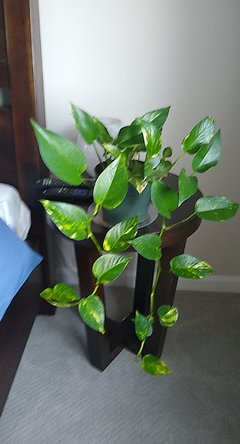
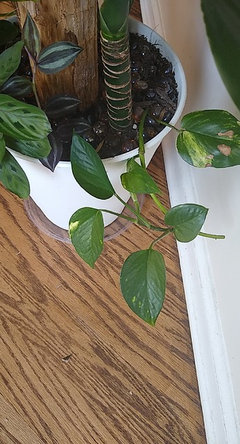
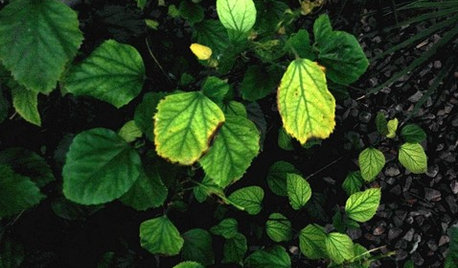
Pothos leaves turning yellow

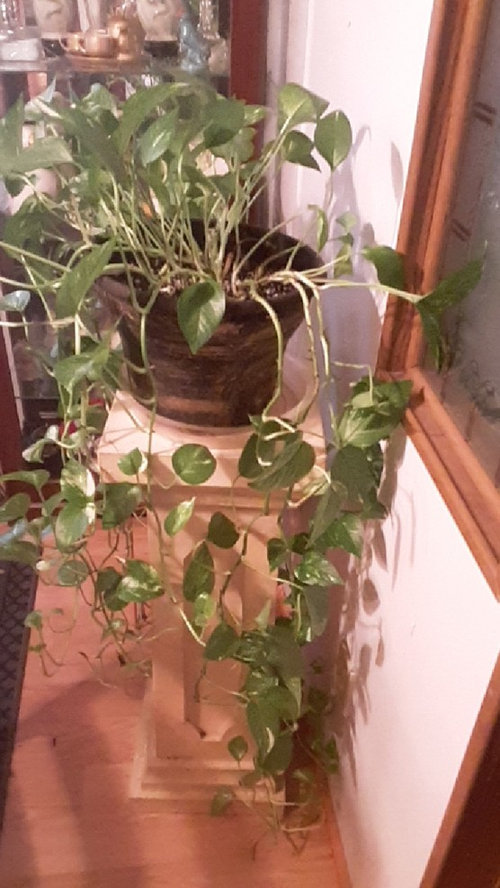
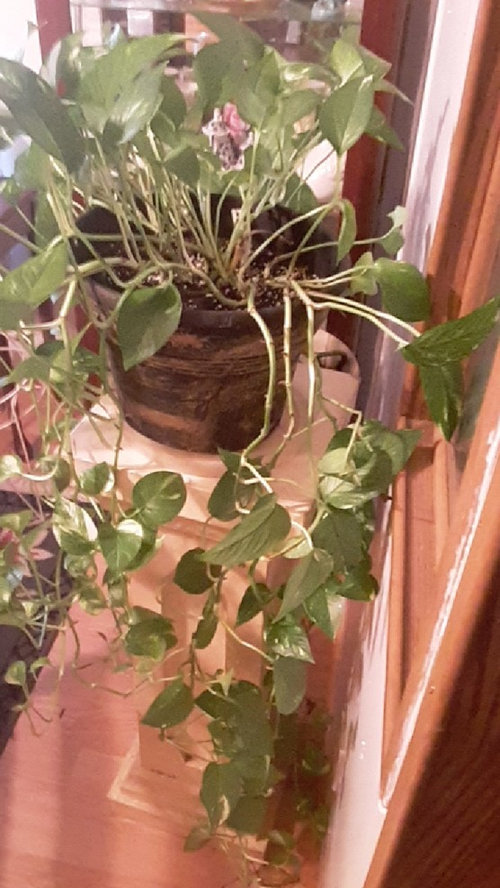
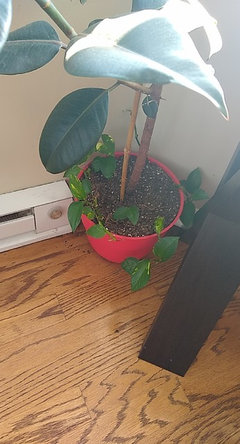
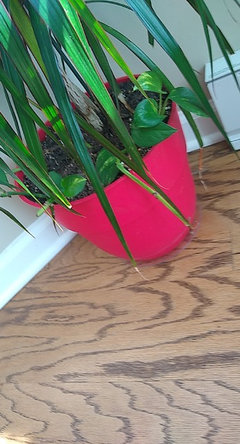
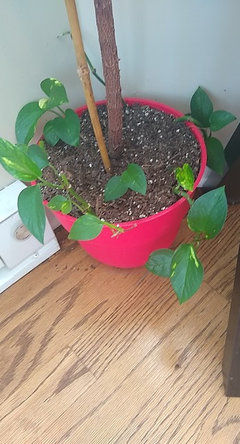
I repotted my Pothos after being in a cheap pot for years. Why are leaves turning yellow and then falling off? see the empty spots where the leaves came off.

Comments (13)

  • 7 years ago

    Is the potting medium staying too wet?

    Cathy Cokley Shilow z8 SC thanked Laurie (8A)
  • 7 years ago

    My ppotting medium is 50/50 perlite and potting soil. I moved the roots a little then repotted and watered in. I have a coffee filter in the bottom.

  • 7 years ago

    Should I put it outside in the shade for a while?

  • 7 years ago

    Since you just re-potted, I wouldn't, let it adapt to being in a new pot, why stress it more by moving it into a new environment. Thats just my opinion, other members may feel different.

    Cathy Cokley Shilow z8 SC thanked christine 5b
  • 7 years ago

    I’m not a fan of coffee filters and would poke a hole in it. You probably love the long vines, but if it were my plant, I would cut it back by half. I like mine shorter and bushy. You could give it a vacation outside later, but for now keep it where it has always been. My 2 cents.

    Cathy Cokley Shilow z8 SC thanked socks
  • 7 years ago
    last modified: 7 years ago

    Thanks. I'll l keep it where it is. My DH likes it to run all over the place. He actually thinks this is his plant. I've been chopping this to make more to give away and I will add more to this pot.

  • 7 years ago

    Is it in a hot/sunny place? It may be the summer heat if not overwatering. Try moving it to a cooler/shady area. If you fertilized it after repotting that may be the culprit. Are the leaves wilting or softer than usual?
    One sureshot way of saving what is left is to cut the long vines along where they have lost leaves and put them in a vase of water. They would grow nicely, develop new roots and could then be repotted in potting media if desired.
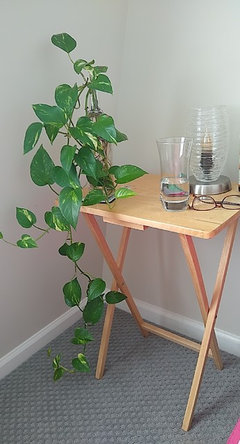
    I had a fairly full flowing pot that went limp and turned progressively yellow while I left it in unheated apartment for a whole month this winter (February) while I was away. My neighbor watered regularly, probably too much? or it was the temperature dipping to 47, which it wasn't used to. Anyhow, nothing I did seemed to stabilize it so I basically salvaged it taking cutting and putting them in water. Both the longer and shorter vines recovered immediately and the bare stems were used for making more plants. I now have them in multiple containers some in water. Here is the before and after.

    Cathy Cokley Shilow z8 SC thanked getgoing100_7b_nj
  • 7 years ago

    Mines used to look like your top picture also. I moved it home from work about a year ago. Too many people wanted a piece tootoootoooftooofttoooftetoooften. I do not fertilize it at all. After repotting some of the leaves just started yellowing and falling off.

    What did you mean by 'the bare stems were used for making more plants'? How?

  • 7 years ago

    I chopped the bare stem into multiple pieces, each having 3-4 nodes and put them in water. Make sure the end that goes in the water is the end that was toward the potting mix. Upside down stem resist throwing out roots. Each piece will develop roots and leaves. It's not superfast but then you are getting new baby plants from what you would have thrown away.

  • 7 years ago

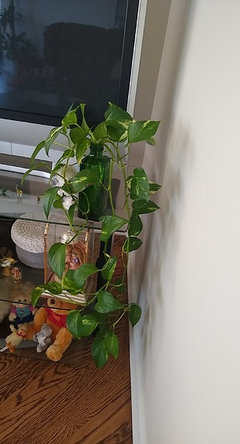
    These are from the bare stems.

  • 7 years ago

    I'll have to try that. I saw this on YouTube a long time ago.

  • 7 years ago

    I'd bet it's over-watering, too. I would repot the plant using ballast in the bottom of the pot, which will go a very long way toward fixing the water retention problem. Learn more about ballast.


    I don't know if you realize it or not, but mixing water-retentive media with an equal measure of perlite is actually a step backward, no matter how counter intuitive that might seem. To visualize why, let's use BBs as a substitute for perlite and peat will take the place of the medium you felt needed amending. Let's start with a jar containing 4 cups of BBs. In the mind's eye, you can 'see' all the lovely air spaces plants love between the BBs. Now, add 1 cup of peat, and mix. What happened to all the air porosity between the BBs? They are full of peat ..... so what has been accomplished? Peat or perlite - doesn't matter which, roots cannot grow into the space occupied by either. So, you have 5 cups of soil, only 1 cup of which can support root growth. AND, the level of air porosity in the spaces between the BBs is exactly what the level of air porosity is in peat alone. The only good thing that occurred is, you reduced the o/a amount of water the soil can hold, but for that, you reduced the volume of soil available for root colonization. It would have been better to stick with your medium, unamended, and used ballast to eliminate excess water.

    If you want to take advantage of the added porosity and drainage pine bark, perlite and an assortment of other mineral products CAN offer, it's important to keep in mind there is a threshold % at which these ingredients can be considered as providing a significant improvement in your soils' porosity. You cannot start with a predominant fraction of a water-retentive medium and add an equal measure of something coarse and expect aeration to improve. The volume of coarse material added, you will find, must be a very large fraction of the medium, certainly more than 75%, which means you wouldn't be amending the water-retentive medium with coarse material, you would be using the fine material to adjust water retention of the coarse material to a level that you prefer. For the most part, the more often a planting needs to be watered, the greater will be the promise of plants realizing as much of their genetic potential as possible.

    Al