

Accelerate/Improve Tree Growth, Compost in August?
So I have a yard in Zone 7b. The soil is terrible and mostly very hard clay. I've been struggling the last 5 years getting trees and shrubs to grow quickly and remain healthy. I've done mulching and watering following best practices as far as I can research. I want to kick it up a notch this year with compost, which I can get from a local supplier for $30/yd. I was thinking about getting 10 yards, expanding the "mulched" area around all my trees to fully encompass the canopy, then basically peeling back the old mulch, integrating a few inches of compost, using a drill auger in key spots to break up some of the clay and fill with the compost, then push the mulch back over top. Firstly, do you think this would be a fultile effort and secondly, do you think putting the compost down in late august would have any ill effects (ie should I wait until the fall). The only reason I wouldn't do it in fall is that it's my busy season at work.
Comments (38)
 7 years ago
how big are the trees ... what are the trees ....
what is the old mulch ... why do you need to remove it ... why not just cover it???
one warning on compost.. sometimes its not properly 'finished' ... either leading to being too hot ... or filled with weed seeds that did not properly compost during the process ... i cant define too hot right now.. coffee buzz .. lol ... [i think this is about compost made with manure .. too much nitrogen]
i dont think the auguring would accomplish anything ...
how fast a tree grows is a function of maturity .. including the maturity of the root mass ... imo .. you cant really 'speed it up' ... it always good to mulch.. or compost .... anytime of the year .... but i am not sure your plan will speed up tree growth ...
clay is usually a very fertile soil .... and the issue is drainage ... have you ever perked you soil??? ... this will give you useful info ...
https://duckduckgo.com/?q=garden+perk+test&t=ffcm&ia=web
trees grow in tree time .. which is counted in decades .... and again... imo ... other than properly watering transplants for the requisite period of establishment .... there isnt much you can do ... to speed it up ... when it all boils down ... there is little instant gratification... in growing trees ....
give us a big city name.. so we can hone in on your location ... and the names of the trees ....
kenCharley Ruggiero
Original Author7 years agoSo I'm in lower delaware, drainage is a problem but we do have concrete swales and good grading. Mulch is a year old and is hardwood un-dyed. It's of a fairly good quality (from a local supplier, contains a lot of bark and organics).
In order from worst growth to best:
River Birch, 10' (soil is mostly construction debris, it took a pick axe to plant it. Hindsight is 20/20. Moving one of my downspout discharges upgrade from it to get more water, it seems to drop half its leaves every year. Considered moving it but it's been there 4 years and would be a pain)
Evergreens, 10'-15' (cedar, spruce, black pine. They seem to really be stunted, very little growth, new growth sometimes goes brown)
Wax Leaf Privets, 4' (seem healthy but not getting the growth isn't nearly as good as I've historically had in other areas. I would love them to grow faster for a privacy screen. Recently re-trenched the mulch border to drain any standing water farther away )
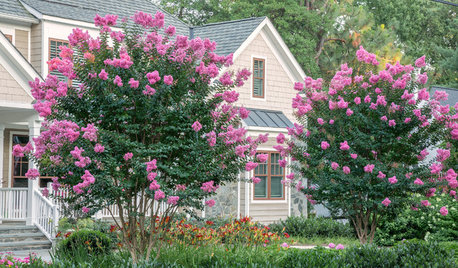
Crape Myrtles 10' (had to transplant so the bottom of the root ball didn't sit in water, japanese beetles also eat them up, try to spray when I can)
Autumn Blaze Maples 10' (These grow the best, they seem to be able to take the soil/wetness and dryness)Related Professionals
Pine Bluff Landscape Architects & Landscape Designers · Somerset Landscape Contractors · Rocky Mount Landscape Contractors · Phoenix Landscape Contractors · Longview Landscape Contractors · Anderson Decks, Patios & Outdoor Enclosures · Johnson City Decks, Patios & Outdoor Enclosures · North Adams Decks, Patios & Outdoor Enclosures · Atlanta Landscape Architects & Landscape Designers · Chambersburg Landscape Architects & Landscape Designers · Beatrice Landscape Architects & Landscape Designers · Jamestown Landscape Architects & Landscape Designers · Madison Landscape Architects & Landscape Designers · Waco Home Additions · New Haven Home Additions- 7 years agolast modified: 7 years ago
What, exactly the to-be-purchased product consists of is relevant. If it has something in it that would generate a significant fertilizing effect putting it on in August would mean that you would need to be really on top of your watering - if its application resulted in a flush of tender new top growth, during hot weather.
Charley Ruggiero
Original Author7 years agoI wish I had some, we are talking decomposed plant parts. Trees, leaves yard waste one would assume. Not mushroom excrement or anything particularly exotic. I assume it would decompose slowly.
 7 years ago
You could try trench composting a little ways away from the trees root system, to provide the nutrients for when the roots eventually get there. I don't know of any way of adding compost in "shots" though, because of its low nutrient composition. I have however, added concentrated fertilizer the way you describe. This year was the first year I have done it. But I don't have clay soil.
Charley Ruggiero
Original Author7 years agoThanks for comments. I'll keep any augering or mixing away from the root system. The intent was to mechanically speed up the process of integrating organics into the soil. I'll probably use the auger to inject fertilizer like plant tone right at the edge of the root system in early spring.
- 7 years ago
Your tree if it is any where near planted in the right zone and spot, may be well adapted to clay soil. Not all trees hate clay soil, and it does have it's benefits. Keep adding compost too, you'll get there! Have patience.
- 7 years ago
The bit about 'construction fill' sounds awesome. It's a shame that developers don't care enough to put decent soil back in3
- 7 years ago
mulch tempers soil heat and water movement in and out of the soil ... and in that.. helps a plant thrive ... i would expect little nutritional impact in the short run.. but as the years and decades roll by... mulch will 'feed' the soil... for lack of a better word ...
digging ... auguring.. glazed side holes and filling it will foreign material ... is.. IMO!!! .. a waste of time ... but if it pleases you to do it .. well.. hot spit.. go for it ...
if in fact.. a tree root ever finds one of these holes ... one might wonder why the root would ever leave it.. and just not grow in circles ...
most of us would agree ... that those tree fert spikes are useless and a waste of money ... other than making the owner happy to be doing something ...
but one might posit... if one of your augured holes full of fert.. would be any different.. in theory ...
if there is lawn under your trees.. and you fert it.. there is nothing more.. a tree would need ... and if its mulch instead of grass ... if you insist ... just broadcast some fert over the area ...
but it remains my opinion.. that you simply dont need to feed trees .. unless a soil test indicates something is lacking from your soil .. they just arent children that need to be fed ...
but all that said.. and again ... if you find joy in doing whatever you want.. then just enjoy yourself... they are your trees.. in your yard ... and your decision ...
ken Charley Ruggiero
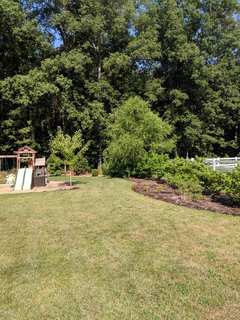
Original Author7 years agoKen your writing caedance makes me wonder if your insane or a genius. I did get a soil test for my grass from our local extension and it said my soil was deficient in everything except magnesium. I think the compost is a well rounded way to work on it. I'm going to spread it on my lawn for some overseeing as well. I also failed to mention a "swamp Willow" in my back yard is easily my most successful tree. it presumably came from some bird droppings. I know it's a trash tree, but I love it's gumption
 7 years ago
Post your soil test in lawn care and soil forums.
They'll help with what you should do for improving the soil.
Compost will help but being deficient in everything doesn't sound good.I guess it depends on the degree of deficiency.
For example my soil is extremely deficient in calcium. I'm going to put down Gypsum well before spending time on putting compost down.
Ken your writing caedance makes me wonder if your insane or a genius.LOL - I'd say somewhere in between!
Charley Ruggiero
Original Author7 years agoI'll have to see if I can dig up the soil test. it's been years. thanks
- 7 years ago
Your lawn doesn't look very green for how you describe the level of moisture in your yard. It's probably lacking nitrogen. And since you said your soil was deficient in pretty much everything I'd be inclined to put something with low N (don't want to apply N now and encourage a bunch of new growth on your plants then have it get zapped by cold weather before hardening off) in the late fall as "winterizer" to help root growth and then do 22-10-10 or 22-15-10 or something similar starting in the spring and then do a mid-summer application of the same stuff. That is if you already don't do this. Then get your soil test back and address the micro nutrient problem accordingly. Good luck!
- 7 years agolast modified: 7 years ago
I have the same issue with sort of crappy soil. But no sense in over-fertilizing, because as L mentions, one can have too much of a good thing. I take L's approach, address the overall lawn but try not to overdo it. A small amount of fertilizer will compensate for what is lacking in your soil. A larger amount will just create new problems and much of it will be wasted time and money. A tree with an unnaturally large amount of growth will not be hardy in the long haul. Slow and steady growth is the dream of a tree.
Edited to add that in most big box stores they sell very generic fertilizer and sometimes it is mixed with weed killer. I think you will have more luck and find that it is more cost and time effective to tailor your fertilizing mix to the time of year and save the weed killing for specific times of the year when you will have any chance of actually killing the weeds. Generally broadcasting fertilizer and weed killer is not particularly effective and it's rather wasteful, but does sell a lot of product to the masses who want a no-brainer approach.
- 7 years agolast modified: 7 years ago
Appying compost in August is highly unlikely to result in much of a growth spurt. Compost carries a pretty low nutrient load to begin with and is not something that will result in any immediate availablity of nutes anyway
Depends on what the specific product being considered has in it, what Charley is referring to as compost in this particular instance.
The excessive addition of nutrient-rich compost to this landscape contributed not only to plant health problems but to nutrient loading of adjacent natural waters.
https://s3.wp.wsu.edu/uploads/sites/403/2015/03/soil-amendments-3.pdf
 7 years ago
I have issues with a number of comments here :-)
First is the notion that fertilizing is "feeding" plants. It is NOT - that is a concept initiated by fertilizer manufacturers to sell more product. Plants manufacture their own food - that is what the process of photosynthesis is all about, combining soil nutrients, oxygen, sunlight and water and converting these into the starches, sugars and proteins the plants need to survive. All a fertilizer will do is supply nutrients that may be missing or deficient in the current soil.
Second, it is also misleading to state that trees (or any other plants, for that matter) do not need to be fertilized. Soil nutrients can be depleted over time and need to be replaced. Typically, nitrogen is the deficient element, as it is used in the greatest concentration and is the most mobile or temporary of the required nutes and often needs to be supplemented. Stunted, slow growing or sparsely foliated trees or shrubs are often due to a lack of N.
Finally deep core fertilizing is a waste of $$, time and effort. Feeder roots - what accesses and transports nutrients and soil moisture up into the plant vascular system - are located just under the soil surface and for the first 6-8 inches or so of the soil profile. Applying fertilizer any deeper than that is putting the nutrients beyond the ability of the root system to access.
And while fertilizer spikes have a similar theory behind them, they are not implanted as deeply, so of potentially more benefit.....except for the fact that they are concentrating nutes to a single area so effectively bypassing 95% of the root system. If you have them, just grind them up and sprinkle at the dripline. Or use a granular fert to begin with.
And one is relatively safe using an organically derived fertilzer at any time (in moderation), as they too have a very light nutrient load and require the activities of soil organisms to make them available to the plants so a slow and very gradual release.
One thing that has not been brought up is the impact of soil pH. If soil pH is skewed too far in one direction or another or is not suitable for the plants you are growing, it will limit the ability of the plants to access nutrients easily.
- 7 years ago
"Depends on what the specific product being considered has in it, what Charley is referring to as compost in this particular instance.
The excessive addition of nutrient-rich compost to this landscape contributed not only to plant health problems but to nutrient loading of adjacent natural waters."
LOL!! Compost is compost - decomposed plant and animal parts. Considering it to be "nutrient rich" is a bit of a stretch as the vast majority of compost products, regardless of ingredients, have a very low NPK....somewhere in the 2-2-2 range, if not lower. And the nutrients it does contain tend to be released slowly over time, as is the case with nearly all organic products.
And one would have to be overapplying compost at an amazingly high rate for it to leach significantly into waterways. It just doesn't have that ability. That is more an issue with fresh manures, not with a finished compost product.
- 7 years agolast modified: 7 years ago
Compost helps soil hold nutrients and makes them available due to creating a good structure for holding water, air and beneficial bacteria and bits and bobs that bind to various nutrients (scientific name "aggregates"). Compost is the whole package, nutrients in low concentration is how things work in nature. I think the confusion stems from the word "nutrient" which is what humans get from food, but plants need many chemicals for the smooth operation of a whole host of processes. They also have immune systems that respond to a whole host of biochemical signals and environmental quality issues in the soil. The soil/root interface is one of the world's great unexplored territories, although it's being explored more and more.
Web link about aggregates:
https://www.nrcs.usda.gov/Internet/FSE_DOCUMENTS/nrcs142p2_052820.pdfBTW, the USDA has a lot of information on how to measure, evaluate and improve soil quality in a whole host of ways, including the issues of clay soil, which has a tendency to bind up nutrients quite tightly. On the one hand, they don't wash away, on the other hand, it makes it more difficult for plants' roots to take them up. So soil structure is related to nutrient availability. Compost not only provides nutrients, but helps the plant extract them from the soil.
I explored this idea (drilling holes) because I have some trees that are not exactly booming in my crappy soil but they are surrounded by grass and grass roots. How to get fertilizer to the tree roots but not have it all be taken up by the grass before it gets there? One suggestion that I found and tried, is to dig down just below the grass roots for the small holes. And then they were spaced close together so the fertilizer would spread out and cover most of the root zone. I thought that was easier and less disruptive than digging a shallow trench all the way around, although if shallow and narrow it shouldn't be that much of a problem, any more than a blood transfusion ruins all your blood vessels. To me, it was worth a shot. Worse comes to worse, my grass gets a little extra shot in that area. I do compost around my trees, and am slowly expanding the compost zone but haven't reached the outer rings of the trees yet.
Edited for clarification that my point was even if it is not directly supplying nutrients to the tree's roots, by improving soil structure, compost is creating the long term conditions for nutrient uptake, whenever the time is best.
- 7 years ago
And don't think that if you are digging out beyond the drip line, that you are outside of the root zone. Roots can extend many feet beyond the drip line. Digging into them usually will do more harm than good.
Conservatively top dressing, something with nitrogen content, around the root area, in the late fall or early spring, will usually get a positive response with most perennials and younger trees, even though there may be other deficiencies, that should be addressed. There may be exceptions.
Heavy clay will take longer for top dressing to penetrate into the soil, so maybe late fall would be better, after everything is dormant. If your soil doesn't freeze, anytime during winter should work. Don't want to put it on too early, that might cause fall growth if the weather warms up again and things come out of dormancy. That's another reason you don't want to over do it.
Up here in the frozen Tundra, as soon as the frost goes out is the best time. I just use a non pesticide lawn fert, 26-0-0 and sprinkle it on the mulched area around the tree, not real heavy, about like you would for grass. Works wonders accompanied by the spring rains.
Oh, and if you use nitrogen fert, don't let things get too dry. N can cause burn if applied heavy and then left to dry out.
- 7 years ago
Again, it depends on what a product Charley might be looking at actually has in it. The fact that the word "compost" (or "composted") might be included in what a vendor is calling a particular preparation doesn't necessarily assure that it is in fact compost in the sense that it is highly decomposed and low in nutrients.
- 7 years ago
Yes, you really should "grow your own" when it comes to compost. Most of what is sold as compost is marginal and some downright useless.
- 7 years ago
Even unfinished compost or fresh ruminant manure is relatively low in nutrients compared to commercial fertilizers. As are ALL organic sources of plant nutrients with possible exception of bird guano. And are highly unlikely to be damaging to plants even if applied this late in the season.
And it is unreasonable to make blanket statements of the quality of commercial compost. Some is of dubious quality, especially bagged stuff, but much of it is excellent. Municiple yard waste composting operations tend to produce very high quality material.
- 7 years ago
OK, not sure why you have to always follow my statements with a criticism GG, but I'm just trying to help the OP. I also don't know about where you live, but where I live, the big box and discount stores are often the only source of anything, and a lot of the cheaper mixes aren't worth squat IMHO. I have been able to find some reasonable mixes, but I have also seen and dealt with TONS (I'm not exaggerating) of bags of cheap, worthless compost that a colleague bought at a soil auction. A lot of problems can be hidden behind a plastic bag, including one batch of compost that looked like dried cement when you opened the bag. So I know that there is a lot of not so great stuff out there and I am just cautioning Charley to watch out for that. I know what to look for on the label. I'm not making a blanket statement about ALL commercial compost. Also, some municipalities to a better job than others at composting and you can get burned with stuff that has a lot of awful weed seeds in it if you don't know what to look for. Composting is both simple and complicated and I teach composting classes which is why I suggested doing it yourself. That way you can control it and make sure it is done properly and only the best stuff goes into it. Soil improvement is a science, and one can if one wants, find GADS of information on how to improve clay soil. Here's an article on some of what I'm talking about, from Better Homes and Gardens no less, although copied from Rodale, https://www.goodhousekeeping.com/home/gardening/a20705765/buying-organic-compost/
Also, as we have discussed here before, all carbonaceous material is not the same, and will have varying effects on the soil N content depending on the interface between the compost and the bacteria. If the compost is full of shredded bark filler (and I've seen that at the big box store) then that is not going to break down very well and when it does it can affect N content in soil, which is why you need to be cautious about what you incorporate deep into the soil. There is some discussion of this factor in this article from Oregon State Cooperative Extension, https://extension.oregonstate.edu/news/theres-no-break-people-who-garden-clay
I lived right near the area where the OP lives, and on several occasions I redid garden beds in clay soil and made amendments. The best stuff I ever put on my garden was worm castings and my own home grown mix. I liked peat moss but I know that has an environmental cost and also could make the soil too acid, not a problem with the plants I was trying to grow but if it is for you, needs to be amended with limestone particles.There's also more to it because if you add compost and other amendments to clay, you're still going to have a zone where the improved soil meets the old soil, and that is not that great for plant roots. This is one of the most common causes of larger plants failing to thrive long term, as the roots get adapted to one texture of soil and then eventually start trying to grow into another totally different kind of soil. So folks DO try to get the compost deep down into the soil so that the soil has a more uniform texture. BUT, it is not that easy since constant tilling around your plants is not a good thing. There's a long game and a short game.
I have spoken with some colleagues (professional horticulturalists) who do use the deep drill method of incorporating compost into the lower layers of soil. Here is an interesting article on that from Texas AM University, http://counties.agrilife.org/williamson/files/2014/12/Vertical-Composting-for-Trees.pdf
This is a long term strategy. Here is a good overview of both long term and short term concerns with clay soil, from Fine Gardening Magazine, https://www.finegardening.com/article/improving-clay-soils
 7 years ago
Is core aerating around the tree with a machine a bad idea? I have seen some machines that have hammer-like corers on arms that pull out and throw the cores all over the place. Going over the entire area with something like this seems like it would help with water infilitration during rain storms and incorporating the top dressed compost.
- 7 years ago
Guess where I was this morning, my county's compost facility. Here county residents take yard waste and other vegetative debris and dump it. Road crews and tree trimmers also bring stuff here. They give away or sell mulch and compost. I asked whether they add anything to the compost and they said no. It "cooks" at a really high temperature which essentially pasturizes the compost. I've gotten it here for many years and there's simply no negatives with it. I use the compost as a top dressing. I also dig it in to my vegetable garden.
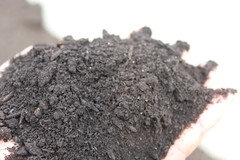
Here's the compost, it has been screened and ready to give away in small quantities. They will load it onto your pickup for a charge. This stuff is like black gold.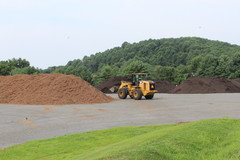 I'm guessing the OP is in Sussex County. That area is known for sandy loam and a high water table. Is it possible his soil was compacted by equipment during home construction? If that's the case my suggestion to OP woud be you've got a good idea, go ahead with it. HERE is a previous post of mine about Sweetleaf. This was near Gumboro near a naturally occuring Bald Cypress swamp. We have had many fieldtrips to that area and love going there where we find incredible and diverse native flora. If you're going for a visit check our Peppers Greenhouses in Milton DE.
- 7 years ago
I follow any comments with a critique or differing opinon if I find them to be inaccurate, misleading or make vague and unsubstantiated generalities.
I also teach classes - on composting, on soils and soil improvements and on fertilizers, among a number of other horticultural topics - as well as a run a horticultural consultation and garden design business. It could be that I also have information of value to share with the OP or any others who may be reading this thread.
There is no single keeper of all the horticultural knowledge :-) We all have something to share.
Charley Ruggiero
Original Author7 years agothanks for all the advice, was gone for the weekend and saw about 20 comments pop up when I got back on cell phone range
- 7 years agolast modified: 7 years ago
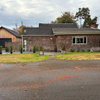
Looking at the photo above I would get a few yards of mushroom compost delivered and spread an inch over the entire yard. Lawn and beds. This product is usually called mushroom manure, I used the term preferred by the one here who corrects everyone. There's a mushroom grower south of Philly, I think in Chester county so this product will be available in that metro area. I paid $39 a cubic yard plus $35 for delivery, this year on the other side of that state. This is manure that's been used to grow a couple crops of mushrooms. It's well composted, and steamed twice. Any weed seeds that survived that may have germinated already.
The grass will grow thru an inch of this product in a few days. I use a smaller square shovel, fill from a wheelbarrow and rock the shovel so that it falls off both sides as opposed to dumping it. If you have lots of energy it can be tossed maybe 10 feet to scatter it. If you have spots in the lawn before you spread it is an excellent time to scatter some seed.
I've done this for the grass and the 50 to 60 foot Norway Spruces I have greened up very nicely. I agree with the comments above about not doing this too late in the season. You don't want to put on new growth late in the year for perennials. If you do this get it done soon. With grass you can fertilize late in the season, but you may still be mowing till Thanksgiving.
- 7 years agolast modified: 7 years ago
John your post takes me back to the days I lived north of Pittsburgh in mushroom farm territory. All my permaculture friends swore by the used mushroom growing medium. I used to drive by big piles of it. Not sure if any of those places are still there, but it is a great idea. Some cautions though, https://extension.oregonstate.edu/news/what-mushroom-compost
You are lucky Sam! Our county used to have good compost but then they cut back staff and now don't even do it at all. The good stuff in bulk comes from a ways a way from me now, so is more expensive due to delivery costs.
- 7 years ago
I pinkmountain
It's quite common, at least in this area, for the finest lawns to be sown and covered with an inch of mushroom manure. Of course on the sides of highways they cover it with straw, but in a fine lawn you'd spend several years trying to get that straw out of the Kentucky Blue Grass, or the Penn State Mix.
It seems anymore that educators spend a lot of time bashing good ideas.
- 7 years agolast modified: 7 years ago
I wasn't bashing your great idea as I said. In fact, if you live where this is available you would be lucky. This is the only caution, from the article: "Remember that rhododendrons, azaleas, camellias and other members of the heath family may be injured by salts unless mushroom compost is "cured" first. To avoid killing germinating seeds and stressing heath family members,
Hart recommends mixing mushroom compost with garden soil before using it
on young plants. Or, order a supply of mushroom compost in the fall and
let it sit uncovered, to "cure" over the winter."Does not look like the OP has any of those plants but I know rhodies and azaleas are popular in PA. Most of the places I saw with the mushroom compost piles it had been sitting around for a while anyway, so shouldn't be a problem. Just ask so you know for sure.
- 7 years ago
Let's not forget that mushroom compost was used to grow mushrooms, two crops from what I'm told here locally. The mushrooms you buy at the store were grown in this product.
I've been using it for decades. Usually in the spring they sell huge quantities. I would assume that it's been piling up all winter much of the previous fall, because no ones using it. I think if one were trying to shift gardeners from using one product to another you throw a subtle derogatory comment and let the internet swell it out of all reason. There could be salt in it from watering the mushrooms, but then we here in western Pa water our gardens for years with the same water. I use well water. They grew two crops!
The mushrooms grown here are grown in coal mines. "Keep them in the dark and feed them hit". So I would assume they need much less watering than if they grew them in a field in southern Arizona!
- 7 years ago
"So I would assume they need much less watering than if they grew them in a field in southern Arizona!"
Well, you can't grow mushrooms in a field in AZ regardless of irrigation so that topic is off the table altogther!!
And the soluble salt content of mushroom compost IS high relative to other common soil amendments, so there ARE valid concerns. In fact, it is easily triple to quadruple the SS level of yard waste compost. High levels of soluble salts do prevent good seed germination and root development of seedlings, so use in a vegetable garden should be done well in advance of any planting to give adequate time for the salts to leach out. And they are a well-established and documented anathema to any ericaceous plants so avoid using around them at all. And there are other salt sensitive crops that will not appreciate mushroom compost unless very well aged, including strawberries and lettuce.
High levels of soluble salts also affects how plants are able to access other nutrients and can impede the intake of K, Ca and Mg, among others. Users beware :-)
- 7 years ago
Soil EC (electrical conductivity) is the way soluble salts are typically measured and that is by mmhos/cm (or dS/m). Mushroom compost has a mean EC of 13.30mmhos/cm. Yard waste compost can range between 1 mmhos/cm upto 10 mmhos/cm but should be less than 4 to prevent damaging plants.
There is a rather complicated formula to convert ppm to either mmho/cm or dS/m and it is beyond my math skills :-) But I think you are well below any levels of concern at 150ppm.
- 7 years ago
"Well, you can't grow mushrooms in a field in AZ regardless of irrigation so that topic is off the table altogther!!"
So tell us why you can't grow mushrooms in a field in Arizona!
My point was that in a coal mine you're not going to have near the evaporation that we in western PA have in our gardens. They use this product for 2 crops and I've been growing for years in my garden.I would use any manure or mushroom manure before some municipal compost product. I have used and recommend bulk mushroom manure or well composted manure.





gardengal48 (PNW Z8/9)