Software
Houzz Logo Print
wildingout

Help Turning Cleared Red Spruce Forest Into Native Pollinator Garden

7 years ago

Hello,


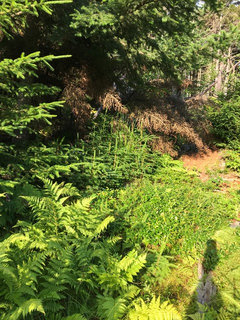
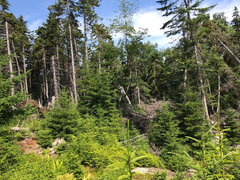
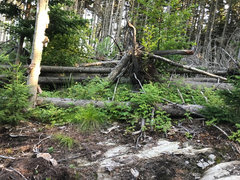
First time posting. I am an amateur gardening enthusiast with a fun project ahead and I could use all of the help I can get. I am working on land in southern coastal Maine. It is an old growth Red Spruce forest. In the area I'm going to work on, the trees got knocked down in the Patriot's Day storm Nor'easter in April of 2007. a couple of years later, the trees were cut down to stumps and removed. Since then, more trees have fallen and some of them have been cleared as well.


Other than that, the open areas have been totally wild and have begun to fill up with whatever seeds are blowing around or nearby.


Species that I have identified as existing at the moment:


Ornamental Grasses

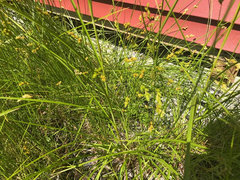
Troublesome sedge

Early Lowbush Blueberry

Common Rush

Japanese Barberry

Oxalis Stricta

American Raspberry

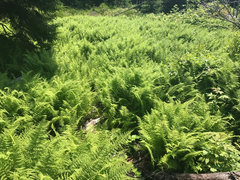
Eastern Hayscented Fern

River Birch

Red Spruce Trees

Bayberry

Pin Cherry Trees

Mosses, Ferns, other grasses, and probably a lot more I'm not finding.


I have the pleasure of visiting this land once or twice a year. Always in late July for a couple of weeks, and occasionally once or twice during another time of the year. When I visit in July there are almost no flowers in bloom and almost everything is green. It's nice and natural and I'd like to add some color and pollinators.


My goal is to repopulate a lot of this area with native pollinators that ideally already grow close by as well as with others that are native to southern Maine. I want to support the bee, butterfly, and bird communities as well as experience a visually appealing wild flower garden when I visit in July. I also want the bees etc. to have pollinators to enjoy in the spring and fall, but mostly in July.


The areas I'm mostly working with are pretty ledgy, many of these 60-80 foot tall spruce trees that came down were anchored on virtually no soil, just the ledge. others had maybe a foot or two of soil at most.


Another restriction I have is limited access to this site. I will have 3 days in late September to do the work I'm attempting to do and then I might not see the area again until July, 2020. The hayscented ferns have taken over huge areas that have been cleared. luckily for me that area I'm working on is at the edge of the area that the trees fell down and somehow the ferns have only spread to one corner of this lot. I want to remove a bunch of them maybe a 10x20' area, remove a bunch of the ornamental grasses, remove some other random green species, and replace them with the native pollinators. I'll leave the blueberries and raspberries and the blackberries (I know, the blackberries aren't native to maine, this will maybe be the primary exception). The area is also remote and not accessible by vehicle so al supplies need to be hand carried some 1000 feet to get to the location.


So here is the help I need: how to best do this to increase the chances of seeing the flowers in bloom next July?


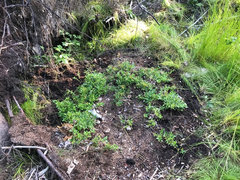
I plan to pull out a bunch of the plants by their roots as best as possible and then spread seeds around in Late September and hope for the best come July. This is where I need advise from people who have experience. The soil is generally acidic and loamy. there are some areas that are filled with spruce needles that have fallen for hundreds of years. Not much has grown in those areas aside from blueberries and moss and some grasses. How do I plant in this spruce needle area? Will any seeds take hold in that stuff if I plant in September? Do I need to rake away a certain amount of needles and get down to better soil?


I also plan to clear areas that are covered in small red spruce growth, ranging from an few inches tall to 4-5 feet tall. I want to remove all of that and spread seeds in their place that will grow into native pollinators next season. Should I cut the small trees at ground level and spread seeds in that area leaving the roots in the soil? Should I try to remove all of the roots and disturb the soil? I'm concerned that tearing all of th roots out in some areas will expose the bedrock and the soil will be too loose to handle plant growth (the spruce roots somehow keep everything in place. These spruce trees somehow take root in almost no soil and then grow and soil sort of collects below them.


The area I'm planting in is mostly well drained and dry, but there's also an area that's kind of wet as well.


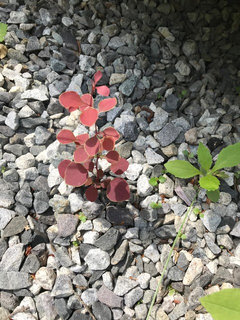
There's a small structure on the land that is surrounded by crushed stone. In the first year after putting that in, the crushed stone did little to stop plant growth (not enough was added and that ship has flown, no more is going to be added). So tall grasses are surrounding the structure and I'd like to rip these out of the gravel and I guess reseed this moister area with a native pollinator that will be lower to the ground, maybe the red and white clovers?


Here's a list of seeds that I have acquired that I want to add. Any help with the species that I should consider or specific techniques to help my chances of success, or just any words of help would be appreciated!


I have in hand:


Old Field Goldenrod x 24,000

Common Milkweed Seeds x 12,000

Black Eyed Susan x 6,000

Red Clover x 1,650

White Clover x 2,750

Wild Geranium x 250

Common Lilac tree x 450

Queen of the Prairie Pink Meadowsweet x 160 (I don't think this is native to Maine)

Pink New England Aster x 500

Purple New England Aster x 8,750

Joe Pye Weed x 8,000


That area I'm working with is about 80' x 60'

Comments (31)

  • 7 years ago


    My ideas · More Info


  • 7 years ago


    My ideas · More Info


  • 7 years ago


    My ideas · More Info


  • 7 years ago


    My ideas · More Info


  • 7 years ago


    My ideas · More Info


  • 7 years ago


    My ideas · More Info


  • 7 years ago


    My ideas · More Info


  • 7 years ago

    You've named a lot of plants that are present on the site that are good butterfly/caterpillar host plants, and some that are good native ground covers and soil stabilizers. You've also proposed adding 3 non-native plants (clovers and lilac). I would remove the barberry and spread your seeds on any disturbed soil. I wouldnt touch the thin soil or undisturbed soil. Starting with some small containerized plants from a nearby native nursery would be a good bet too.

    Check out https://wildseedproject.net/ for some info on Maine native planting.


    wildingout thanked Skip1909
  • 7 years ago
    last modified: 7 years ago

    Thanks Skip! I suppose I’ll scrap the lilacs and the clovers then. Which plants listed should I keep? There are only two barberry plants and I can easily get rid of those, they sprouted in the gravel.

    what do you mean by disturbed areas? Can you point any out in my photos?

    if I pull out a bunch of the ferns and spread seeds of milkweed and goldenrod in that area in late September will I have a chance of seeing those seeds turn into plants when I return in July?

    Planting small plants from Nurseries isn’t good for late September right? Won’t they just die in the winter? Either way I’m mostly working with seeds so any tips about weeding this area are helpful too.

    Which seeds do you recommend throwing down and any species not listed I should consider adding? Any seeds that will have a chance in spruce needles?

  • 7 years ago

    Every time you pull a plant up or dig, you disturb the soil and create an opening for dormant seed to germinate. Driving and walking creates compaction that changes the soil a little bit. Every time a plant is removed, whether by a storm or by a chainsaw, it creates an opening above ground for another plant to fill in. When the trees came down it created an opening for all those sedges and ferns. Thats where I would look to seed into. The strongly rhizomatous species like that fern might make it a little complicated, but if you simply cut them down with hedging shears or a weed wacker or similar, broadcast the seed and rake them in a little, you have a shot at all of your species germinating next year and growing into plants. It would be best if you could return to the site in the spring to do some follow up cutting to give your seedlings some space. September is a fine time to plant here, but Maine is a different climate so I can't say for sure. However, I planted a lot of small plants just before first frost in october last year and almost all of them survived the winter and my subsequent neglect this year. The only ones that died were planted in unsuitable spots... like shade plants that ended up being in full sun.

    I would leave the spruce needle layer intact, let the blueberries fill in. You could drop seed and rake them in a little and see what happens, but I've had bad experiences after removing accumulated leaf and pine needle layers. Where I had mulch layers before, now I have knee high invasive weeds, who knows what you will get. The plant community that exists on your area might be lacking flowers in July but it is actually a desirable plant community and very beautiful. Try to create little pockets for color here and there matching your seed to the appropriate sun and moisture conditions for them, and plant into whats there, instead of trying to replace larger sections of it. Try adding thinleaf sunflower Helianthus decapetalus, and white meadowsweet Spirea alba (live plant) to your list. Im not sure what you'll have flowering up there in July so hopefully someone local can chime in with more suggestions for you.

    By the way, spruce is host plant to 177 species of Lepidoptera (butterfly and moths), so while they are boring to look at and not obviously feeding pollinators, they are helping to support the food webs and habitat there, consider letting some regrow.

    wildingout thanked Skip1909
  • 7 years ago

    Thanks!


    Is it really better to weed whack the ferns in September and then spread seeds over that as opposed to pulling out the ferns by their roots and then spreading seed over that? I was given one suggestion prior to posting here, which was to pull out the ferns. Won't leaving the roots in give them a better chance of regrowing the next season?


    A friend also suggested strawberry plants rather than the non-native clovers. I cannot find any source online talking about simply planting seeds outdoors. Every reference to strawberries talks about planting them indoors first and then moving them. Is it a viable plan to spread strawberry seeds around disturbed soil in late September and expect to see growth the following July?

  • 7 years ago

    I've never tried to start strawberry seeds, every source I've found talks about vegetative propagation. You could pull the ferns out, maybe it would help with germination, but you are likely to also get weeds. By the way, in the book Garden Revolution by Larry Weaner, for seeding its recommended at a rate of 100 seeds per square foot. If you look here, https://shop.wildseedproject.net/products/wild-strawberry?variant=1046014245 they say the strawberry seeds should germinate immediately (no cold stratification required).

    wildingout thanked Skip1909
  • 7 years ago
    last modified: 7 years ago

    Does that mean that spreading strawberry seeds in September will be a bad idea because they will begin to grow then get killed by the frost at a young stage? I really appreciate your help here. The seeding per square foot was helpful too!

  • 7 years ago

    No problem, I am a bit obsessed with plants and anything I can read about landscape and habitat restoration. The seeding rate was for any type of seed or mix of seeds by the way, not just the strawberries. I would still sow them in the fall, they're hardy plants. Depending on the seeds, if the temperature and moisture conditions aren't right they might not germinate until the spring anyway. Actually check out this info:

    "Fragaria vesca , Sow at Max. 5ºC (41ºF), germination irregular, often several months

    Fragaria hybrida , Sow at 20ºC (68ºF), germination slow

    Fragaria virginiana , Sow at -4 to +4ºC (24-39ºF) for 12 wks, move to 20ºC (68ºF) for germination"

    So there you go, the seeds actually like cold temps to germinate. This exerpt is from here in the perennial germination database: https://tomclothier.hort.net/index.html

    I planted a lot of tiny seedlings in the fall last year and had good survival. Rudbeckia fulgida, Hypericum prolificum, Astragalus canadensis, Hollow stem joe pye Eupatorium fistulosum, Senna hebecarpa, Agastache scrophulariifolia, Aquilegia canadensis, and Vernonia noveboracensis all made it after hitting the ground close to november. They also survived a winter full of hard flooding rains that froze solid the following day, as well subzero temperatures. The pattern seemed to be abnormally warm weather, then like 2" of rain, then a cold front with highs in the teens. Your plants should handle a nice long stable winter in Maine.

    wildingout thanked Skip1909
  • 7 years ago

    This is great info thanks. Is there any reliable place to purchase native strawberry seeds in bulk? I found one listing for 5,000 Fragaria vesca seeds on eBay but not the other varieties.

  • 7 years ago

    Great, I will purchase the 1/8 ounce of those strawberry seeds and distribute them liberally on disturbed areas as well as on the gravel. Thank you. I also got some Woodland Strawberry seeds to distribute on the shadier side of the structure.


    I am not having luck finding the thinleaf sunflower Helianthus decapetalus seeds you recommended, and I was able to secure some of the white meadowsweet seeds.


    Is there any risk of spreading too many seeds per square foot?

  • 7 years ago
    last modified: 7 years ago

    The exact quote from the book I mentioned is "I plan my seed mixes to spread 80 to 175 seeds per square foot of soil." More than that, maybe would just be wasting seed. For tiny seeds, you might have tens of thousands of seeds in an ounce, so you would want to mix them in a container with sand, rice hulls or similar to make them easier to spread at the desired rate.

    wildingout thanked Skip1909
  • 7 years ago

    That’s helpful! Would dispersing blueberry seeds in September also be a viable option? If so I am also having a hard time sourcing a good source for a bulk purchase. I tried transplanting two wild blueberry young bushes from one area to another (no watering) and both died within days. Maybe I’ll attempt it again and haul some water to the area to help them out.

  • 7 years ago

    Are there any blueberries left on the plants? If you get a cup of blueberries, put them in the blender with water, blend it, let it settle, skim off the flesh and carefully pour out the water, and repeat that a couple times, you will be left with a bunch of blueberry seeds at the bottom. Then strain them out and sow them. You can do this with store bought blueberries too. They will take years to grow into bushes though.

    wildingout thanked Skip1909
  • 6 years ago

    Thanks! Someone recommended I use Jute Netting to cover the areas I am seeding. Any comments on that? Amazon has a 3 foot by 150 foot roll for about $50. I've never done this so any input would be valuable, thanks again for all of your help.

  • 6 years ago

    Here are 2 good Habitat restoration webinars sponsored by the us fish & wildlife & Monarch Joint Venture: https://m.youtube.com/watch?v=gij_gjCsGHQ# https://m.youtube.com/watch?v=TX1aDWu3S_s&t=8s# 

    wildingout thanked nickcats
  • 6 years ago

    I have heard of using jute netting or straw blankets on embankments and areas prone to flooding or erosion. If thats your situation, then go for it. Otherwise just leave it very lightly covered in mulch or duff from the plants you pulled out.

  • 6 years ago

    I can't believe no one has asked yet, but is this land owned by your family or do you have permission to alter it?

  • 6 years ago

    Thanks Skip, that simplified things. I’ll use Duff from the area. I’m quite excited about setting this plan in motion next weekend. I haven’t had the chance to watch the hour plus videos that nickcats posted and will try to find the time this week, thanks for those too.


    Harold, yes, this is my land. Cheers.


    anyone want to jump in with random advise or thoughts, please do so, all advise and help is appreciated and has been very useful for me.

  • 6 years ago
    last modified: 6 years ago

    Heading up there now. Excited for the project.


    This is the final list of what I’m working with. Should any of these be mixed into the same area or should I separate them Into different/adjacent areas? And if anyone has experience planting any of these, I could use tips regarding the best depth to plant these and anything else you have to offer. I will not have any mulch or water. They will be left alone until next July.

    • 12,000 milkweed
    • 6,000 Black-eyed Susan
    • 250 wild geranium
    • 160 queen of the prairie pink meadowsweet
    • 500 pink New England aster
    • 8,750 New England aster purple
    • 8,000 Joe Pye Weed
    • 24,000 old field goldenrod
    • 10,375 Virginia Strawberry
    • 5,000 Woodland strawberry
    • 2,150 Asclepias tuberosa /Butterfly Weed
    • 160 White meadowsweet
    • 1/4 pound Wild Lupine
  • 6 years ago

    Don’t forget some seeds need light to germinate, such as Swamp Milkweed Asclepias incarnata. Also some seeds need stratification such as Milkweeds & Lupines. Seed to soil contact, moisture & temperature are the main components to seed germination. Slugs & snails LOVE new milkweed sprouts. Good luck! Can’t wait to see your spring pics!

    wildingout thanked nickcats
  • 6 years ago

    What I would do is try to get a diverse mix of plants from different families, exactly how you'd find plants in pristine, natural ecosystems. Some overlooked and neglected species are vital necessities for certain animals and insects. It's great that you are already adding some species that are host plants like the milkweeds and lupins. You have about 5 plant families represented so far. The sub family Asclepiadoideae, and the families Fabaceae, Asteraceae, Geraniaceae, and Rosaceae. If you were to look at a guide of Maine wildflowers they will probably be grouped into families and a guide will show you what species from other families are growing in your area. I'm talking like long term, not saying to do it all right now at once. It's something to shoot for over time. Good success!

  • 6 years ago

    UPDATE 2020 JUNE


    I was planning to check the progress in May and then again in July, but all travel is off this year due to COVID19. So luckily for me, I have a close family member that has been checking on the project for me as well as pulling the ferns every couple of weeks to allow the other plants a chance.


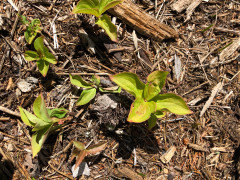
    Another reality for me is that the deer on this island are overpopulated and will eat everything they can, which makes matters even more tough. In May I was sent photos of new growth that was popping up which turned out to be bunchberry dogwood, a species I didn't plant and that I have never seen in July. Then when my relative checked again in a couple of weeks, the ones that were initially there were gone and others had popped up. So i presume the deer eat thee every year and never allow them to grow to maturity so I don't see them in July.


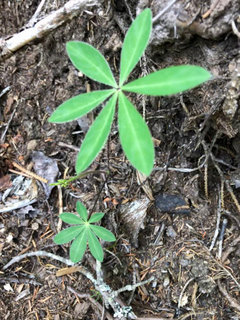
    As of 2 weeks ago, out of the 75,000 or so seeds I planted, exactly one was positively identified, one of the Wild Lupine seeds has made it and is growing! Supposedly it is deer resistant so fingers crossed. I should have more updates throughout the year and will check in about the progress.


    One other good piece of news was that the small blueberry plant I dug up and moved to the area last September, has survived the winter and is growing fresh leaves. That's really wonderful news because I only watered it one time before having to leave, and now 9 months later it's alive and well. So I will be able to repeat this many times over now (whenever I can get to Maine) and hopefully in 3-5 years I can establish a very large area of low bush blueberries.


    It's been very dry in Maine so far and my hope is that the other seeds I planted are still waiting to make an appearance somehow.


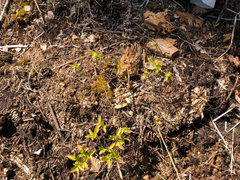
    Presumed Bunchberry Dogwood


    The Blueberry plant I transplanted in september and survived (pic from this May)


    And here is my one confirmed successful seed (so far), the Wild Lupine (from June)


  • 6 years ago

    Do you know about this place? You might be interested in what they have been doing with the site - it isn't all conventional decorative gardens by any means.

    https://www.mainegardens.org/

    wildingout thanked Embothrium
  • 6 years ago

    Latest update from about a week ago: No signs of anything growing from the seeds that I panted. The one wild lupine vanished. Presumably deer? If it was drought the dried up plant would still remain right? There have been some good rains over the past week, is it possible that my September seeds will still sprout and grow this late in the season?

Sponsored
Peabody Landscape Group
Average rating: 3.5 out of 5 stars8 Reviews
Columbus' Reliable Landscape Design & Contracting