Software
Houzz Logo Print
oklawc

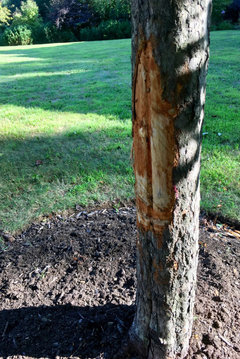
Damaged Hawthorne Tree

6 years ago
last modified: 6 years ago

A vehicle hit an established Hawthorne tree in our front yard a few weeks ago. It sustained a 2 foot long scrape to the bark. A local arborist company wants $820.00 to care for the tree by pruning the tree and scribing the injury, applying Boost NK 32-0-10 and Fortiphite. This seems excessive to us. Thoughts? Comments? Suggestions?


Comments (14)

  • 6 years ago
    last modified: 6 years ago
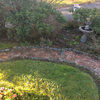
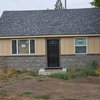
    Thank you. I'm in New England. I've trimmed but never fertilized trees, so this was a new one for me. It sort of made sense in that it would provide good nutrition to the healing tree. We just bought the house, so no idea if there was a fertilizer program for the lawn, but we'll be starting one as it looks sort of sad. Photos should be there, was having trouble getting them to upload....

  • 6 years ago

    Can we see a photo of the tree and the damage?

    I can't imagine how pruning would have any effect, either positive or negative, with respect to the damage and I wouldn't suggest fertilization at this time of year. And depending on severity, all that may be required is some time for the tree to compartmentalize and scar over the wound on its own.

  • 6 years ago

    I'm afraid the photos are microscopic. Can you try again? Meanwhile it's hard to imagine something as small and easy going as a Hawthorn (no 'e') requires anything more than time to heal itself.

  • 6 years ago

    I agree that the photo are almost too small to be of any use. But what I can see from enlarging (before all focus is lost) does not look to me like it requires any intervention.

    btw, fertilization is never considered a cure-all for plant problems. If the tree received enough "nutrition" for healthy growth before the injury, it will receive the same after. All fertilizing does is replace or supplement nutrients that are already present in the soil but may be deficient or lacking.

    I think your tree people are playing off the naivete of new homeowners and trying to charge you for services you - and the tree - do not need!

  • 6 years ago

    Photo attempt #2

  • 6 years ago

    There's nothing to be done except maybe put up a crash barrier. With what the company was trying to sell you definitely sounding like overkill - what for instance was applying a fertilizer with a whopping 32% nitrogen content supposed to accomplish?

  • 6 years ago

    there is absolutely NOTHING i would recommend be done ... period ...


    send me 50% of your savings.. lol ...


    your lawn looks weed free ... i might suspect... it was previously treated.. including fert ...


    but even that doesnt matter... i have near beach like sand ... and i NEVER fert trees.. ever ... period ... they are not children.. they dont need to be fed.. period ...


    in a year or two.. you will start to see it healing itself.. its called encapsulation ... its natures way... and trees are pretty good about taking care of all that.. all by themselves ... everything you can dream up... is contrary to nature.. no sealing.. no paint.. no nothing ...


    https://duckduckgo.com/?q=tree+encapsulation+of+wounds&t=ffcm&iar=images&iax=images&ia=images


    again.. in tree time.. we will find out if there is unseen internal damage that may impair its future ... we will wait and find out ... if it dies.. it dies.. so be it ... we will plant another ... but please.. dont waste money on it ...


    ken


  • 6 years ago

    Fertilization is always on a case by case basis and can be very beneficial to woody plants - friends used a single dose of a low potency organic product on various plants (including a 'Mikawa-yatsubusa' Japanese maple) this past spring and the improvement being shown now is AMAZING.

  • 6 years ago

    While fertilizing can be of benefit, it cannot be considered a panacea for any old tree ailments that come down the pike. That is not what fertilizer was intended to do and it is not a tonic or cure-all. In most cases, the need to fertilize established, inground planted trees is minimal.

    And there is a world of difference in applying a low dose organic product early in the growing season and a high N synthetic at the end of the growing season!

  • 6 years ago

    In most cases, the need to fertilize established, inground planted trees is minimal.

    False - there are plenty of long-planted trees and shrubs just in our region alone that have quite apparent nutrient deficiencies, likely to be of N in this instance. And certain other parts of the country have terrible soils with significant chronic and widespread deficiencies that extend over large areas.

    Again, fertilization is to be based on specific individual circumstances and not sweeping generalizations like "trees don't need to be fertilized". Without sampling and testing of soils then the only basis for choosing to fertilize (and what to use) is personal experience.

  • 6 years ago

    To be quite honest, judging by that crease in the trunk, it appears the tree has been damaged before and healed or encapsulated over the previous wound.

    So maybe a barrier of some sort would be in order.

    Is it close to the approach?

  • 6 years ago

    Along those same lines, I wondered about just letting the tree heal itself. I've seen "encapsulated" lightening strike scars as big that that wound.

    Is it a possibility to go after the driver's insurance for the cost of replacing a tree that size. Or get whatever you can for it and buy another tree?

  • 6 years ago

    Not at all false!! Most trees in suburban/urban landscapes are planted in close proximity to lawns. And lawns tend to get fertilized with a certain degree of frequency :-) If the tree roots are anywhere that they can access the soil under the lawn, - and most do: it's a very common complaint - they are very likely getting everything they need. Mulching helps as well.

    And I have no idea what you are looking at, but you have to hunt hard for trees around here showing ANY signs of nutrient deficiencies!!