Software
Houzz Logo Print
ocd123

shower floor stone tile changing colors

7 years ago

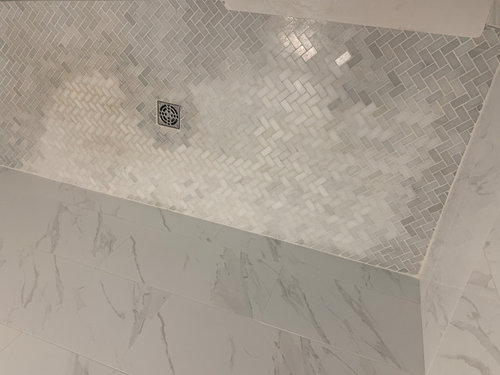
I have read another post on Houzz that carrara marble stone floor tile bathroom can change color due to thinset and gases being release, etc and apparently there is a curing time that can takes weeks and then the stone turns white again. I don't understand the chemistry of all that, but would love your advice or opinions on what is happening shower tile. It is a marble stone and used to be white with a mixture of grey (I've included a sample of preinstall tile below). Now, there seems to be distinct area that is really white and an area that is really grey in our shower floor. Tile was installed at the end of Feb 2019 and we just started noticing the change this summer.


Comments (12)

  • 7 years ago

    I would call the contractor. Ask them how they constructed the floor and what waterproofing materials and methods they used. I’m not a pro. Hopefully a pro on here can weigh in. And maybe give some information about the right kinds of questions to ask your contractor. For sure ask him about the pan and the waterproofing method he used.

  • 7 years ago

    I am not a pro.


    I have marble tile on my shower floors which I have been using since October 2018 when I moved back after the remodel.


    My floors do NOT have any of that kind of discoloration nor have I read anything about curing or marble changing due to off gassing. I did a lot of research and aside from the general advice in terms of marble being subject to etching, I read that some marble has iron oxide which can then turn fairly reddish when the iron oxidizes on exposure to water.


    Based on other threads which show the same gray discoloration on the shower floor, it looks as if the issue is that your shower pan was built incorrectly and therefore the shower floor remains saturated with water.


    My shower floor was built with a significant slope and I also have a very good fan which runs when it senses ambient moisture levels are above a certain level. As I wrote, my shower floors look identical to the rest of the flooring in the bathroom - I mention that because obviously the rest of my bathroom isn't subjected to the same type of moisture as a shower floor is.

  • 7 years ago

    Agree with livewire. I would begin with the simplest solution: clogged weepholes around the drain and go from there. Hopefully it’s as easy as that.

  • 7 years ago

    following

  • 7 years ago
    last modified: 7 years ago

    I had a similar issue with a marble tile shower. My contractor was no help at all and it was determined that he did not build the shower floor with enought slope.

    What I did to address the issue is seal the shower using a good solvent based sealer - the water based sealer did nothing to help. I also used a clear silicone caulk on joints, where the wall meets the floor and where walls meet.

    I know there is controversy about whether a marble shower should be sealed or not. I am not a professional and am just provided my personal solution to my issue.


    BTW, you need to wait for your shower to dry out before you apply the sealer - it can take weeks.

  • 7 years ago

    Sealer does not address water seepage, it is only useful in slowing the absorption of stains. You will still have the potential for a moldy mess.

  • 7 years ago

    A improperly built shower is a 100% redo. And you should be there when it’s torn out to experience that smell in person. Trying to caulk your way or seal your way out of a rebuild only makes that smell of death worse when you do tear it out.

  • PRO
    7 years ago

    Water is getting under the tile somehow so call the guy that did the shower waterproofing and it will come to a rip out to fix. This is why you need to hire the right guys for the job all the bandaids now will not do anything.

  • 7 years ago

    I have a marble tile shower floor and do not have that issue. When they say that the color can change it has nothing to do with the thin set or gasses being released. What they mean is if there's any iron ore in the tile, it will turn those areas orange or rust.

    What you have is a poorly built shower that was not properly waterproofed, where water is getting underneath.

    Do you have pictures of the shower being constructed before the tile went on?

  • PRO
    7 years ago

    This is why we try to talk every customer out of using natural stone in a wet area. By the look of the drain it appears they used the Kerdi system, but without 'during' pictures it will be difficult to give precise advice. Do you have any during photos? Is the perimeter of the shower level? From the offset pattern of the wet area, something is amiss. If it were just the marble itself, it should be darkest around the drain then radiate outwards evenly......

  • 7 years ago
    last modified: 7 years ago

    what cp said.

    is your shower floor sloped? does water sit or pool in that one area?

    the dark part is water that has been absorbed and is unable to drain away or properly evaporate.

    if the shower floor isn't properly sloped, then the water sits there and gets absorbed into the stone. Put a level on the shower floor (wall to drain) lets see how that looks.

    any pics of how the shower floor was done?


    some sealers do repel water. When I had my marble floor resurfaced, he used Tenax. water just beads up on it. However, I also use a squeegee on my floor after every shower so water doesn't sit. Have you tried that?


    after determining if you have proper slope, drainage issues are ok, etc. call in a marble restorer and have him redo the floor (it will remove etching/scratches and he can re-polish or hone it) and apply this when done.